
Should I Fix, Replace, or Tear Down My Retaining Wall?
The question should I fix, replace, or tear down my retaining wall is a million-dollar question. Schedule a free evaluation with Dalinghaus.


The question should I fix, replace, or tear down my retaining wall is a million-dollar question. Okay, probably not a legitimate million-dollar question as we’ve covered actual retaining wall cost in our article How Much Does a Retaining Wall Cost
But there is no one-size-fits-all scenario for retaining wall repair or replacement. It all depends on the condition of the wall.
A well-built retaining wall:
- Features a robust footing to anchor the wall into place (18 to 24 inches deep)
- Has CMU Blocks reinforced with rebar at regular intervals for structural integrity
- Is strong enough to sustain the lateral load
- Has weepholes and no significant lean
In contrast, a poorly built retaining wall:
- Has a shallow, insufficient footing
- Is not reinforced with rebar or built with brick
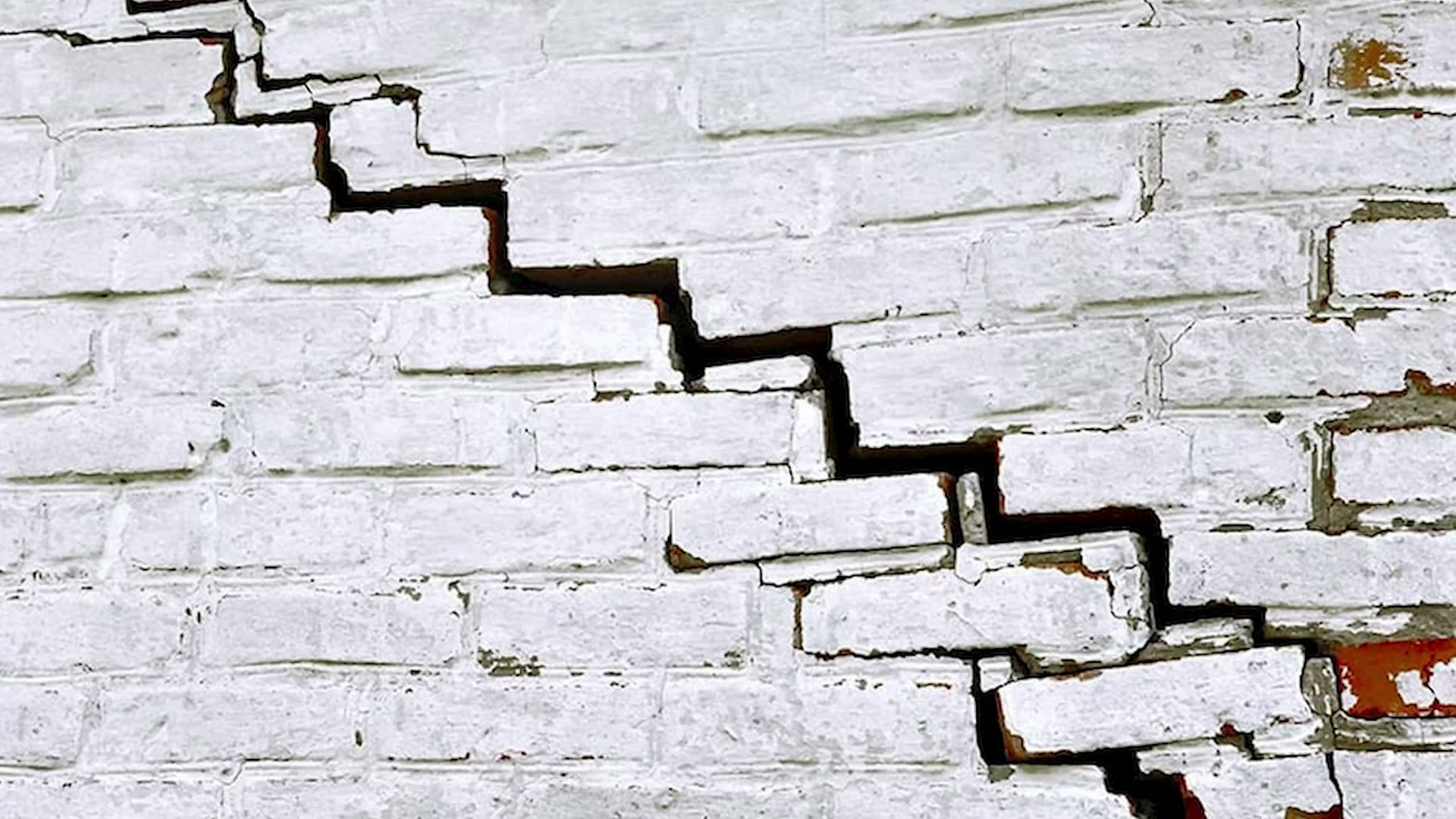
- Has cracks wider than a quarter-inch
- Heavy brick flaking/ spalling

What Is a Retaining Wall?
A retaining wall is a strong, solid barrier utilized to support soil laterally so as to “retain” the soil at two separate levels on either border. These structures are designed to harness soil to a slope that would otherwise naturally not exist. Retaining walls are used to mitigate soil failure and are a favorite form of slope stabilization. Retaining walls used to separate water from land are called bulkheads.
In this blog post, we are going to cover the questions:
- Should You Fix Your Retaining Wall?
- Should You Replace Your Retaining Wall?
- Should You Tear Down Your Retaining Wall?
So, let’s dive in.
Should You Fix Your Retaining Wall?
You should fix your retaining wall if the structural integrity of the wall can sustain a repair and/or if it’s cheaper than building a new retaining wall.
It may sound counterintuitive, but fixing a retaining wall is not always the cheapest option.
Retaining walls fail because they are unable to sustain the load that is forced upon them. Primarily, this is due to expansive soil. Expansive soil expands and shrinks in direct correlation to water saturation.
Water makes everything heavier, including the dirt caged up behind your retaining wall. If your retaining wall has no weepholes, then it’s very likely to fail.
A lack of weepholes is the numero uno predictor of a retaining wall failing.
We repair retaining walls by adding weeping holes, utilizing Helical Tiebacks, Vertical Piers, and waler beams.
However, it’s imperative that the wall is able to survive the repair and sustain it. You can’t implement tiebacks on a wall that wasn’t built correctly because the wall will crumble around it.
So, yes, it is worth it to fix a retaining wall if it can sustain the repair. However, some of our clients would like the wall returned to sit at a clean 90-degree angle. This involves heavy excavation work behind the wall and jacks up the final price line immensely. This price jump can even usurp the cost of putting in a new retaining wall.
We recommend stabilization only. While it is possible for us to return a retaining wall back to square, it’s not cost-effective.
We suggest, leave the wall crooked. It will hold with our repair.
Should You Replace Your Retaining Wall?
If your retaining wall cannot sustain the repair or (as it occasionally turns out) it’s cheaper to build a new retaining wall than repair, then yes, we suggest you do replace your retaining wall.
However, a few concerns that might get in the way of a repair include objects that might not be worth moving or limited access.
Limited access can result from:
- Trees and heavy foliage
- Fences
- A second wall dividing property
The great news is we are one of the few construction contractors who implement helical tiebacks in new retaining walls. This is not an everyday occurrence but is done quite frequently in Orange County and areas with excessive expansive soil.
We build the right way.
Should You Tear Down Your Retaining Wall?
Probably not. We can only speculate, but the odds that the retaining wall was built for a reason (hopefully to retain a slope) are high. Those deductive reasoning classes in college really paid off.
If you can’t afford repair or a new wall, it’s not a good idea to eliminate the primary source of retention with no backup plan.
Unless the hillside slope is going to be bulldozed or leveled, a failing retaining wall is better than no retaining wall.
To wrap up:
- You should repair your retaining wall if it can sustain the repairs and if the repairs are cheaper than a complete rebuild.
- You should build a new retaining wall if the old wall is unsalvageable.
- You should never, ever, ever remove a retaining wall without another slope stabilization plan unless you’re trying to level a surface.
Also, see our article What is Slope Stabilization
Choose Dalinghaus for Your Retaining Wall Repair Needs
Here at Dalinghaus Foundation Repair: we respect your time. We tailor-fit your retaining wall’s repair plan to meet your unique needs. We also perform excellent foundation repair.
Dalinghaus Foundation Repair can help you address a sinking foundation with helical pier, push pier, and polyurethane underpinning.
We do foundation underpinning and retaining wall repair the right way.
Schedule a Free Evaluation
Foundation movement is easier to judge in person than from a photo. Schedule a free evaluation and a Dalinghaus specialist will walk the property with you and explain what the evidence shows.
Written by
Brian Dalinghaus
Co-Founder, Dalinghaus Foundation Repair
Brian Dalinghaus founded Dalinghaus Foundation Repair with his brother Brad in Southern California in 2011. The brothers built the company on a Midwest work ethic and a single standard for every job: Never Settle.
More about Brian