How to Repair Cracks in Cinder Block Walls, A Straightforward Guide
Cinder block walls are tough. They're strong, reliable, and built to last. But like anything in your home, they're not invincible.

Cinder block walls are tough. They’re strong, reliable, and built to last. But like anything in your home, they’re not invincible.
Some cracks are harmless. Others? Not so much.
At Dalinghaus Foundation Repair, we’ve seen everything from small hairline fractures to wide gaps big enough to slide a screwdriver into. And we can tell you this: when cinder block walls start cracking, there’s usually more going on behind the scenes than meets the eye.
So let’s break it down, what causes these cracks, which ones are serious, and what you can do to repair them the right way.
Why Do Cinder Block Walls Crack?
It’s not always about age or bad luck. Most cinder block cracks happen because the structure is reacting to pressure, movement, or moisture.
Here are the most common culprits:
1. Foundation Settlement
If the soil under your home shifts or sinks, especially in Arizona’s dry climate or California’s expansive clay, it can cause parts of your foundation to drop. That movement pulls on your walls and causes cracks.
3. Tree Roots or Soil Expansion
Large roots or swelling clay soil can push against exterior walls, causing horizontal or diagonal cracks over time.
4. Seismic Activity (California-specific)
Even small earthquakes can stress cinder block walls, especially if they’re older or unreinforced.
Types of Cinder Block Cracks (and What They Mean)
Not all cracks are created equal. Here’s what to watch for:
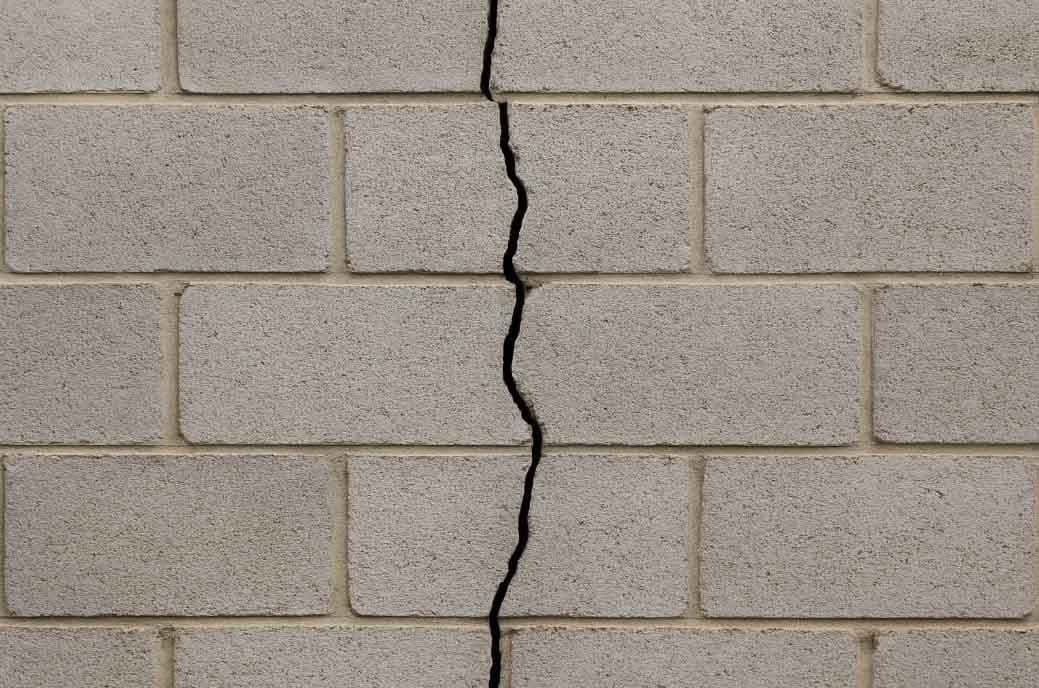
Vertical Cracks
Usually a sign of settlement or shrinkage. Small vertical cracks might not be urgent, but they should still be monitored.
Diagonal (“Stair-Step”) Cracks
These follow the mortar lines in a zig-zag pattern. They usually indicate foundation movement and can grow worse if ignored.
Horizontal Cracks
These are the biggest red flag. A horizontal crack in a block wall often means the wall is bowing or buckling under pressure.
How to Repair Cinder Block Cracks (Step by Step)
The fix depends on the type and severity of the crack. Below are the typical methods we use to repair cracks in cinder block walls, starting with basic cosmetic repairs and moving to structural solutions.
Option 1: Surface-Level Crack Repair (for Hairline Cracks)
If the wall is structurally sound and the cracks are small:
Step-by-Step
- Clean the Crack: Remove loose debris with a wire brush.
- Fill the Crack: Use masonry crack filler or hydraulic cement.
- Smooth & Paint: Trowel the surface smooth and apply a waterproof paint or sealant.
Option 2: Epoxy Injection (for Structural Hairline Cracks)
If the crack is narrow but goes deep, epoxy injection is a great option.
How It Works
- We inject structural epoxy into the crack under pressure.
- This seals the gap and restores some strength to the wall.
Best for vertical or stair-step cracks that are stable but concerning.
Option 3: Carbon Fiber Reinforcement (for Bowing Walls)
When a wall is bowing inward due to pressure, carbon fiber straps can help hold it in place.
What We Do
- Clean the surface.
- Attach carbon fiber strips with high-strength epoxy.
- Anchor the system top and bottom.
This reinforces the wall without excavation, and it’s barely noticeable when done.
Option 4: Wall Anchors or Helical Tiebacks (for Severe Bowing or Lateral Movement)
If the wall has moved more than 2 inches, or if cracks are accompanied by bulging, you may need anchors.
The Process
- Install steel wall plates inside and anchor rods that extend into the soil.
- Tighten the system gradually to straighten and support the wall.
These systems transfer the soil pressure on the wall to anchors set in stable soil.
Option 5: Rebuild or Replace the Wall (in Worst-Case Scenarios)
If a cinder block wall has failed completely, crumbling, collapsing, or beyond repair, it may need to be rebuilt from scratch.
While rare, we’ve seen this happen with:
- Older unreinforced walls
- Severe water intrusion
- Neglected horizontal cracks
We’ll only recommend this if no repair system can restore the wall safely.
When to Call a Professional
Here’s a good rule of thumb: if you can slide a nickel into the crack, or if the crack is horizontal or stair-step shaped, schedule a free evaluation.
Other signs it’s time to call us:
- You notice widening gaps over time
- Water is leaking through the cracks
- The wall is bulging or leaning
- Cracks appear near windows or doors
- You’re planning to sell and need peace of mind
Our 3-Step Repair Process
At Dalinghaus Foundation Repair, we don’t throw patch jobs at structural problems. We find the root cause, then repair the wall and the movement behind it.
Step 1: free evaluation
We assess the cracks, measure wall movement, and determine if it’s structural or cosmetic.
Step 2: Custom Repair Plan
We tailor a plan that fits your home, budget, and long-term goals, whether that’s epoxy, carbon fiber, or full stabilization.
Why Homeowners Trust Dalinghaus
- More than 2,000 foundation projects since 2011
- Local crews with deep knowledge of California & Arizona soils
- Licensed in California, Arizona and Nevada
- We don’t upsell, we educate
We’ve seen too many homeowners waste money on quick patches that don’t last. Our goal is long-term stability, not temporary fixes.
FAQs About Cinder Block Wall Cracks
Q: Will the cracks come back after repair? If you only seal the surface, maybe. But when the root cause is fixed, foundation settlement, pressure, or moisture, they won’t.
Q: How much does cinder block wall repair cost? It depends on the severity and the solution. Crack injection might cost a few hundred bucks. Full wall stabilization can run into the thousands. We offer free quotes and financing to make it manageable.
Q: Can I repair block wall cracks myself? You can patch small cracks, yes. But if the crack is wider than 1/8 inch or looks like a stair-step or horizontal line, call in an expert.
Don’t Wait Until the Wall Fails
Cracks in cinder block walls aren’t just an eyesore, they’re your home trying to tell you something. The sooner you act, the easier (and cheaper) the fix will be.
Let us take a look. It’s free. It’s honest. And it might just save you thousands down the road.
Schedule your free evaluation with Dalinghaus Foundation Repair today. Because strong homes start with strong walls.
Schedule a Free Evaluation
Foundation movement is easier to judge in person than from a photo. Schedule a free evaluation and a Dalinghaus specialist will walk the property with you and explain what the evidence shows.
Written by
Brian Dalinghaus
Co-Founder, Dalinghaus Foundation Repair
Brian Dalinghaus founded Dalinghaus Foundation Repair with his brother Brad in Southern California in 2011. The brothers built the company on a Midwest work ethic and a single standard for every job: Never Settle.
More about Brian