CH 01
Slab types in this region, and how each one fails
Most homes here stand on one of three slab designs. A slab on grade rests on prepared soil with footings at the edges. A monolithic slab pours the floor and footings as one piece, which is fast and strong but means the whole element moves together when the soil under one part gives. A floating slab sits as an independent plate, free to move relative to deeper footings, which protects the structure around it but lets the floor itself tilt. Many newer homes add post tension cables that squeeze the concrete into a stiffer plate.
The designs fail differently: edge settlement lifts or drops the perimeter of a slab on grade, interior voids crack the middle of a monolithic pour, and a floating slab can tip as a unit. Knowing which slab you have is step one of the diagnosis, and it is one of the first things the evaluation confirms.
CH 02
Reading the house: the indoor symptom pattern
A slab reports trouble through the finishes above it. Tile answers first, because porcelain cannot bend: a crack traveling across multiple tiles in a line is usually tracing a crack in the concrete below. Sticking doors and windows mean the frames above the slab are racking. Slopes you can feel in a hallway, gaps under baseboards, and drywall cracks near the floor line fill out the picture. One symptom alone often has an innocent explanation; several of these foundation repair warning signs clustering in the same zone rarely do.
The direction of the evidence matters too. Symptoms that worsen through the dry season and ease after rain are usually tracking expansive clay beneath the slab. Symptoms that only ever get worse point at settlement or erosion, and symptoms clustered around a kitchen or bath earn a hard look at the plumbing.
CH 03
How we diagnose slab movement, including the direction of it
The centerpiece of the evaluation is a manometer floor elevation survey: readings across the whole slab, mapped to fractions of an inch, that show where the floor is low, where it is high, and how steep the change is. The map matters because slabs move in two directions. Settlement drops sections; heave, usually from moisture swelling the clay under one zone, lifts them, and from inside the house the two look nearly identical. Lifting a heaved slab with piers would make it worse, so telling them apart is not optional. The elevation pattern, paired with a hunt for the moisture source, is how foundation upheaval gets separated from sinking.
You receive the survey, the photographs, and the conclusion in writing, whether the recommendation is a repair, a drainage correction, or a follow up measurement next season.
CH 04
The ground under the slab: regional soil mechanics
Inland valley neighborhoods mostly sit on clay with moderate to high expansion potential, and a slab is the building element most exposed to it, riding directly on the soil that swells and shrinks. Coastal strips and desert floors run sandier; those soils hold still until water moves through them, then compress or wash, which is why desert slab problems so often date from a specific wet winter or a specific leak. Foothill homes on shallow rock have the calmest ground but the most cut and fill grading, where half a slab can rest on rock and half on fill.
The practical upshot: the same crack in three different towns can have three different causes, and the soil map is part of every honest slab diagnosis.
CH 05
What slab repair involves, and when you do not need it
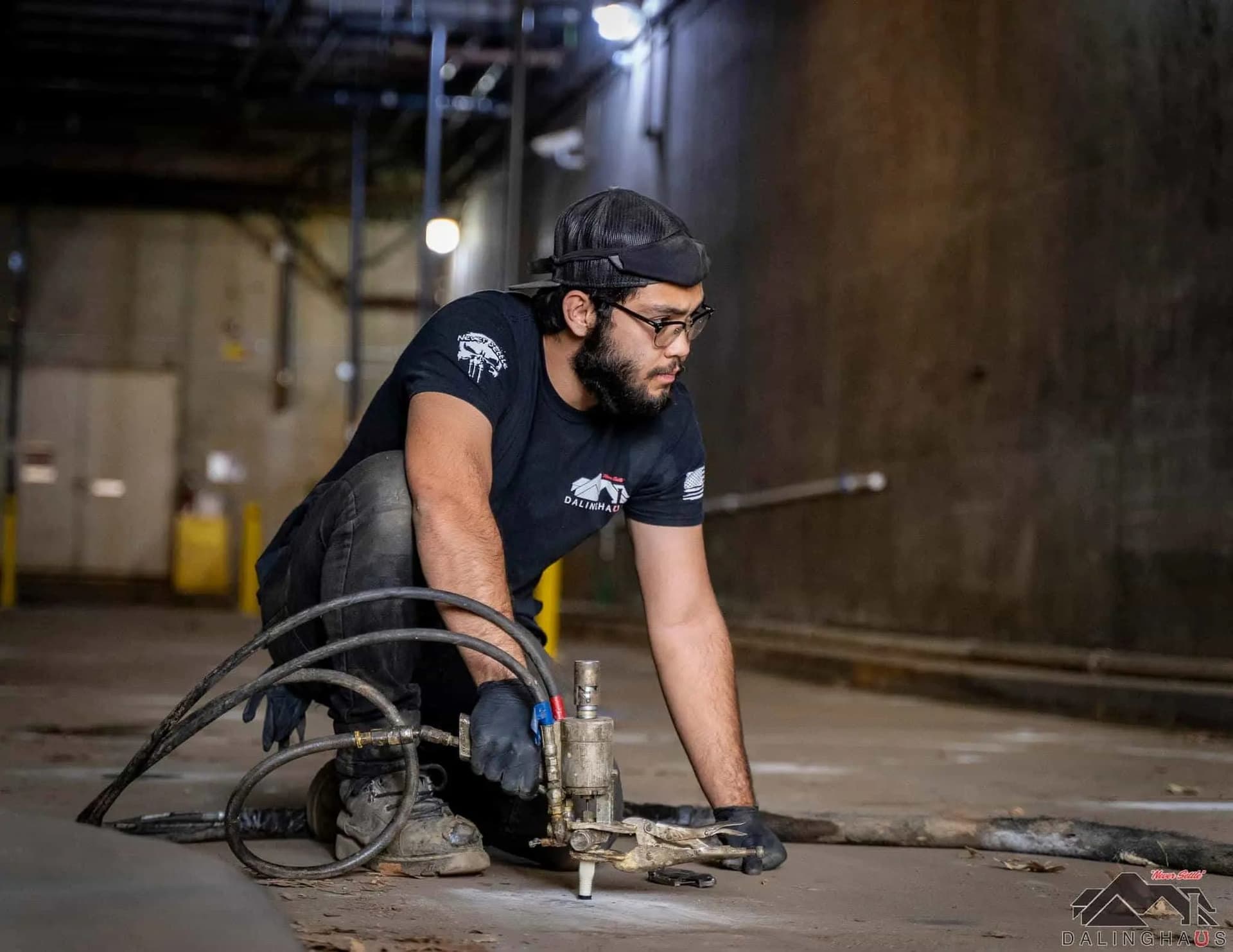
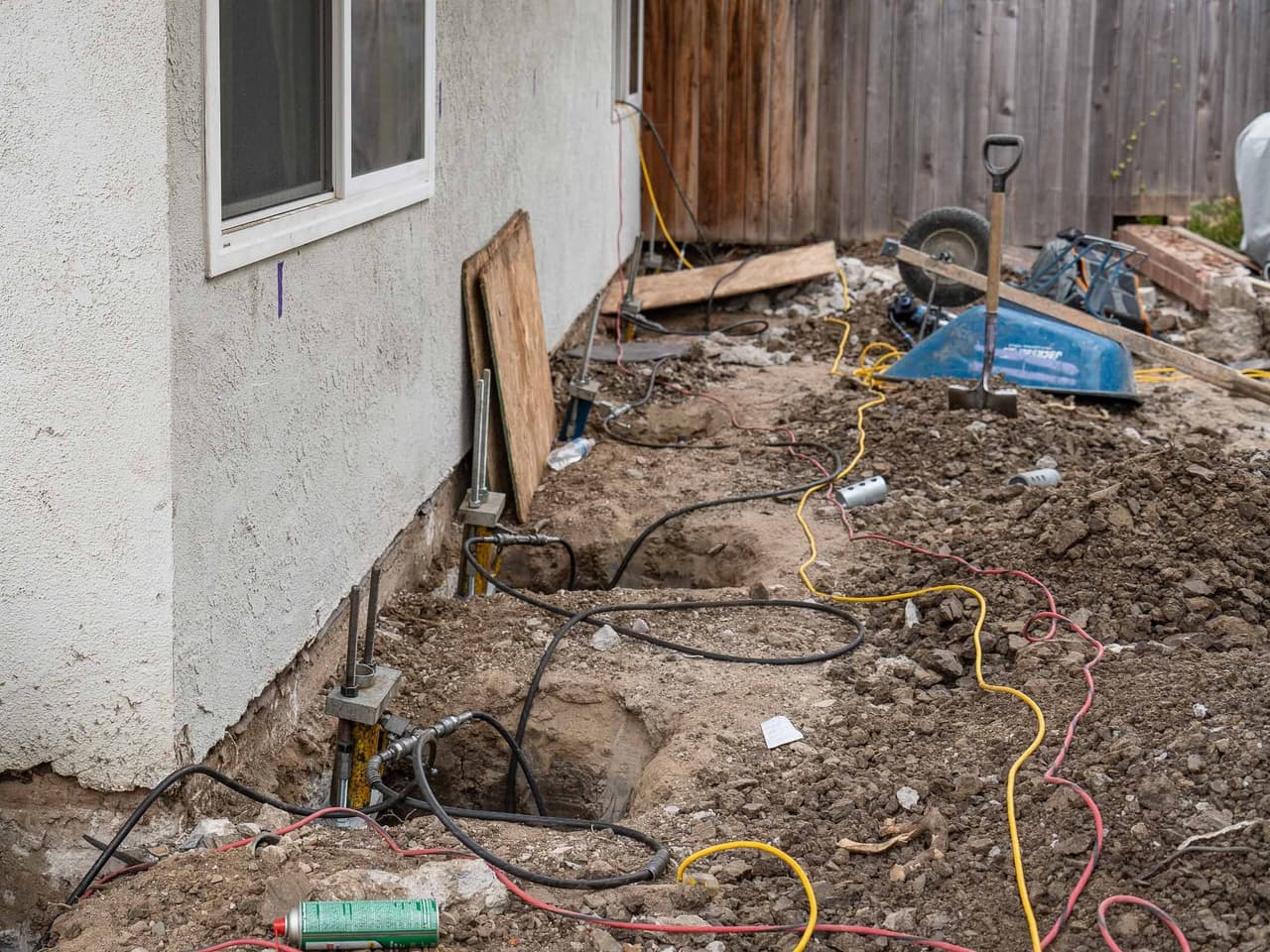
Shallow voids get polyurethane injection through coin sized holes, lifting the low section in monitored stages. Deep seated settlement gets steel: piers installed through or beside the slab to load bearing strata, the deep soil layers that hold firm, verified by torque or driving resistance. Cracks are sealed or stitched only after the movement behind them is stopped, so the seal goes into concrete that is no longer moving.
One step comes before any of that when the work is inside the house. A ground penetrating radar floor scan is completed before interior work commences, and on a post tension slab it is required without exception, because the cables squeezing that slab into a stiffer plate are the last thing a drill bit or a pier core should find. The scan reports the thickness of the concrete and the spacing and depth of what is embedded in it, so the ports and the cored openings are laid out around those findings. It is booked at a two hour minimum and is an additional cost where your proposal does not already carry it.
And some slabs need nothing. Hairline shrinkage cracks with no displacement and stable elevation readings are cosmetic; a slight, stable tilt in an older home is often history rather than an active problem. The survey tells us which house you have, and if the answer is monitoring, that is the recommendation you will get.