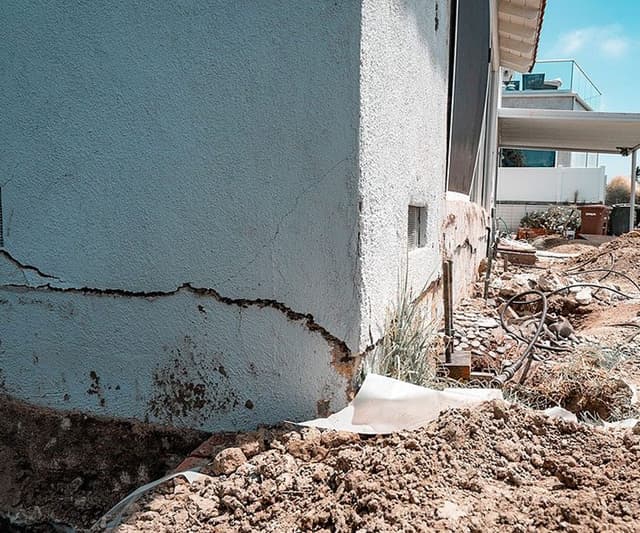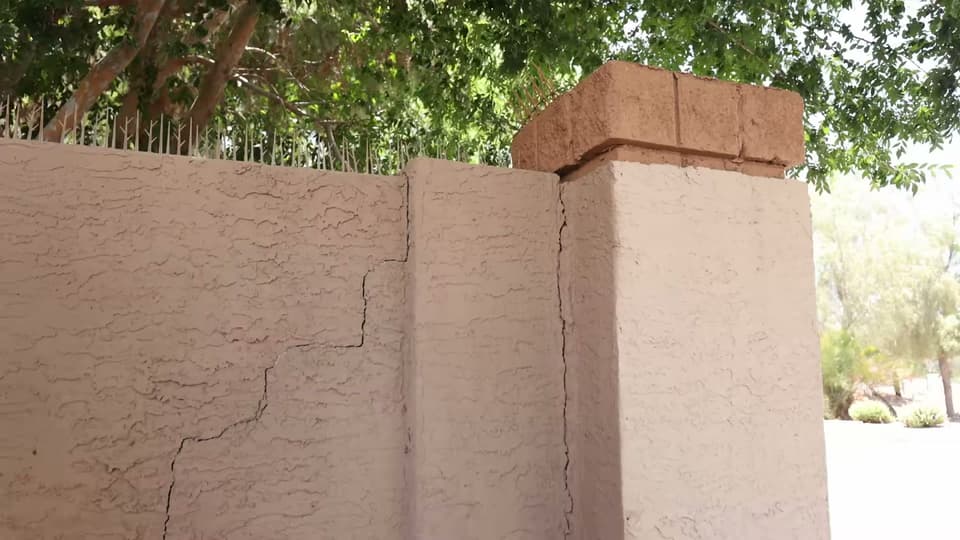
If you’ve noticed your basement walls bowing inward, cracking, or feeling unstable, you’re not alone. Many homeowners face this issue, and it’s a sign that your foundation is under pressure. A bowed basement wall will not fix itself. Expanding soil, poor drainage, and shifting ground can make the problem worse. Waiting too long can result in expensive repairs.
The good news? There are proven ways to reinforce and stabilize your basement walls before the damage worsens. This guide will explain why basement walls bow, how to identify the warning signs, and the best bowed basement wall repair methods to keep your home safe and secure.
How To Repair A Bowed Basement Wall: Best Repair Solutions
If your basement walls are bowing inward, you have several repair options to stabilize them and prevent further damage. The right bowed basement wall repair depends on how severe the bowing is, your budget, and whether you have room around your home for exterior reinforcements.
Let’s go over the most effective repair methods, comparing their pros and cons to help you decide which one might be best for your situation.
Repair Method | Best For | Space Needed? | Corrects Bowing? | Cost | Installation Time |
Wall Anchors | Moderate to severe bowing | Needs outdoor space | Gradual correction | $80 to $140 per foot | 1-2 days |
Steel I-Beams | Severe bowing | Takes up some basement space | No – only prevents movement | $85 and $250 per foot | A few days to a few weeks |
Helical Tiebacks | Extreme bowing | Needs outdoor space | Immediate correction | $300 to $360 per foot | 1-2 days |
Carbon Fiber Straps | Minor bowing | No extra space needed | No – only prevents movement | $85 and $250 per foot | A few hours or one day |
Wall Anchors
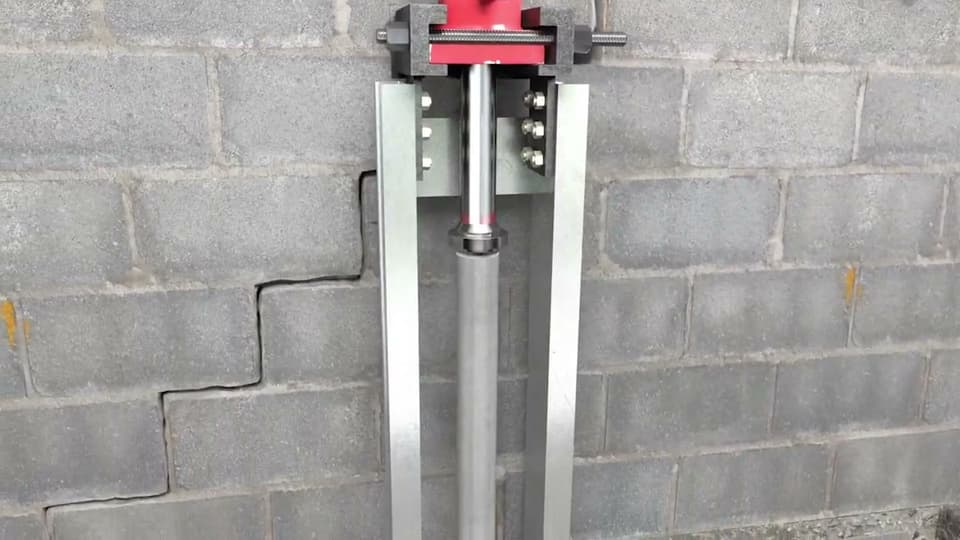
If your basement walls have moderate to severe bowing or bows more than 2 inches, wall anchors might be the right solution. This method works by securing steel plates inside your basement wall and connecting them to anchoring rods that extend into stable soil outside your home. These rods are tightened over time, gradually pulling the wall back into place.
How It Works:
- Drill small holes in the basement wall and insert anchor rods.
- Dig anchor points in the soil at least 10 feet from the foundation.
- Connect the rods to steel plates inside the basement.
- Tighten the anchors gradually over time to straighten the wall.
Pros:
Long-term solution: Once installed, anchors permanently stabilize the wall.
Adjustable over time: Anchors can be tightened to correct the wall position further.
Cons:
Requires outdoor space: You need room outside your home for anchor installation, making this impractical for houses with close neighbors or patios near the foundation.
Slower results: Walls are straightened gradually over time rather than immediately.
Best For: Homes with enough yard space and moderate to severe bowing where a long-term solution is preferred.
Steel I-Beams
Steel I-beams (braced wall systems) offer strong, immediate stabilization for severely bowed basement walls. These vertical beams are anchored to the basement floor and ceiling, creating a rigid barrier preventing further inward movement.
How It Works:
- Measure and install steel brackets on the basement floor and ceiling joists.
- Position vertical steel I-beams every 4 feet along the bowed wall.
- Secure the beams in place, preventing the wall from moving any further.
Pros:
Highly effective for severe bowing: Provides immediate structural support.
Works for any basement type: Doesn’t require outdoor space like wall anchors.
Permanent reinforcement: Once installed, it stops all further movement.
Cons:
Takes up basement space: The steel beams stick out from the wall, reducing floor space in the basement.
Doesn’t push the wall back: Like carbon fiber, it stops movement but doesn’t correct the existing bowing.
Best For: Homes with severe wall bowing where a strong and permanent solution is needed.
Helical Tiebacks
If your basement walls have significant bowing and need immediate correction, helical tiebacks may be your best option. These large screw-like anchors are drilled into the soil at an angle, pulling the basement wall back into place and locking it there.
How It Works:
- Drill holes through the basement wall at an angle.
- Drive helical anchors deep into the ground using specialized equipment.
- Attach and tighten interior plates to straighten and stabilize the wall.
Pros:
Works for extreme bowing: One of the most powerful foundation wall repair methods for correcting walls.
Adjustable: The anchors can be tightened over time if needed.
Doesn’t occupy basement space: Unlike steel I-beams, they don’t reduce floor space.
Cons:
Requires heavy equipment: Installation is more involved than other methods.
Higher bowed basement wall repair cost: Because of the labor and materials, this tends to be one of the more expensive solutions.
Best For: Homes with severe bowing where an immediate fix is needed, and outdoor excavation is possible.
Carbon Fiber Straps
Carbon fiber straps may be the quickest and least invasive option if your basement walls are only slightly bowed or 2 inches or less. These high-strength carbon fiber straps are bonded to the wall, preventing further movement without taking up any space in your basement.
How It Works:
- Prepare the wall surface by grinding it down to remove paint or coatings.
- Apply a strong epoxy adhesive every 4 feet to the wall.
- Secure the carbon fiber straps vertically along the wall.
- Let the epoxy cure, permanently reinforcing the wall.
Pros:
Fast installation: Most jobs are completed in just a few hours.
Non-invasive: No digging, no large holes, and no basement space lost.
Cost-effective: One of the most affordable options for minor wall bowing.
Cons:
Doesn’t correct existing bowing: Unlike anchors or tiebacks, carbon fiber straps only prevent further movement; they won’t push a wall back into place.
Best for minor issues: This solution is not strong enough if your wall is significantly bowed.
Best For: Homeowners with minor bowing who want a quick, affordable reinforcement solution.
What Causes Bowed Basement Walls?
Basement walls bow inward when external forces push against them with more pressure than they were designed to handle. Over time, this stress causes cracks, bulging, and structural weakening.
Hydrostatic Pressure: The Force Of Water Against Your Walls
Water buildup around your home’s foundation is one of the main causes of bowed basement walls. When rainwater, melting snow, or flood water accumulates in the soil, it creates hydrostatic pressure—a force that pushes against the foundation walls. Over time, this continuous pressure can cause walls to crack, shift, and bow inward.
According to the Association of State Floodplain Managers, hydrostatic pressure increases as flood water rises along foundation walls. As the surrounding soil becomes saturated, the pressure intensifies, adding to the weight of the water and exerting significant stress on the basement structure. Walls not designed to handle this force will begin to deform, creating structural concerns that can worsen if left unaddressed.
Signs of hydrostatic pressure issues:
- Persistent dampness or water seepage in your basement
- Horizontal cracks forming along the middle of the wall
- Walls starting to bulge outward at weak points
Expansive Soils: The Expanding And Contracting Cycle
Soil composition plays a major role in basement wall movement. Expansive soils, particularly those rich in clay, absorb moisture and swell when wet. This expansion pushes against basement walls, creating excessive pressure. During dry periods, the soil shrinks, leaving gaps that cause uneven settling and structural instability. The repeated cycle of swelling and contraction gradually weakens foundation walls, making them more susceptible to bowing.
According to the American Society of Civil Engineers (ASCE), differential movements of foundations on expansive soils have damaged thousands of homes in California. They also estimate that one in four homes across the country has some damage caused by expansive soils. These movements can lead to visible foundation cracks, uneven floors, and significant foundation repair costs for homeowners.
How to tell if expansive soils are affecting your foundation:
- Cracks in walls that widen or shift with the seasons
- Gaps form between the soil and foundation during dry periods
- Uneven floors or difficulty opening and closing doors and windows
Poor Drainage: When Water Has Nowhere To Go
If rainwater and runoff aren’t properly directed away from your home, they can accumulate around the foundation, increasing pressure against basement walls. According to the University of Minnesota, a 1-inch rainfall deposits 1,250 gallons of water on the roof of a 2,000-square-foot house. Without proper drainage, a significant portion of this water can penetrate into the soil around the foundation, increasing the risk of basement leaks or bowed walls.
Poor drainage can be caused by:
- Clogged or missing gutters that allow rainwater to pour directly next to the foundation
- Downspouts that discharge too close to the home rather than directing water at least 10 feet away
- Negative grading, where the ground slopes toward the house instead of away
- Failing or nonexistent drain tiles that are unable to channel excess water away
Signs that poor drainage is affecting your foundation:
- Water pooling near the foundation after heavy rain
- Increased basement humidity or mold growth
- Cracks in basement walls near water entry points
Construction Factors: Structural Weaknesses From The Start
In some cases, bowed basement walls result from how the foundation was originally built. Older homes or cost-cutting construction methods may contribute to structural weaknesses that make basement walls more vulnerable to external pressure.
Common issues include:
- Improper backfilling, where the soil is compacted unevenly against the foundation, causing instability
- Lack of reinforcement, particularly in block walls that were not reinforced with steel or concrete
- Thin or weak concrete pours, reducing the wall’s ability to resist external pressure over time
Homes built with these structural weaknesses are often more prone to bowing walls, especially with poor drainage or expansive soils.
FAQs About Bowing Basement Walls
Can a bowing basement wall be fixed?
Yes, a bowing basement wall can be fixed. Repair methods include carbon fiber reinforcement, wall anchors, steel braces, and hydraulic straightening. The right solution depends on the severity of the bowing and the underlying cause.
How much does it cost to fix bowing basement walls?
The cost to fix a bowing basement wall depends on the repair method, wall size, and severity of damage. Carbon fiber straps are more affordable, while wall anchors and structural reinforcements cost more.
Should I buy a house with bowing basement walls?
Buying a home with bowing basement walls can be risky. A structural professional should evaluate the extent of the damage. The home could still be a good investment if repairs are manageable and factored into the price. However, severe bowing may indicate costly foundation issues.
How to fix basement walls leaning in?
Leaning basement walls can be stabilized with wall anchors, steel I-beams, carbon fiber strips, or hydraulic jacks. The best method depends on how much the wall has moved and the soil conditions around the foundation.
How much bowing is acceptable for basement walls?
A basement wall that bows less than 1 inch is generally considered minor and can be stabilized. If the bowing exceeds 2 inches, immediate repairs are needed to prevent collapse. Walls bowing more than 4 inches may require excavation and rebuilding.
Trust The Experts In Basement Wall Repair
If you’ve noticed your basement walls bowing or cracking, don’t wait for the problem to worsen. At Dalinghaus Construction, our expert team provides foundation inspection services to evaluate the extent of damage and recommend the best basement wall crack repair solutions.
With years of experience as trusted foundation repair contractors, we use proven techniques like helical tiebacks to restore stability. Plus, basement waterproofing solutions can help protect your foundation from future moisture damage, keeping your home safe and dry. We proudly serve in California, such as Los Angeles, San Diego, Bakersfield, Long Beach, Riverside, Irvine, Newport Beach, and nearby cities.
Don’t ignore the warning signs—take action today. Schedule a free foundation inspection with Dalinghaus Construction and get the peace of mind you deserve.