
As a homeowner, hardly anything sends shivers down your spine like the thought of foundation damage. And while problems with your home’s main foundation are concerning enough, many forget that their garage’s structure also requires proper maintenance and care. In this blog post, we’ll dive into everything you need to know about garage foundation repair. Whether you are a seasoned homeowner or a first-time buyer, understanding these basics can save you time, money, and headaches down the road!
Causes of Garage Foundation Damage
One leading cause of garage foundation damage is differential settlement. To understand how settlement works, recall that your garage’s foundation rests on the soil below it and depends on that soil for support. If the soil shifts and sinks, the foundation of your garage will shift as well.
A small amount of uniform settlement is normal following the initial construction of a foundation. However, another type of foundation settlement, known as differential settlement, is detrimental to the structural integrity of a foundation.
Unlike uniform settlement, differential settlement involves uneven shifts. These shifts can lead to foundation damage and can also compromise the rest of your garage. Since foundation damage can be severe and costly if unaddressed, it is crucial to seek repairs as soon as possible.
Signs Your Garage Foundation Needs Repairs
We closed the section above by highlighting the importance of seeking professional help when you notice garage foundation damage. However, have you ever stopped to consider the signs of foundation damage? If not, the list below will help familiarize you with the common indications of garage foundation damage:
- Cracks in your garage foundation: One of the surest signs that your garage foundation has experienced differential settlement is visible cracks that can vary in severity.
- Stuck doors and windows: If your garage features doors and windows that suddenly stopped working correctly, this may indicate uneven settlement.
- Drywall cracks: It’s possible that drywall cracks relate only to issues with the drywall itself. However, they can also be a sign of differential settlement.
- Sloping floors: When your garage settles unevenly, it is likely that the floor of your garage will develop a distinct slope in one direction.
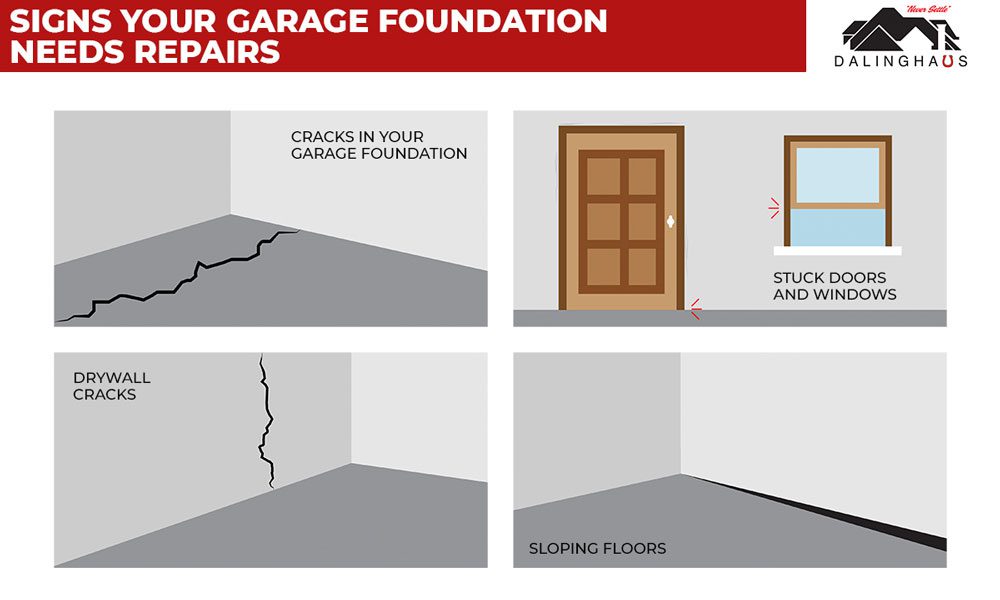
Take time to study these signs so that you can notice them in your garage as soon as possible. The quicker you identify a foundation problem, the sooner you can begin implementing one of the repair methods in the section to follow.
How Garage Foundations Are Repaired
Before discussing how a garage foundation is repaired, it is essential to note that garage foundation repair is not something you can do on your own. Instead, it is vital to seek the help of a foundation professional in your area.
Foundation repair is not only tricky, but it is also dangerous if you attempt to do it without experience. Hiring a skilled team is the best way to ensure this project is successful and safe.
Repairing a Garage Foundation Using Piers
If your garage foundation has experienced differential settlement, installing piers is one of the best ways to repair it. This process, sometimes called underpinning, is an excellent way to level a foundation and add stability so that future settlement is unlikely to occur.
Push and helical piers are two of the most common types for this job. To install push piers, your foundation team will use a hydraulic pump to press them into the ground while connecting them to your garage foundation. Once the connection is in place, that team can use the piers to raise and hold your foundation.
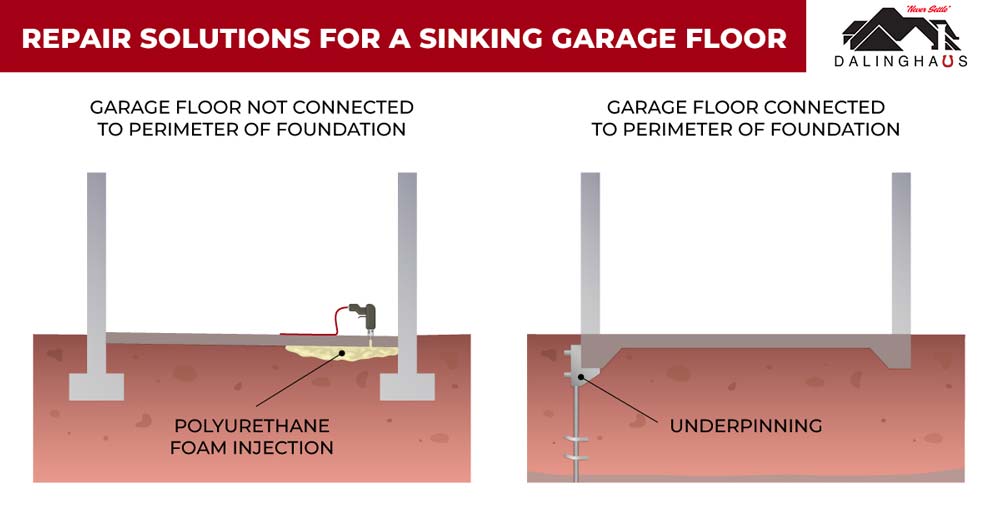
Helical piers serve the same function via slightly different means. Rather than requiring a hydraulic pump, helical piers are like giant screws that the repair team will twist into the ground. Once fully embedded in the ground and connected to your foundation, the helical piers also allow your foundation professionals to raise your garage and keep it stable.
Preventing Foundation Problems
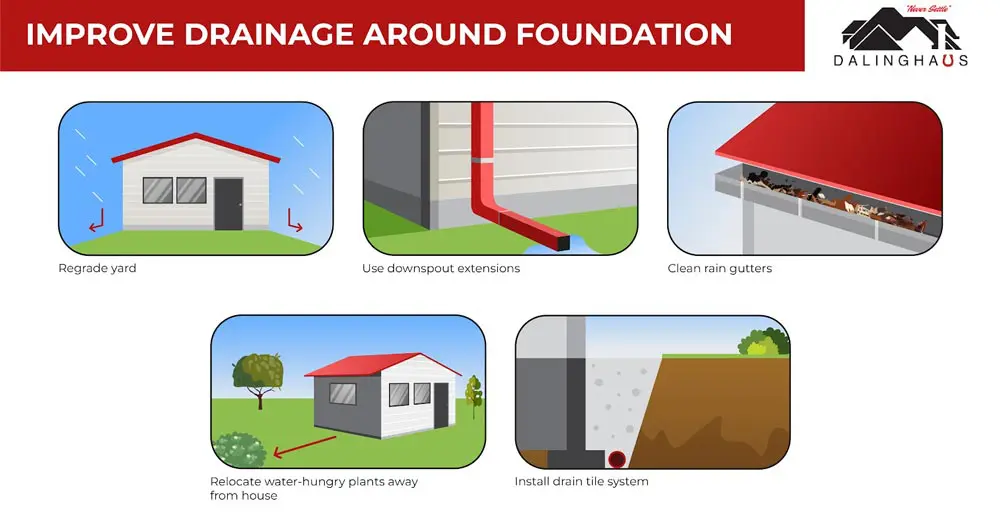
While the method described above will resolve existing garage foundation problems, a better approach is to prevent them in the first place. Below is a list of ways to ensure foundation damage is less likely for your garage:
- Keep your gutters clean: When your gutters become clogged, rainwater can overflow, spill onto the ground below, and seep into your foundation. Keeping your gutters clean helps prevent the damage that can arise from that occurrence.
- Install downspout extensions: Your downspouts can cause a problem for your foundation if they dump water directly next to it. Prevent this issue by installing downspout extensions that deposit the water well away from your building.
- Regrade your land: The land surrounding your garage should have a distinct slope away from the foundation to encourage water to flow away.
- Improve your drainage system: Adding drain tiles and other drainage structures helps your garage manage water more efficiently to prevent foundation damage.
Hire a Professional for Your Garage Foundation Repair
We cannot understate the importance of hiring an experienced professional to conduct your garage foundation repair. An experienced foundation team can accurately diagnose the cause of your foundation damage and provide the ideal solution for you.
If you are struggling with a foundation problem and live in Southern California, Nevada, or Arizona, Dalinghaus Construction is the best team to call to resolve your concerns. Reach out today to learn more about the services we can offer you.


