Bowed Walls: What Causes Them and How to Fix Them
This isn't just a cosmetic issue, it's a clear sign that your foundation is under serious pressure and starting to fail.

What Is a Bowed Wall?
This isn’t just a cosmetic issue, it’s a clear sign that your foundation is under serious pressure and starting to fail.
Most homeowners first notice a horizontal crack running across the wall. Then the wall slowly starts to bulge inward. This is called structural bowing, and if left untreated, it can lead to major damage, or even a complete wall collapse.
The good news? With the right solution, bowed wall repair is possible, and the movement can be stopped.
Why Foundation Walls Start Bowing
There’s one main reason walls bow inward: pressure against the wall from the outside.
This pressure builds up for several reasons, including:
1. Hydrostatic Pressure
When the soil around your foundation becomes saturated with water, it gets heavy and pushes hard against your walls. This pressure is known as hydrostatic pressure. Over time, it can force the wall to bend or crack.
2. Expansive Soil
In parts of California and Arizona, clay soils expand when wet and shrink when dry.
3. Poor Drainage
If rainwater or sprinkler runoff isn’t properly directed away from your home, it can pool around the foundation and soak into the soil. That adds more weight and pressure, and increases the risk of wall movement.
4. Frost Heave (Cold Climates)
In colder areas, frozen ground can expand and push against the walls. While this doesn’t affect most of Southern California or Arizona, it’s a common problem in mountain regions.
Warning Signs of Foundation Wall Bowing
Keep an eye out for these early signs:
- Horizontal cracks near the middle of a wall
- Walls that curve or bulge inward
- Cracks forming in a stair-step pattern
- Water leaking through wall cracks
- Gaps between the wall and the floor
- Doors or windows that stick or won’t close
These aren’t just cosmetic, they’re structural.
What Happens If You Ignore a Bowed Wall?
Without proper wall stabilization, the damage can quickly get worse. The wall may continue to bend, develop more cracks, or even fail completely. In extreme cases, this can lead to:
- Foundation collapse
- Unsafe living conditions
- Expensive repairs or full wall replacement
Bowed Wall Repair Methods That Stop the Movement
At Dalinghaus Foundation Repair, we use three proven methods to fix foundation wall bowing and stabilize the structure, each one designed to stop the movement and prevent future damage.
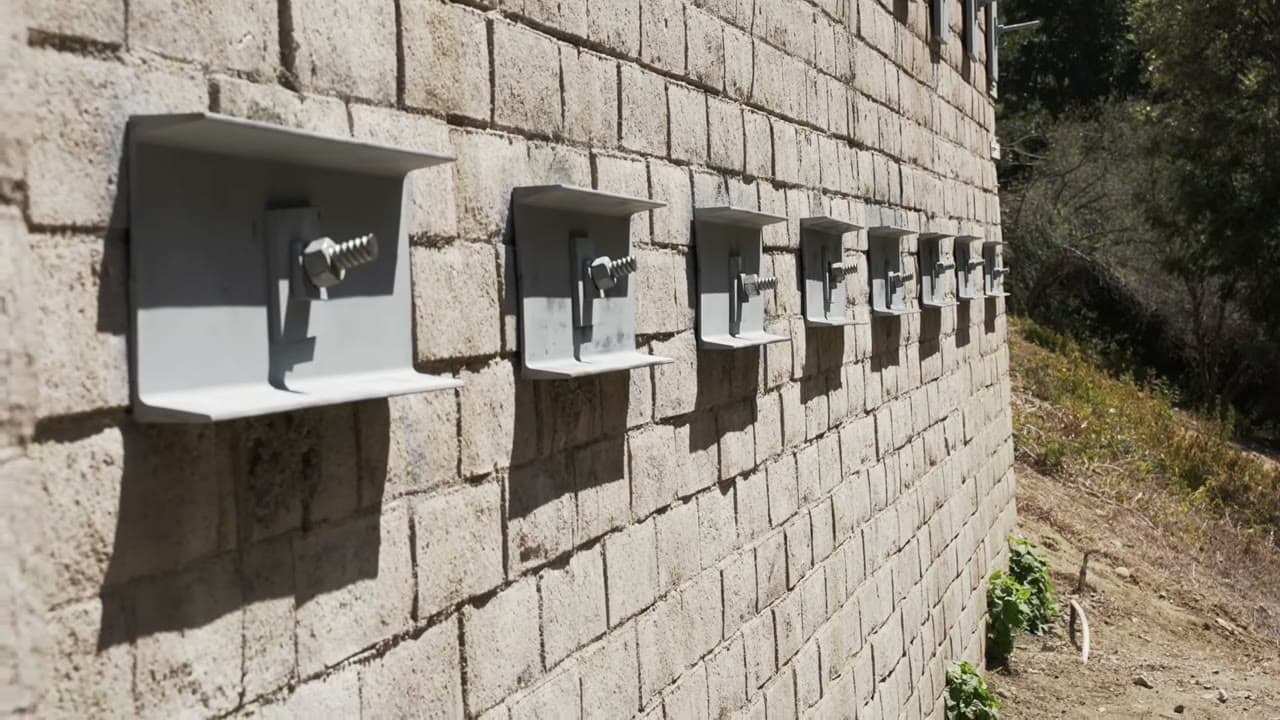
1. Wall Anchors
Best for: Bowed walls with significant movement (over 2 inches)
A steel rod connects the two plates, and when tightened, it pulls the wall back into position and holds it there, and the anchor is retensioned if the wall needs it.
- Straightens walls over time
- Strong, long-term solution
- Works for major bowing issues
Things to know: You’ll need enough space outside the home to install the anchor plates. This method requires digging.
Wall anchors are ideal for serious bowed wall repair, especially when pressure against the wall has caused several inches of movement.
2. Carbon Fiber Straps
Best for: Slight to moderate bowing (less than 2 inches)
How they work: Thin, strong carbon fiber straps are bonded directly to the wall with epoxy. These straps hold the wall in place and prevent further bowing. They’re often installed vertically along the wall and nearly invisible when finished.
- Clean, low-profile installation
- No digging required
Things to know: Carbon fiber straps don’t straighten walls, they stabilize them to prevent further bowing.
When structural bowing is caught early, carbon fiber reinforcement can stop it in its tracks.
3. Steel I-Beams (Wall Bracing)
Best for: Walls that can’t be accessed from the outside
These beams support the wall and resist inward movement, much like a brace holding up a leaning surface.
- Excellent for homes with limited yard access
- Works for tall walls or stone foundations
- Can stop and reverse bowing over time
This wall bracing method adds serious strength to failing walls without disturbing your yard.
Can You Fix a Bowed Wall Yourself?
Short answer: no, not in a way that stops the movement.
Patching cracks or applying waterproof paint won’t fix the actual pressure against the wall. You need a structural solution like anchors, braces, or carbon fiber to stabilize the wall and prevent future damage.
DIY repairs may look nice for a while, but they don’t stop the bowing. And ignoring it can lead to much costlier repairs down the line.
Real Case Study: Bowed Wall Repair in Orange County, CA
Over time, the wall had started to curve inward, and water was beginning to seep through.
Our team inspected the wall and found moderate foundation wall bowing caused by years of hydrostatic pressure and poor yard drainage.
We installed:
- 6 carbon fiber straps
- An interior drain system to relieve water pressure
- Grading recommendations to divert water away from the home
For more information, see How Foundation Repair Can Increase Your Property’s Value.
Why Choose Dalinghaus Foundation Repair?
- Specialized in wall stabilization and foundation repair
- Trusted across California and Arizona
We don’t just stop the symptoms, we fix the root of the problem.
Get a free evaluation Today
At Dalinghaus, we offer a free evaluation, expert solutions, and repairs designed to stop the movement, with the terms in writing before work starts.
Let’s restore your home’s safety, starting today.
Schedule your free consultation now .
Schedule a Free Evaluation
Foundation movement is easier to judge in person than from a photo. Schedule a free evaluation and a Dalinghaus specialist will walk the property with you and explain what the evidence shows.
Written by
Brian Dalinghaus
Co-Founder, Dalinghaus Foundation Repair
Brian Dalinghaus founded Dalinghaus Foundation Repair with his brother Brad in Southern California in 2011. The brothers built the company on a Midwest work ethic and a single standard for every job: Never Settle.
More about Brian