
That little gap between your wall and floor might look harmless, but it’s not just a cosmetic issue. It’s your house quietly telling you something’s wrong. It could be settling soil. It could be a shifting foundation. Either way, ignoring it won’t make it go away.
In this gap between wall and floor guide, we’ll break down what causes floor gaps, how to spot the real warning signs, and what to do before that small space turns into a big problem.
Why Is There a Gap Between My Wall and Floor?

Alt text: gap between wall and floor image
That gap between your wall and floor didn’t show up overnight, but it sure didn’t show up for no reason, either. When your house starts pulling away from itself, it’s usually not a trim issue. It’s a structural cry for help. Most of the time, it boils down to your foundation shifting, thanks to the soil doing what soil does best: moving.
Here’s what might be going on beneath your feet:
1. Foundation Settlement
Over time, the soil under your home can compact, dry out, or straight-up vanish, especially in places like California and Arizona where you’ve got expansive clay, drought, and the occasional monsoon. When part of your foundation loses support, it starts to sink. The structure shifts, the floor drops, and bam, you’ve got a gap between the wall and floor.
2. Soil Erosion or Poor Compaction
If the original builder didn’t pack the soil tightly, or if water’s been running too close to the foundation, your soil might be slowly washing away. And where the soil goes, your foundation follows. That’s when floors start to dip and walls start to pull apart.
3. Expansive Soil
This one’s a real troublemaker. Expansive soil swells when it’s wet and shrinks when it’s dry, over and over, like a sponge on repeat. That constant movement pushes and pulls on your foundation, creating stress points. Result? Floor gaps, wall cracks, doors that won’t shut, and a homeowner asking, “What now?”
4. Framing or Joist Issues
Not every problem starts in the dirt. Sometimes, the wood above it is the culprit. If your floor joists are sagging or your rim joist is failing, the floor can start dropping away from the wall. It looks like a foundation issue, but the framing’s actually to blame.
5. Moisture in the Crawl Space
If your home has a crawl space, too much humidity can rot the joists and beams that hold up your floor. When that wood gets soft, it sags. And when it sags, it pulls the floor down with it, leaving that visible gap at the base of your wall.
No matter the cause, one thing’s for sure: that gap means something’s moving. And if you want to keep your house standing tall, it’s best to figure out what’s shifting and fix it before it gets worse.
Signs the Gap Between Wall and Floor Is More Than Cosmetic
Sometimes a gap between your wall and floor is just that cosmetic: a little caulk, a fresh baseboard, no harm done.
But sometimes? It’s your house waving a red flag.
Here’s how to tell if you’ve got a real structural problem brewing underneath your feet:
- Uneven or Sloping Floors: If marbles roll across the room, chances are your floor isn’t the only thing off; your foundation may be shifting, too.
- Cracks in Drywall: Walls are like skin, they show stress when the foundation beneath them starts pulling apart. Cracks forming at corners, seams, or window frames are a classic sign that something’s moving.
- Sticking Doors or Windows: If you’ve got to shoulder your way into a room or wrestle a window shut, your frame may be warping from structural movement. Floors drop, walls shift, and nothing lines up like it used to.
- Gaps That Get Bigger Over Time: If that floor-to-wall gap started as a hairline and now it’s big enough to lose your phone in, it’s not going away on its own. Movement is active and likely getting worse.
- Ceiling or Crown Molding Separation: Gaps aren’t just at the floor. If your ceiling trim is pulling apart or cracking, it could be your whole structure flexing under pressure.
- Cracks in the Foundation or Exterior Walls: Walk the outside of your home. If you’re seeing stair-step cracks in the brick, separation in siding, or crumbling concrete, that floor gap is likely part of a bigger problem below.

If you’re spotting one or more of these signs, don’t wait for things to get worse. A professional foundation inspection can tell you whether it’s just cosmetic or the start of something serious.
How to Fix a Gap Between the Wall and Floor
When there’s a gap between your wall and floor, it’s not just about closing the space; it’s about fixing what caused it in the first place. Slapping on some caulk or new trim might make it look better, but that’s just putting a Band-Aid on a broken bone.
Here are some of the gap between wall and floor solutions:
- Push Piers: If your home is settling because of weak or sinking soil, push piers are driven deep into stable ground to lift and support the foundation. This is one of the most common fixes for homes with visible floor-to-wall separation.
- Helical Piers: Similar to giant screws for your foundation, helical piers are ideal for lighter structures or where soil conditions vary. They’re twisted into the earth until they reach stable load-bearing soil, and then used to raise and stabilize your home gently.
- Helical Tiebacks: If your foundation walls are bowing or sliding outward, especially in homes with retaining walls, helical tiebacks can pull them back into place and prevent further movement. Think of them as anchors keeping everything where it belongs.
- Crawl Space Jacks: If sagging floors are the issue and you’ve got a crawl space, adjustable steel jacks can be installed to lift and relevel the floor system from underneath. It’s a game-changer when joists are sagging and the floor’s dropping away from the wall.
- Post & Pad Replacement: Old-school support posts made of wood can rot, shift, or settle over time. Replacing them with concrete pads and steel posts restores proper support and helps close the gap caused by floor sagging, especially in older homes.
- Deep Injection Polyurethane: For slab-on-grade homes with sinking floors, deep injection polyurethane foam is injected under the slab. It expands, fills voids, and gently lifts the concrete back into place, closing the gap and stabilizing the area fast.
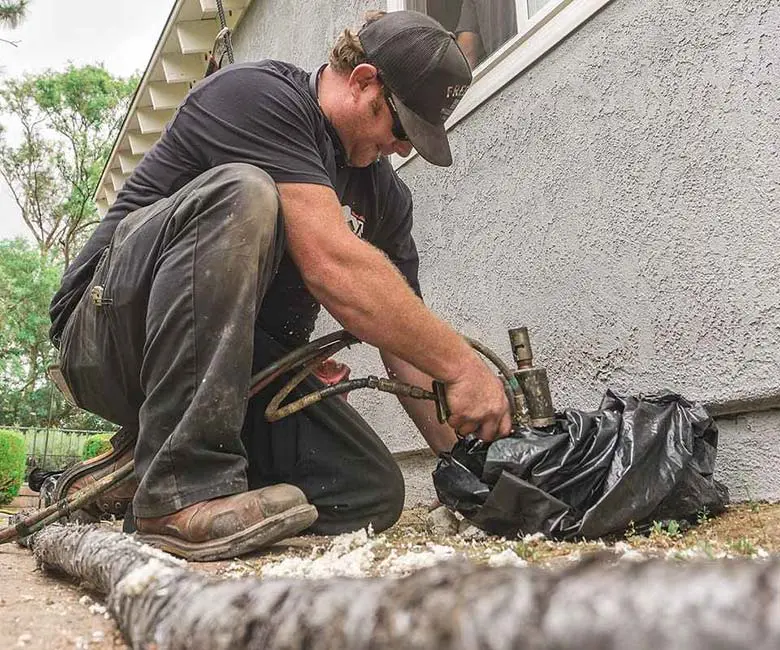
Alt text: Deep Injection Polyurethane
- Drainage Correction & Moisture Control: Water is often the silent troublemaker. Poor drainage, high humidity, or standing moisture can lead to erosion, rot, or shifting soil. Solutions like grading, gutters, vapor barriers, or crawl space encapsulation can help prevent future damage once structural repairs are made.
No two homes settle the same way, which is why a floor-to-wall gap needs a custom fix, not guesswork. The right gap between wall and floor fix depends on your soil, your structure, and the extent of the damage.
Bottom line? Don’t just hide the gap; fix what’s causing it from the ground up.
How to Prevent Your Floor from Separating from the Wall
What’s the best fix for a gap between your wall and floor? I don’t need one in the first place.
Here’s how to keep your floors where they belong and avoid watching your walls pull away over time:
Control Drainage Around the Foundation
Water is the silent killer of good foundations. Make sure your gutters and downspouts are doing their job, moving water away from the house, rather than allowing it to flow directly into the soil next to it. If water’s pooling by your foundation, regrade that yard or dig a swale. It’s not glamorous, but it works.
Don’t Overwater Your Landscaping
In places like California and Arizona, soil loves to expand and contract like an accordion, wet one season, bone-dry the next. Too much irrigation causes the soil to swell, and when it dries out, your foundation drops. That’s how you end up with your floor separating from the wall.
Encapsulate Your Crawl Space
If you’ve got a crawl space, think of it like your home’s lungs. Humidity down there leads to mold, rot, and sagging joists. Crawl space encapsulation seals it off, keeps moisture out, and protects the beams holding up your floor.
Schedule Routine Foundation Inspections
You don’t have to wait for cracks or gaps to show up. A foundation inspection every few years, especially if you live on sketchy soil, is a smart way to catch issues early. It’s like an oil change for your home.
Use the Right Materials When Repairing
Fixing framing? Replacing supports? Don’t cheap out. Pressure-treated lumber and proper installation might cost a little more upfront, but they’ll save you a world of pain down the road. Bad repairs are a time bomb, tick… tick… gap.
A little prevention goes a long way when keeping your home stable. Take care of what’s under your feet, and you’ll spend a lot less time and money fixing what’s pulling away from your walls.
Is a Gap Between the Wall and Floor Dangerous?
Sometimes, the gap between wall and floor issues is just bad trim work. But if it’s caused by foundation movement, that’s a whole different animal. What starts as a small space can lead to cracked walls, sagging floors, and major structural headaches if you let it ride.
So is it dangerous? Maybe not today. But ignore it long enough, and it will be. Catch it early. Fix it fast. Save yourself a fortune.
Schedule a Free Foundation Inspection Today
Seeing some gap between wall and floor problems? Don’t wait for it to turn into cracked drywall, sagging floors, or a foundation that won’t sit still.
At Dalinghaus Construction, we’ve handled over 2,000 foundation and crawl space repairs across California and Arizona. From helical piers to moisture control, we don’t guess; we diagnose, fix, and back it with some of the strongest warranties in the business.
Schedule your gap between wall and floor inspection today. Let’s catch the problem before it catches up with your home.


