Most floor squeaks are wood rubbing against wood or against a nail, and on their own they are harmless. A squeak that shows up along with a soft spot, a bounce, or a slope in the floor points to the support underneath rather than the floor surface itself, and that combination is a different conversation.

Key takeaways
- Most floor squeaks come from wood parts rubbing or shifting slightly, not from a structural problem.
- A squeak paired with a soft spot, a bounce, or a sloping floor points to the support system below the floor, not the floor itself.
- Sistering, support plates, and crawl space jacks correct a support problem. Dalinghaus Construction does not replace floor joists.
- Humidity and normal seasonal wood movement cause squeaks that come and go on their own.
- A free evaluation is the most reliable way to find out whether a squeak is cosmetic or a sign of something underneath the floor.
Squeaky floors are one of the most common complaints homeowners search for, and one of the least understood. Most articles jump straight to structural fear or offer a laundry list of fixes with no way to tell which one applies. This guide walks through what actually causes a squeak, what separates a harmless one from a support problem, and what a repair for the second kind actually involves.
What Makes a Floor Squeak?
A floor squeaks when two wood parts move against each other or against a fastener, and that friction makes noise. Most of the time this happens for one of four reasons.
Boards Rubbing Against Each Other
Wood flooring and subfloor panels are cut and installed with small gaps between them. Over time, as the house settles into normal use, adjacent boards can shift just enough to rub together when weight passes over them. This is the most common cause of a squeak and the least concerning.
Nails Working Loose From the Subfloor
Subfloor panels are nailed or screwed down to the joists beneath them. As wood dries out over the years, the fasteners can work slightly loose, and the panel moves a fraction of an inch every time someone steps on it. That small movement against the loose nail is what you hear.
A Subfloor Separating From the Joist Below
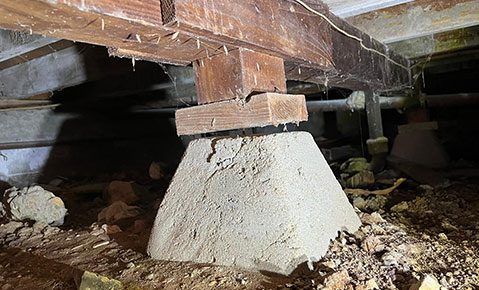
This is the cause worth paying attention to. If the subfloor panel has pulled away from the joist it rests on, whether from moisture, age, or movement in the framing below, the panel flexes under weight instead of staying flat, and the fasteners squeak with every step. This is usually a support issue rather than a surface issue, and it is the reason the next section exists.
Humidity and Seasonal Wood Movement
Wood expands when it absorbs moisture and contracts when it dries out. In homes across Southern California, Arizona, and Nevada, seasonal humidity swings can cause boards to tighten and loosen against each other, which is why some squeaks appear for a few months and then quiet down on their own.
When Is a Squeaky Floor a Support Problem?
A squeaky floor points to a support problem when it shows up alongside a soft spot, a bounce, a slope, or another sign somewhere else in the home. A squeak by itself, with a floor that otherwise feels solid and level, is usually just friction.
The table below is a general guide, not a diagnosis. An evaluation is what actually tells you which category a specific squeak falls into.
| What you notice | What it usually points to | Worth a free evaluation |
|---|---|---|
| A squeak in one spot, floor feels solid | Wood rubbing or a loose fastener | Not on its own |
| A squeak that fades in some seasons and returns in others | Normal humidity driven wood movement | Not on its own |
| The same squeak every time, with a soft or spongy feel underfoot | The subfloor may be separating from the joist below | Yes |
| A squeak plus a visible dip or slope in the floor | A support post or joist beneath the floor may have shifted | Yes |
| A squeak plus doors or windows elsewhere that stick | Possible movement affecting more than the floor | Yes |
If you are already wondering when a sagging floor becomes structural, a squeak is one of the earlier and more subtle signs that can show up before a dip or a bounce becomes obvious.
What Can You Check Yourself?
You can check a squeaky floor yourself by walking the area slowly and noting whether the sound is isolated to one board or spread across a section of the room. A single board that squeaks is usually a quick, low stakes observation. A section that flexes, feels soft, or slopes when you walk it is worth writing down and mentioning to a professional.
A few things to look for while you check:
- Does the floor feel level, or does it dip slightly toward one spot?
- Does the area feel firm underfoot, or does it give slightly with your weight?
- Are there other signs nearby, like a door that has started sticking or a crack that has appeared in a nearby wall?
- Does the squeak happen in the same spot every time, or does it move around depending on the season?
None of these checks are a substitute for a professional look underneath the floor. They are simply a way to describe what you are noticing more precisely before you talk to someone. For a broader look at what to do and what to avoid with an uneven floor, see our guide on uneven floor repair.

How Are Squeaks From a Support Problem Repaired?
Squeaks caused by a support problem are repaired by stabilizing what is underneath the floor, not by replacing the floor itself. The exact approach depends on what a technician finds once they are underneath the house.
Common approaches include:
- Sistering the joist. A new piece of lumber is fastened alongside a weakened or separated joist to add strength and bring the subfloor back into firm contact with it. For more detail on this approach, see strengthening joists from below.
- Installing support plates. Metal plates or blocking are added where a joist meets a beam or support post to stop small movements at that connection point.
- Adding or adjusting crawl space jacks. Where a support post has settled or shifted, crawl space jacks are installed or adjusted to bring the floor system back to level and hold it there.
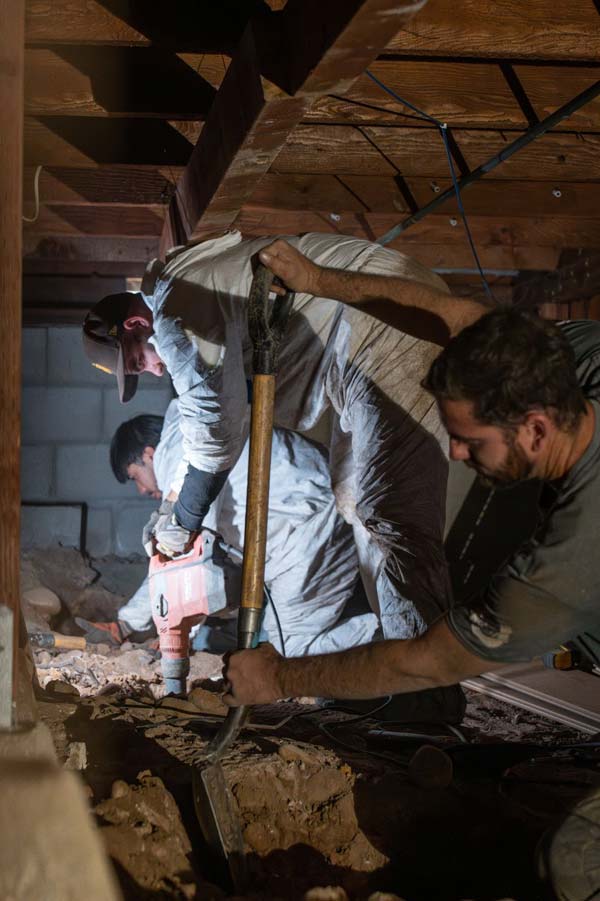
These repairs strengthen and stabilize the existing framing rather than tearing out and rebuilding it. For a closer look at how a sagging section gets addressed, see our guide on sagging floor joist repair. Our crawl space repair team can walk you through which approach applies once they have looked at the specific area.
Can You Just Live With a Squeaky Floor?
You can live with a squeaky floor that is isolated, consistent with normal wood movement, and not paired with any other sign in the home. Whether a specific squeak falls into that category is something a professional can confirm, and that confirmation is worth having if the squeak has started appearing more often, in a wider area, or alongside anything else you have noticed.
A squeak on its own is not proof of a support problem, and it is not proof that everything is fine either. What the squeak means in your specific home is a question for an evaluation, not a guess based on a symptom alone. If you want that answer, schedule a free evaluation and a technician can look at what is actually happening underneath the floor.
Frequently Asked Questions
Is a squeaky floor a sign of a foundation problem? Not by itself. A squeak on its own is usually wood rubbing against wood or a loose fastener. It becomes worth investigating further when it appears along with a soft spot, a slope, a bounce, or another sign elsewhere in the home, since those combinations point toward the support system rather than the floor surface.
Why does my floor squeak more in certain seasons? Wood absorbs and releases moisture as humidity changes through the year, which causes boards to expand and contract slightly against each other. This is a normal process in homes across Southern California, Arizona, and Nevada, and it explains why some squeaks come and go with the seasons rather than staying constant.
Can I fix a squeaky floor myself? A squeak caused by a loose fastener in an accessible spot can sometimes be addressed with basic carpentry. A squeak connected to a support problem underneath the floor is not a do it yourself repair, since it involves the framing that holds the floor up rather than the surface you can see.
Will a squeaky floor go away on its own? A squeak caused by seasonal humidity can quiet down on its own as conditions change. A squeak caused by a subfloor separating from a joist, or by a shifted support post, will not resolve by itself, because the underlying gap or movement stays until something corrects it.
Do all squeaky floors need a professional evaluation? No. A single, isolated squeak in an otherwise solid, level floor usually falls into the wood movement category described above. A squeak that shows up with a soft spot, a slope, a bounce, or another sign in the home is worth having looked at, since that combination is what points toward the support underneath the floor rather than normal wood movement.