Why Drywall Cracks Keep Coming Back After a Repair
A patched drywall crack that reopens is usually reporting movement, not bad patching. Here is how to tell what is moving and what to do about it.

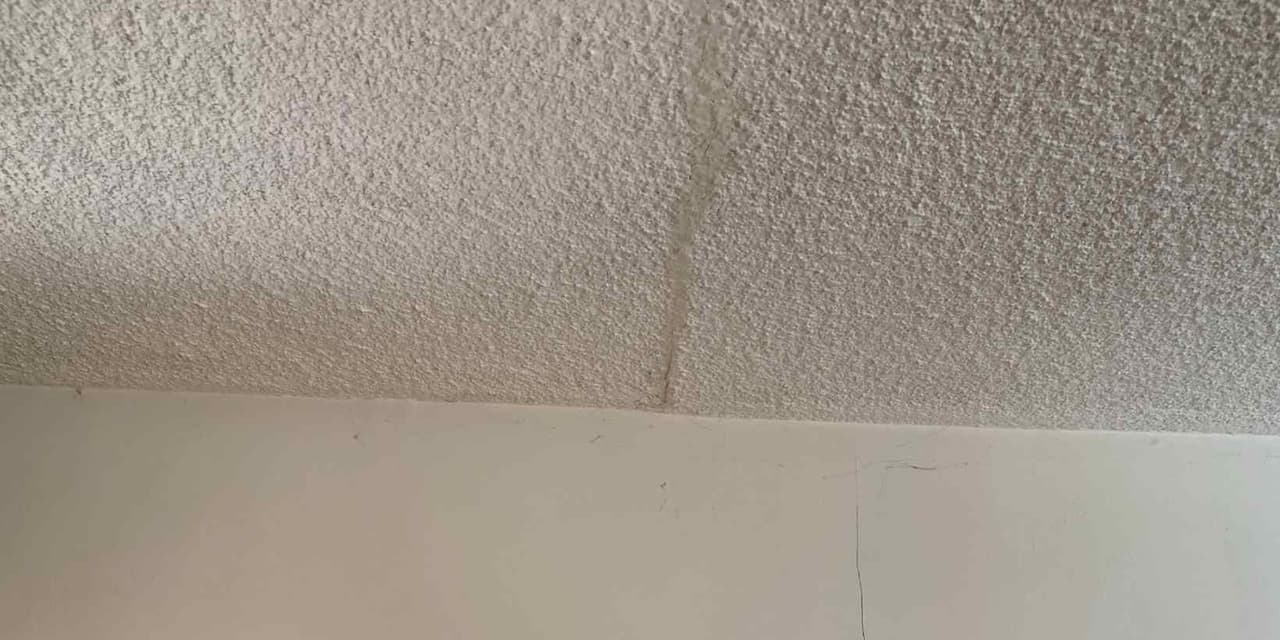
A drywall crack that reopens after a proper patch is almost always a sign that something behind the wall is still moving, not a sign that the patch was done wrong. The patch itself is rigid, so if the framing or the ground beneath the home keeps moving even slightly, the crack reappears along the same line it followed the first time.
Key takeaways
- A drywall crack that comes back after a proper patch usually means something behind the wall is still moving, not that the repair failed.
- Clay soil, uneven settlement, and normal seasonal framing movement are the three most common sources of that movement.
- Cracks that run diagonally from door and window corners, or that reopen at the same spot more than once, are the patterns worth having looked at.
- A lasting fix addresses whatever is moving before the drywall gets repaired again.
- Not every recurring crack points to the foundation. A professional evaluation is how you find out which cause you actually have.

Why Does a Patched Drywall Crack Come Back?
A patched drywall crack comes back when the cause of the original crack is still active, because joint compound and tape are rigid and cannot flex with ongoing movement. When a crack first opens, it follows the path of least resistance through the drywall, usually along a taped seam or the corner of a door or window opening. A patch fills that path but does nothing to stop whatever opened it in the first place. If the wall, the framing behind it, or the ground under the house keeps moving even slightly, the same stress finds the same weak point, and the crack reopens along the same line.
This is different from a drywall crack that never comes back. Those cracks are usually caused by something that already ran its course, such as drywall settling into place during the first year after construction. Once that source of movement stops, a patch holds, because there is nothing left pushing against it.
What Is Actually Moving Behind the Wall?
The movement behind a recurring crack usually traces back to one of three sources: the soil under the home, uneven settlement of the foundation, or seasonal movement in the framing itself.
Clay Soil That Swells and Shrinks
Clay soil acts like a sponge beneath a home. It expands when it absorbs water and contracts as it dries out, and the foundation resting on top of it can move along with those changes. That movement travels up through the framing and into the drywall, which is rigid and has nowhere to go but crack.
Settlement Under One Part of the House
When one section of a foundation settles more than the rest, the framing above it shifts out of level relative to the framing next to it. Drywall spans that difference, so the crack often shows up at a corner, near a door or window, or wherever the framing above it is under the most stress.
Seasonal Framing Movement in a Newer Home
Wood framing continues to season for a period after a home is built, and it also responds to normal changes in humidity and temperature through the year. That movement is usually small, but it repeats every season, and a taped drywall seam that flexes with it can reopen at the same spot each time the weather cycles.
Which Recurring Cracks Point to the Foundation?
Certain crack patterns and locations recur more often when the underlying cause is foundation movement rather than ordinary seasonal settling. The table below describes what each pattern typically suggests, though the description alone is not a diagnosis. It takes an evaluation to confirm the actual cause.
| Crack Pattern | What It Suggests | Does It Commonly Recur? |
|---|---|---|
| Diagonal crack running from a door or window corner | Movement in the framing near that opening | Often, until the source of movement is addressed |
| Stair step pattern in exterior stucco or brick | Uneven settling along that section of the foundation | Often |
| Straight hairline crack in the middle of a flat ceiling or wall | Normal seasonal drywall or framing movement | Sometimes, but it usually stays small |
| Crack that is wider at one end than the other | Settlement happening faster on one side than the other | Often |
| Crack above a door frame that reappears after patching | Frame movement carried through the header above the door | Often |
Cracks at door frames in particular tend to repeat, because the header above a door concentrates stress from any movement nearby. For a broader view of how drywall cracking fits into the larger set of foundation warning signs, see drywall cracking as a foundation symptom.
How Can You Tell Movement From Ordinary Settling?
You cannot reliably tell the difference by looking at the crack alone, which is exactly why a professional evaluation comes before any conclusion about the cause. A homeowner can track useful information in the meantime, such as whether the crack has reopened more than once, whether it is getting wider or longer over time, and whether it lines up with other signs like a door that has started sticking or a floor that feels slightly out of level nearby. That information helps an evaluation move faster, but it does not replace one. Why patching alone does not hold is worth reading if you have already patched the same spot more than once. For a closer look at how cracking connects to settlement specifically, see when cracks point to settlement.
What Does a Lasting Fix Involve?
A lasting fix addresses whatever is moving behind the wall before any drywall gets repaired again, rather than patching over a problem that is still active. Once an evaluation identifies the actual source of movement, the appropriate response depends on what that source turns out to be. Movement tied to settlement is typically addressed with steel piers driven down to more stable soil, which stabilizes the affected section of the foundation. Movement tied to conditions closer to the surface may call for a different approach depending on what the evaluation finds. Only after the underlying movement is stabilized does patching the drywall again make sense, since patching first would mean redoing the same work later. Foundation repair covers the range of approaches Dalinghaus uses once a cause is confirmed.
When Is Patching Actually the Right Answer?
Patching is the right answer on its own when the crack came from something that has already stopped moving, or was never structural to begin with. A hairline crack from a new home settling into place during its first year, a small seam crack from normal seasonal framing movement that has not grown or reappeared with any regularity, and a single crack from a minor bump or vibration are all cases where a straightforward patch is a complete fix. Not every homeowner who calls about a cracked wall needs an extensive repair, and recommending one anyway would not be honest. The way to know which situation you have is the same evaluation that would also catch a movement problem early, so asking does not commit you to anything beyond finding out.
Frequently Asked Questions
Can a small crack from normal home settling turn into a bigger problem later? It depends on what caused it. A crack from normal seasonal or initial settling that has stayed the same size for some time is unlikely to change. A crack that keeps reopening or growing is worth having looked at, since that pattern points to movement that is still active rather than movement that already finished.
Do all recurring drywall cracks mean I need foundation repair? No. Some recurring cracks trace back to seasonal framing movement or drywall installation issues that have nothing to do with the foundation. An evaluation is the only reliable way to tell which cause applies to your specific crack, since more than one cause can produce a similar pattern.
How much movement does it actually take to crack drywall a second time? Very little. Drywall and joint compound are rigid materials, so even small, repeated shifts in the framing behind them are enough to reopen a patched seam. That is part of why a crack can return even when the movement causing it would be hard to notice by eye.
Should I patch a crack myself if it has already come back once? You can, but a second patch will not hold any better than the first one if the underlying movement has not been addressed. If a crack has reopened more than once, an evaluation to identify the cause is a more useful next step than repeating the same patch a third time.
How does Dalinghaus Foundation Repair figure out what is causing a recurring crack? An evaluation looks at the crack pattern, its location, and other signs around the home, such as door and window operation or floor elevation, to identify what is actually moving. From there, the appropriate next step depends on what the evaluation finds, whether that is a straightforward patch or a repair aimed at the source of the movement.
Schedule a free evaluation to find out what is behind a crack that keeps coming back.
Schedule a Free Evaluation
Foundation movement is easier to judge in person than from a photo. Schedule a free evaluation and a Dalinghaus specialist will walk the property with you and explain what the evidence shows.
Written by
Brian Dalinghaus
Co-Founder, Dalinghaus Foundation Repair
Brian Dalinghaus founded Dalinghaus Foundation Repair with his brother Brad in Southern California in 2011. The brothers built the company on a Midwest work ethic and a single standard for every job: Never Settle.
More about Brian