Can Sagging Floors Collapse?
Waiting for your floors to collapse is not a good idea! Sagging floors are not only unattractive but also pose a safety hazard to the stability of your home.
Can Sagging Floors Collapse?
Waiting for your floors to collapse is not a good idea! Sagging floors are not only unattractive but also pose a safety hazard to the stability of your home. A sagging floor indicates that it has lost support and is at risk of collapsing into lower levels of the house. It is crucial to prioritize making repairs and call for help when you notice a shift in your floors. What is causing your floors to sag? Can it be prevented? How can it be fixed?
What Causes Floors to Sag?
A sagging floor can pose safety and structural issues on any level of the home. According to building codes, the allowable threshold for sagging is low. The creaking and groaning noises from the floor may indicate it is deteriorating. It is crucial to identify the cause of the problem, which may stem from various factors, including:
The Age of the Building
Like fine wine, homes can show their age and character, except homes don’t always age as gracefully. As buildings age, their materials can weaken or decline, causing floors to sag.
When a house ages, its foundation may shift, causing the floors to become uneven. This can be a serious issue, making the house unsafe and leading to further damage if left unaddressed.
Improper Load Distribution or Excessive Weight
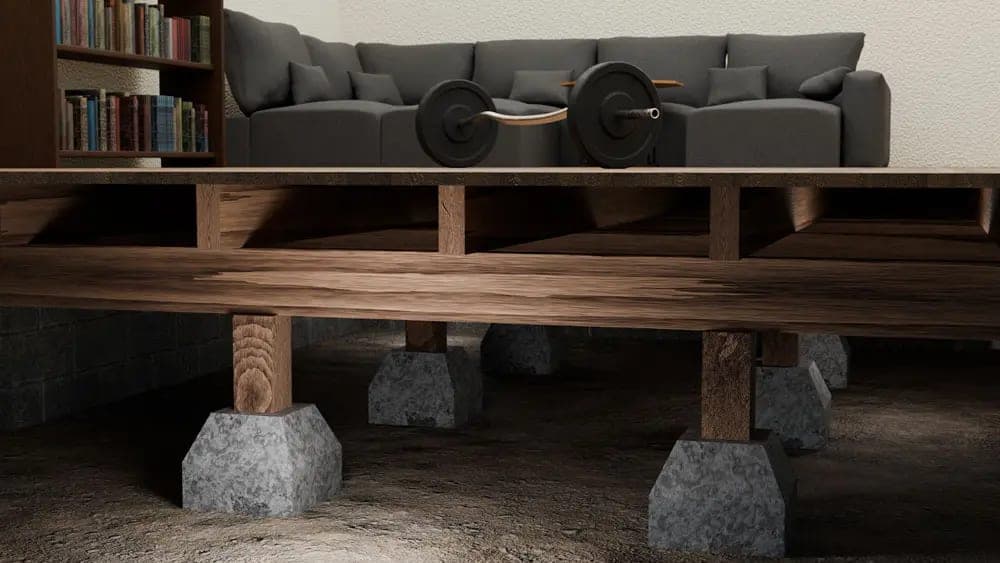
Overloading a floor not designed to support high loads or uneven distribution of heavy furniture can stress floor joists and cause them to bow, crack, or even collapse. That massive book collection or your gym-quality treadmill could do a number on your floors. Too much weight from people standing or jumping in an already weak floor area can also cause your floor to collapse.
Ensure that your floor’s load capacity is appropriate for the intended use and that you avoid exceeding its weight limits. Regular inspections and maintenance of your floor can also help identify and address any issues before they become serious problems.
Water Damage From Humidity and Moisture
Leaks and spills might be part of life, but they’re no friends to your floor joists. Exposure to groundwater or leaky pipes can weaken flooring materials, especially wooden beams, leading to sagging and even the floor collapsing.
Humid environments can also attract wood-eating pests like termites and carpenter ants, speeding up the damage to already warping floor joists. Addressing any moisture or humidity issues as part of foundation repair is crucial to preventing spongy or uneven floors and structural damage to your home.
Poor Structural Support
The most common reason for sagging floors is inadequate structural support. If floor joists bend under the weight of the materials on top of them, the floor will sag.
Having inadequate support in your home can be due to several reasons, such as poor initial installation, a lack of maintenance, or structural changes made to the building over time. In some cases, the original construction may not have included sufficient load-bearing support for the flooring, or the beams may be the wrong size. If load-bearing supports are not installed properly, a floor can collapse.
Fixing Sagging Floors
Repairing sagging floors is about fixing the immediate problem and ensuring the solution is durable and safe. If you notice that your floors are sagging, it is crucial to have a professional evaluate your place. Depending on the assessment, immediate actions such as propping up the floor with temporary supports might be necessary. The inspection will help determine the underlying cause and recommend the appropriate course of action, which could involve:
Stabilizing the Sagging Floor
If the floor joists in your home are weak and unable to support the flooring and furniture, a professional may reinforce them using sister joists.
Installing structural jack posts, or screw jacks, could be the best solution if your floors are sagging due to poor structural design. These support pillars are gradually raised to apply pressure under the sagging beams. This process can be complex, so it is crucial to have a professional with the proper expertise to assist.
Addressing Foundational Issues
If your floors and walls are sagging, it could be due to a foundation issue that requires serious under-the-house surgery. When this is the case, take immediate action to prevent further damage to your home.
One of the most common solutions to sagging is underpinning the foundation, which involves strengthening the foundation by adding support to the existing foundation or excavating and pouring new footings. Underpinning is another more extensive repair that requires the help of a professional. However, if done correctly, it can provide a long-lasting solution to your sagging problem and secure your home’s safety for years.
Preventative Measures to Avoid Sagging and Collapse
It’s essential to take preventative measures to avoid sagging floors that could lead to collapse. These measures may include:
Regular Inspections and Maintenance
Like any relationship, you must regularly check in with your house to ensure your floors stay smooth. It is advisable to have a comprehensive inspection of your home at least once a year. This inspection should involve looking for any signs of damage, including cracks, warping, discoloration, and soft spots. You should also check for signs of moisture, such as mold or mildew, which can indicate water damage.
Proper Load Distribution and Avoidance of Overloading Floors
Evenly distribute heavy items to help prevent cracks and damage due to excessive pressure on specific floor areas. Additionally, you must be aware of your floors’ maximum weight capacity and avoid overloading them. Overloading can cause sagging, cracking, and other types of permanent damage, which can be costly. Your floors will thank you.
Use Sturdy and Durable Materials for Construction
Consider the materials used for the floor joists in your home’s construction to avoid sagging floors. One of the main factors is resistance to moisture, insects, and decay. Choosing the appropriate size beams and treated lumber can protect your floors from damage caused by external factors.
Improving Drainage and Addressing Moisture Issues
To prevent further damage, ensure no water accumulates under the flooring. When water accumulates around the foundation, it can cause the soil to expand and contract, leading to cracks and shifts in the foundation. Over time, these issues worsen, so to prevent this, water needs to be directed away from the foundation through proper drainage systems and grading. Additionally, you can install gutters and downspouts, maintain adequate soil moisture levels, and avoid planting trees and shrubs too close to the foundation.
Getting to the Bottom of Your Sagging Floors
While a sagging floor might not mean your house is about to fold, it’s a sign you shouldn’t ignore. Stay on top of it with regular maintenance and timely repairs. Don’t overlook the signs of sagging floors. Consult professionals to assess and address any issues promptly. Remember, a little care goes a long way to keeping your home safe and sound.
Whether dealing with current issues or aiming to avoid future ones, we understand how distressing it can be to have an unsafe and unleveled house. We offer assistance every step of the way for those located in Southern California, Arizona, and Nevada. Schedule a free evaluation and allow us to help you bring peace of mind and security back to your home.
Schedule a Free Evaluation
Foundation movement is easier to judge in person than from a photo. Schedule a free evaluation and a Dalinghaus specialist will walk the property with you and explain what the evidence shows.