Commercial project, Southern California
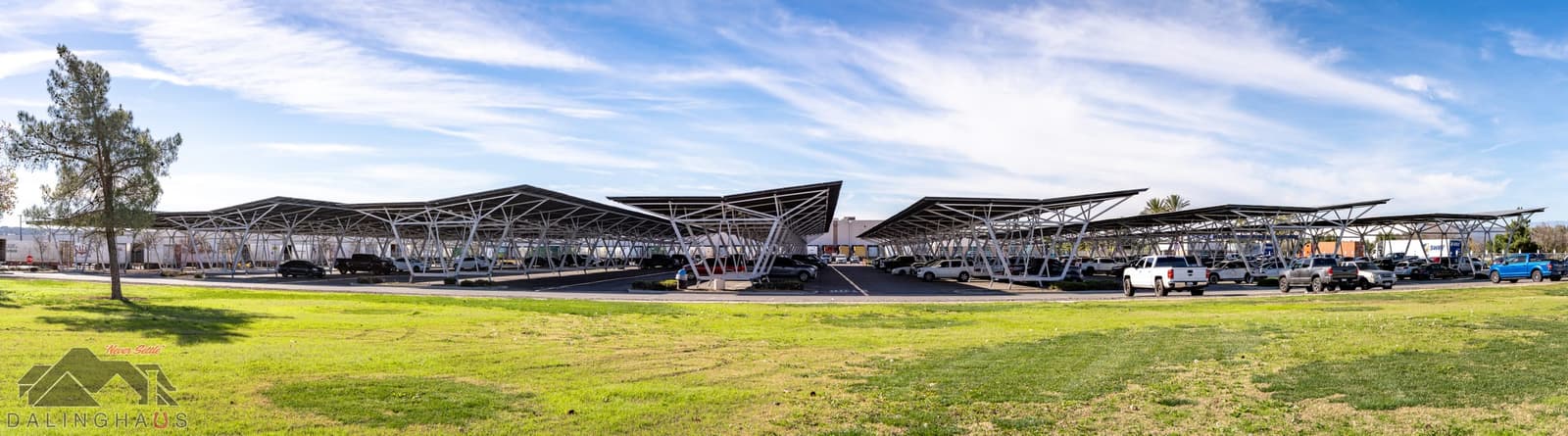
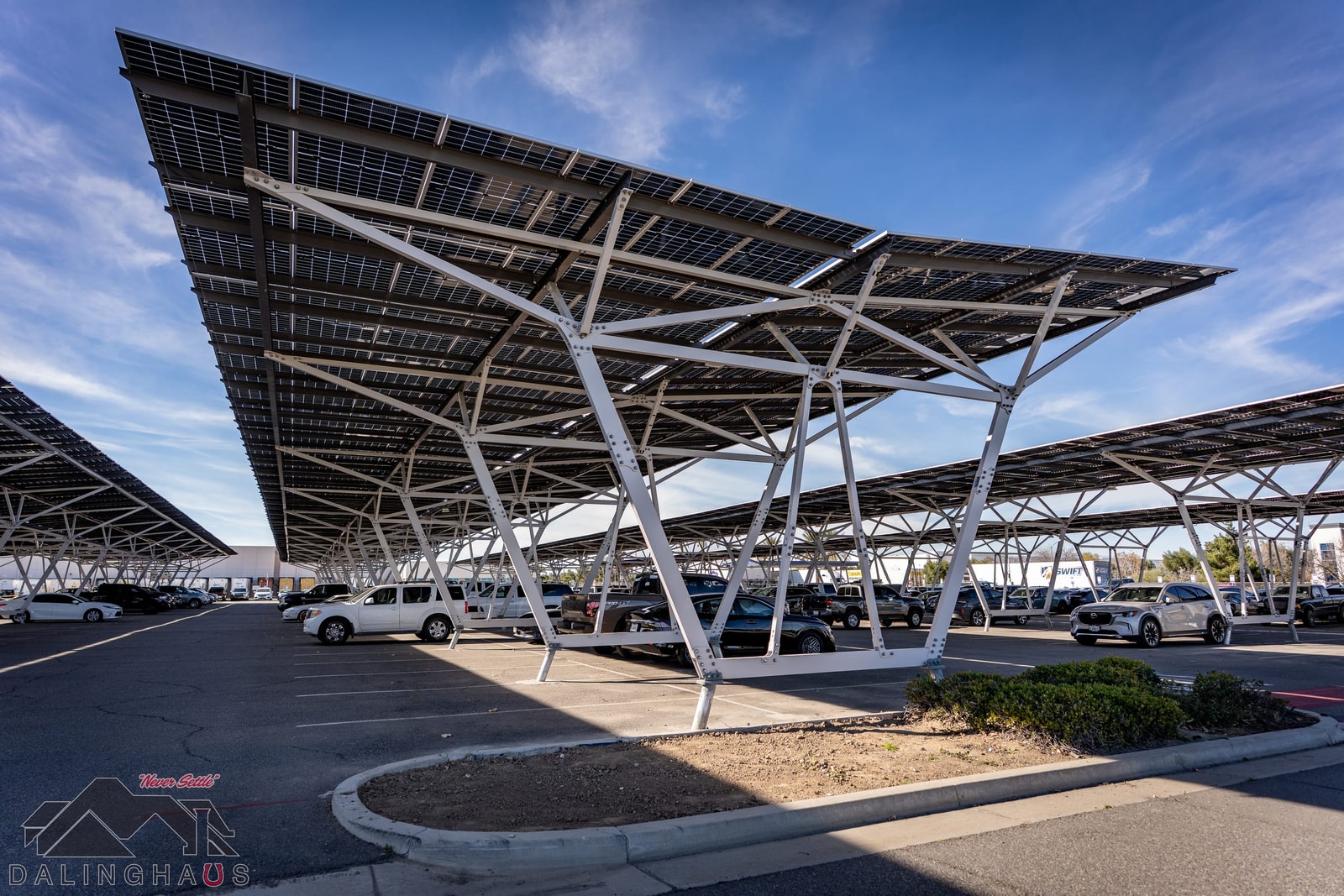
A solar canopy built over a parking lot that never closed.
A solar array spanning a large employer’s staff parking lot, carried on 182 helical piles and installed in four phases so the lot stayed in use throughout.
At a glance
- Location
- Southern California
- Client
- Confidential (NDA)
- Structure
- Solar canopy over a staff parking lot
- Foundation
- 182 helical piles
- Phasing
- Four phases, lot never closed
- Design basis
- Pull tested helical configurations
- Scope
- Everything up to panel install and wiring
From the air
Drone pass over the finished canopy
01
The challenge
The array had to cover the staff parking lot of a working distribution facility, and that lot is where the employees park. Closing it was never on the table. A foundation system that needed excavation, spoils hauled off site and concrete left to cure would have taken rows of stalls out of service for weeks at a time.
The loads were the other half of the problem. Wind governs a solar array of this span, and uplift on a canopy is not something to estimate from a table when the whole field depends on it. The piles themselves were large, and large piles mean large equipment working in a lot with cars still in it.
02
The approach
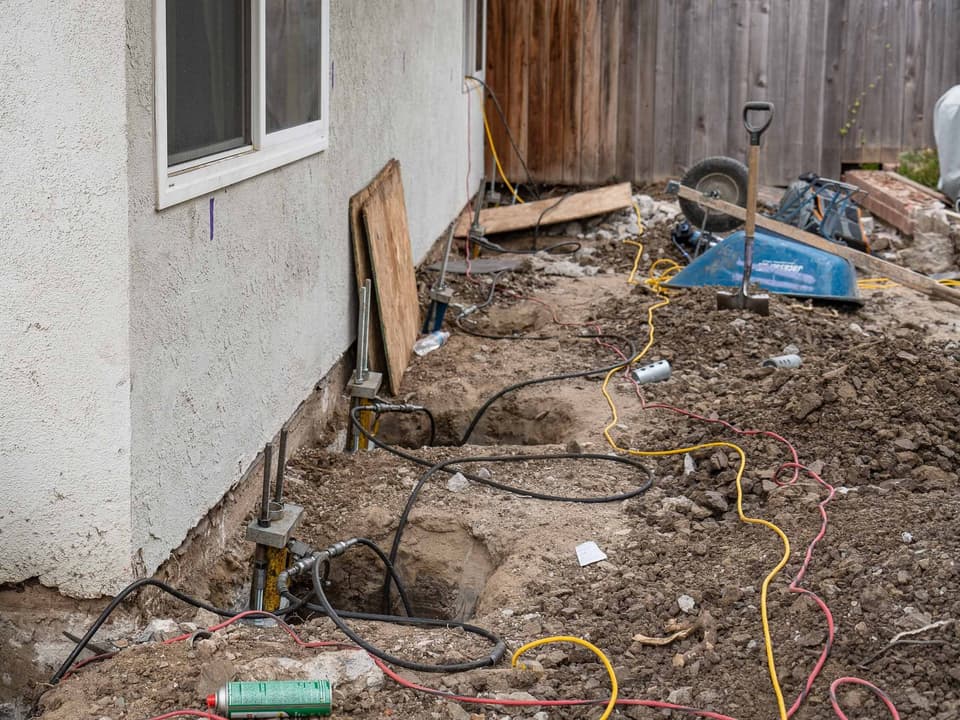
We pull tested different helical configurations on site and used the results to settle on a design that met the required loads, rather than starting the field work on an assumption. Helical piles carry load the day they go in, so there was no cure time between the foundation and the steel.
The work was broken into four phases. Each phase blocked off a small section of the lot, finished it, and handed it back, so at no point was more than a portion of the parking out of service. The drive rigs worked inside those sections and moved on with them.
03
The result
182 helical piles went in. Our crews handled prep, marking and breaking out the pile locations, fabricating the pile caps, installing the piles, erecting the array structure and assembling the canopy itself. The panel installation and wiring were the next trade’s scope, and we handed a completed structure to them.
The lot stayed open from the first phase to the last. The employees who park there kept parking there.
Crew
Superintendent James Rodriguez. Foreman Joe Delgado. Crew: Koehn Dalinghaus, Mark, Isaac, Branden.
Planning a commercial pile scope?
Send the racking supplier reaction loads, the foundation plan and the geotechnical report, and the phasing goes into the proposal rather than being sorted out on site.
From the site
From pull test to finished field.
What this means for your project
Bring us the load table and the site.
Solar carports, canopies and battery storage pads run on the same question this project ran on: what does the pile have to resist, and can the lot stay open while it goes in. Send the racking supplier reaction loads, the foundation plan and the geotechnical report, and the phasing goes into the proposal rather than being sorted out on site.
We work to the engineer of record. Torque, depth and location are logged pile by pile, so capacity is a record rather than a claim.