
Your house drives the fix into the ground.
Push piers borrow the weight of your home to press galvanized steel sections down through failing clay until they stand on soil that can actually hold, then hand the load back to the steel.

Let's take the first step toward solid ground.
A local specialist will evaluate your foundation, walk you through the findings, and send a clear estimate. No cost, no pressure.
What to know about push piers, and when it's the right call.
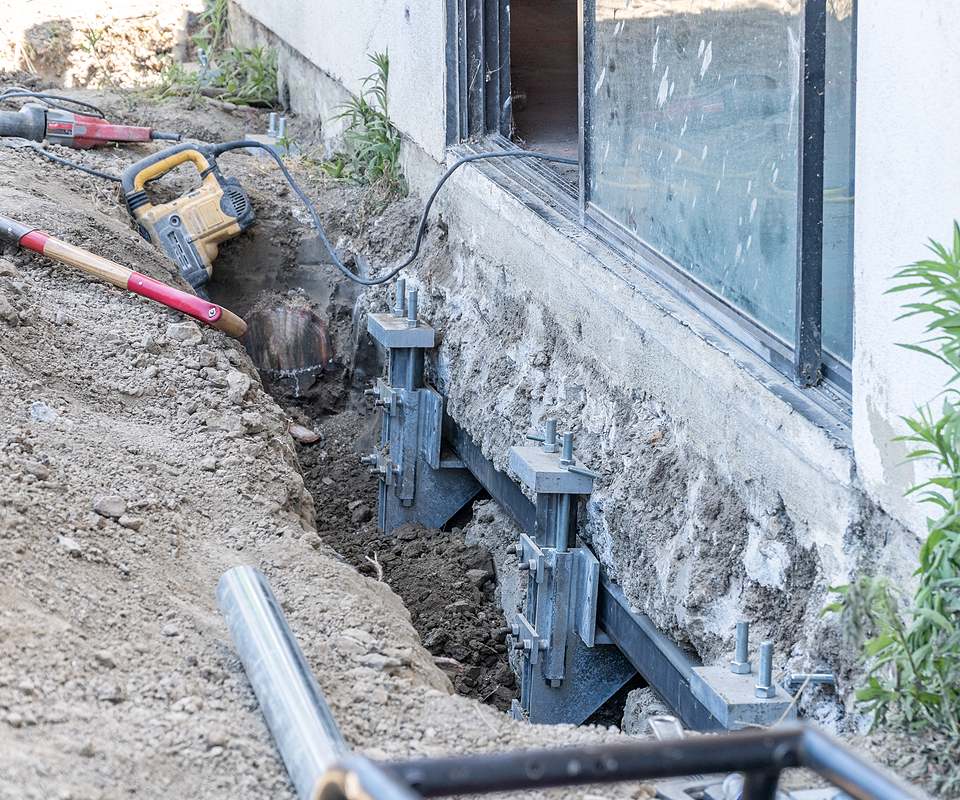
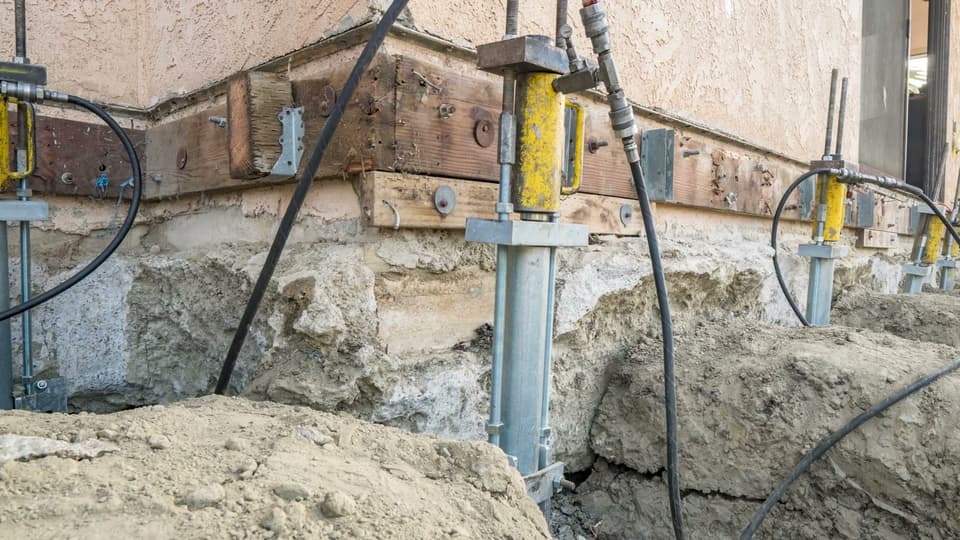
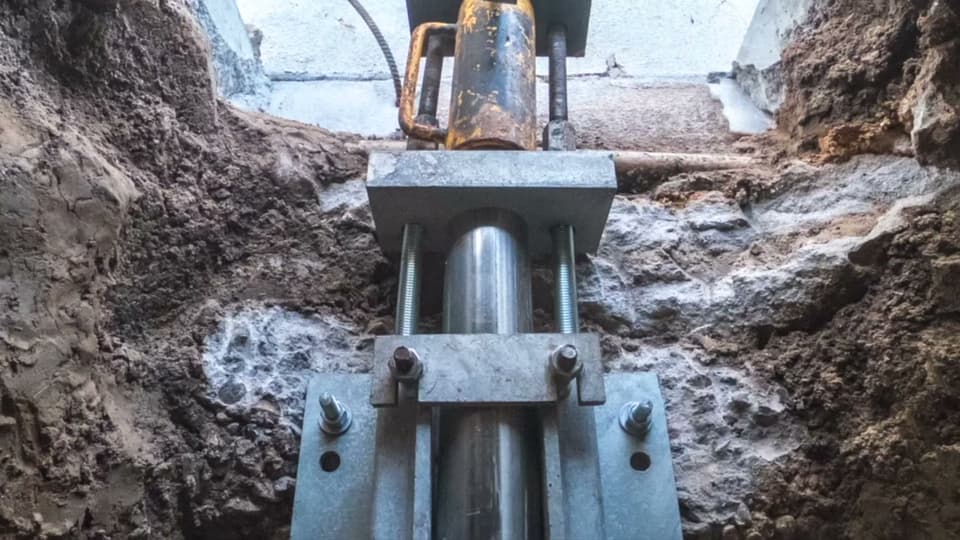
Push piers work on a simple trade: the house pushes the pier down, then the pier holds the house up. Crews expose the footing, bolt a steel bracket to it, and use a hydraulic ram braced against that bracket to press pier sections into the ground one after another. The weak soil that let your home settle offers little resistance, so the pier slides through it. When the tip reaches dense, load bearing strata, the deeper soil layers that hold firm year round, resistance climbs sharply, and the hydraulic pressure gauge shows exactly how much force the pier can take, measured against the weight of the structure itself. Once every pier in the plan has proven its capacity, the crew transfers the home's weight from the failed soil onto the steel. Where the structure allows, we lift toward level during the transfer, which often closes cracks that settlement opened. The galvanized coating protects the steel below grade for the long haul.
The symptoms that usually lead to push piers are on the foundation repair problem signs page, alongside the other signs that point to the same underlying cause.
How we install push piers.
Free evaluation and pier plan
We take floor elevation measurements and inspect the foundation to confirm settlement is active, decide whether push piers are the right tool, and map how many piers the footing needs. You get the findings in writing.
Expose the footing
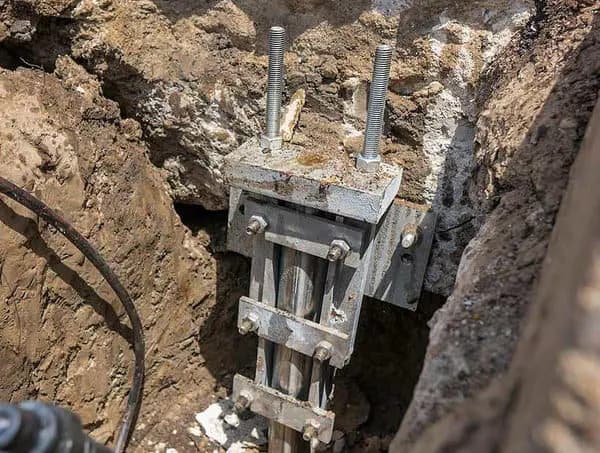
The crew excavates a small pit at each pier location to reach the footing, keeping the digging tight and protecting landscape where possible.
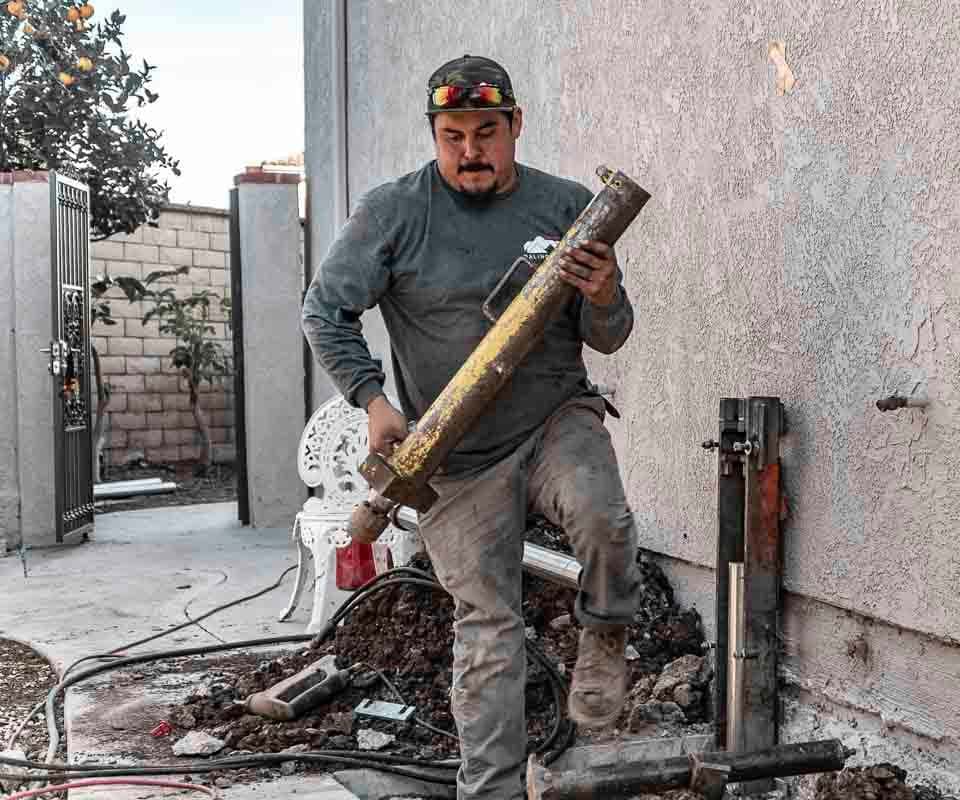
Bracket and drive
A steel bracket is secured to the footing, and hydraulic rams press galvanized pier sections down through the weak soil, using the home's weight as the reaction force.
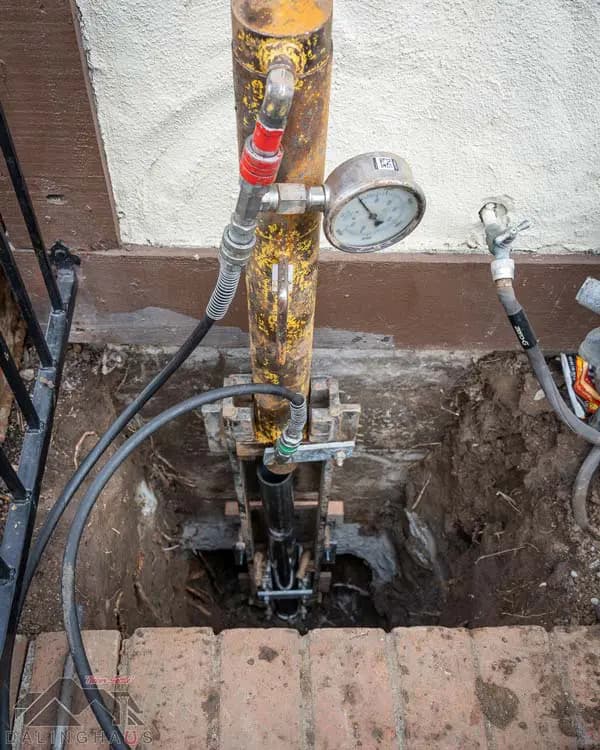
Prove capacity, transfer the load
Driving continues until the pressure readings show each pier standing on soil that can carry more than the structure demands. The home's weight then moves from failing soil onto the steel, with lift toward level where the structure safely allows.
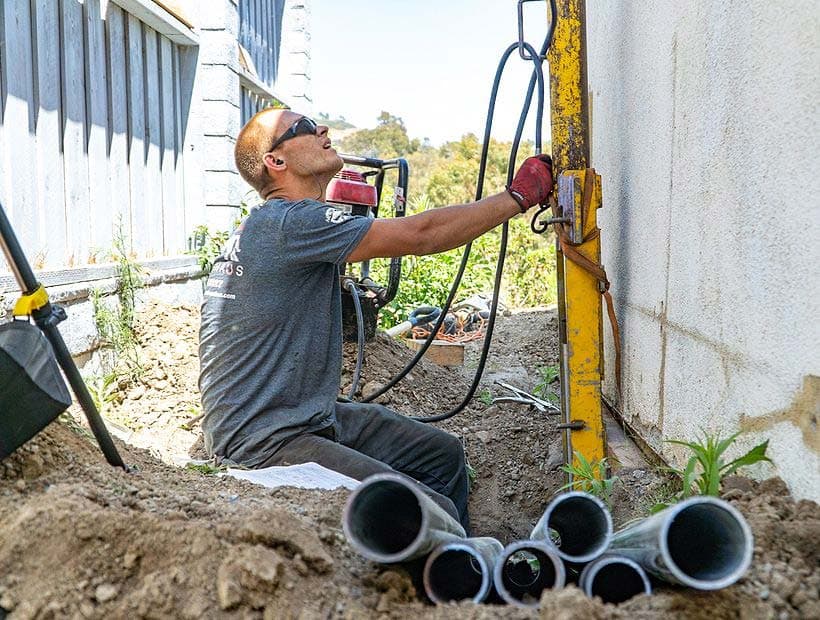
Backfill and verify
Excavations are backfilled, the site is cleaned, and final elevations are compared against the starting measurements so you can see what changed.
Your home proves every pier.
Steel pipe is pushed straight down beside your footing, section after section, until it hits ground solid enough to push back harder than your house weighs. Then your home is rested on it.
Push Piers on our job sites.
Photos from our own crews and projects. Swipe or use the arrows to see more.
Push Piers on a real project.
Push piers borrow the weight of your home to press galvanized steel sections down through failing clay until they stand on soil that can actually hold, then hand the load back to the steel.


Care and expertise from a team that's been doing this since 2011.
When the fix is push piers, the installer matters as much as the method. Dalinghaus crews handle foundation, concrete, and crawl space work across California, Arizona, and Nevada, and nothing else.
Foundation repair, concrete leveling, and crawl space repair are our entire focus. Not a sideline.
More than 2,000 projects on the clay and desert soils of California, Arizona, and Nevada since 2011.
CSLB License #983851 in California, ROC #330307 in Arizona, and License #0089738 in Nevada. Look us up with the state before we ever set foot on your property.
Warranty terms come in writing with every proposal, and the terms that apply to your job are stated in that job's paperwork. Ask your project specialist during the free evaluation.


Answers to common questions about Push Piers.
Don't see your question here? Our team is happy to help. Reach out anytime.
They are pressed down hydraulically, section by section, using the weight of your home as the anchor for the ram. Weak soil gives way easily, so the pier keeps traveling until it meets strata dense enough to resist the full driving force. The hydraulic gauge readings during driving are the proof that each pier reached competent ground.
Other foundation repair solutions we install.
Every solution is engineered for a specific soil profile and failure mode. Browse the full toolkit.
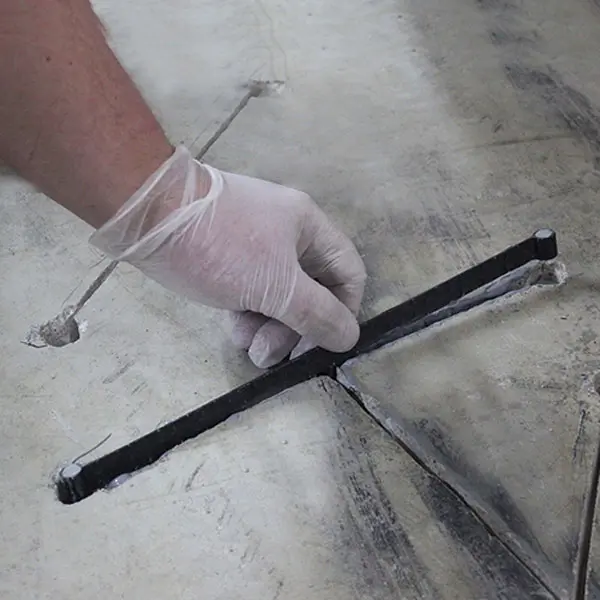
Carbon Fiber Reinforcement
Carbon fiber straps bond to a stressed foundation wall and refuse to stretch, so the wall that was slowly losing to soil pressure simply stops moving.
Learn more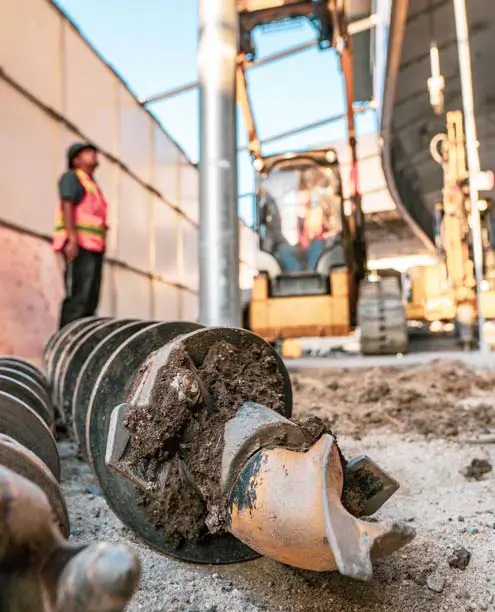
Deep Foundation Systems
Deep foundation systems skip the surface soil entirely and stand your structure on strata that stopped moving long ago, with each element proving its capacity as it goes in.
Learn more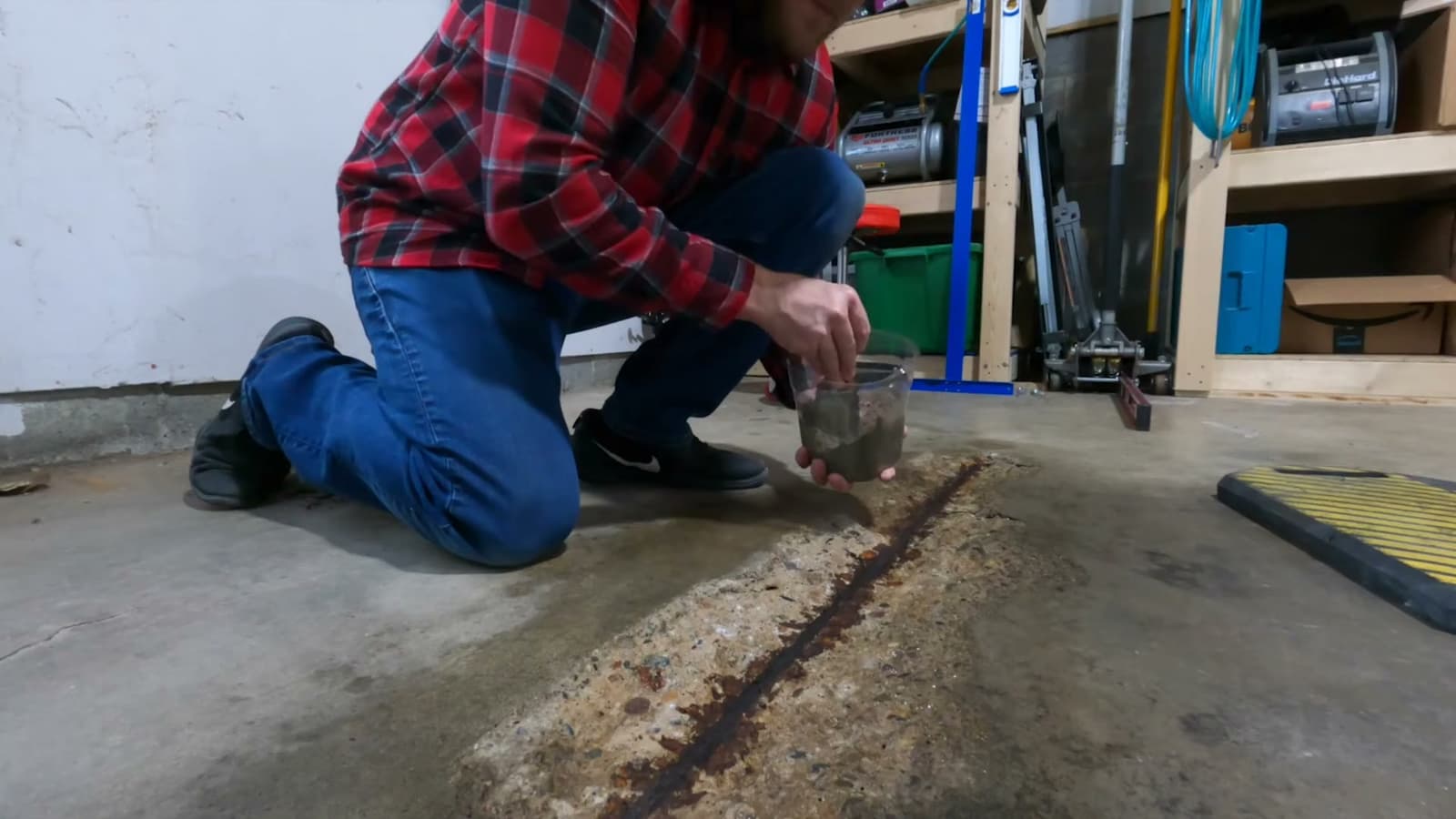
Epoxy & Polyurethane Crack Injection
Epoxy welds a structural crack back into one piece; polyurethane chases water through a wet one and seals it shut. Choosing correctly between them is most of the repair.
Learn more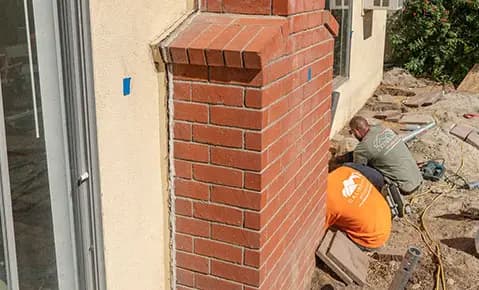
Foundation Underpinning
Underpinning does not patch a settling foundation, it reaches underneath and hands the load to soil that stopped moving long before your house was built.
Learn more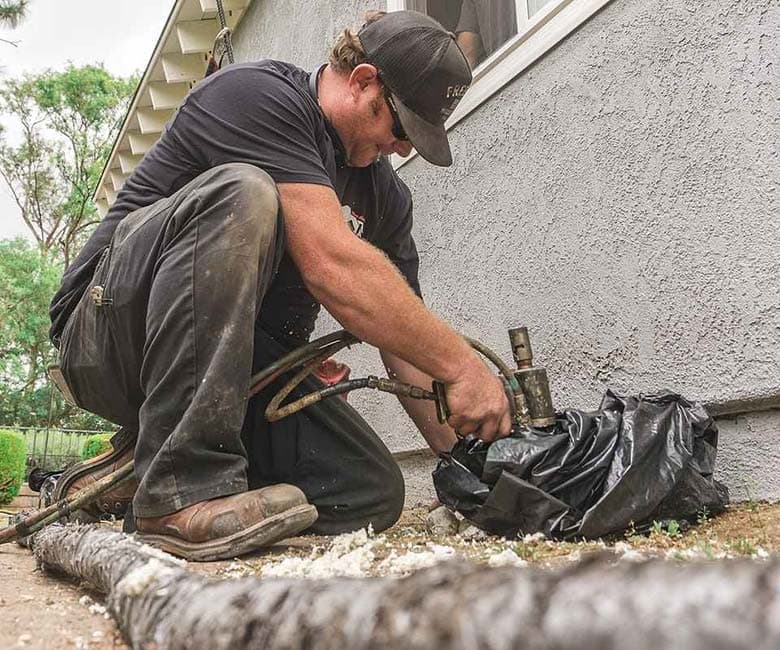
Grout Injection (Chemical Grouting)
Chemical grouting injects grout directly into weak, loose ground, bonding the particles into a soil that can finally carry what sits on it, no excavation required.
Learn more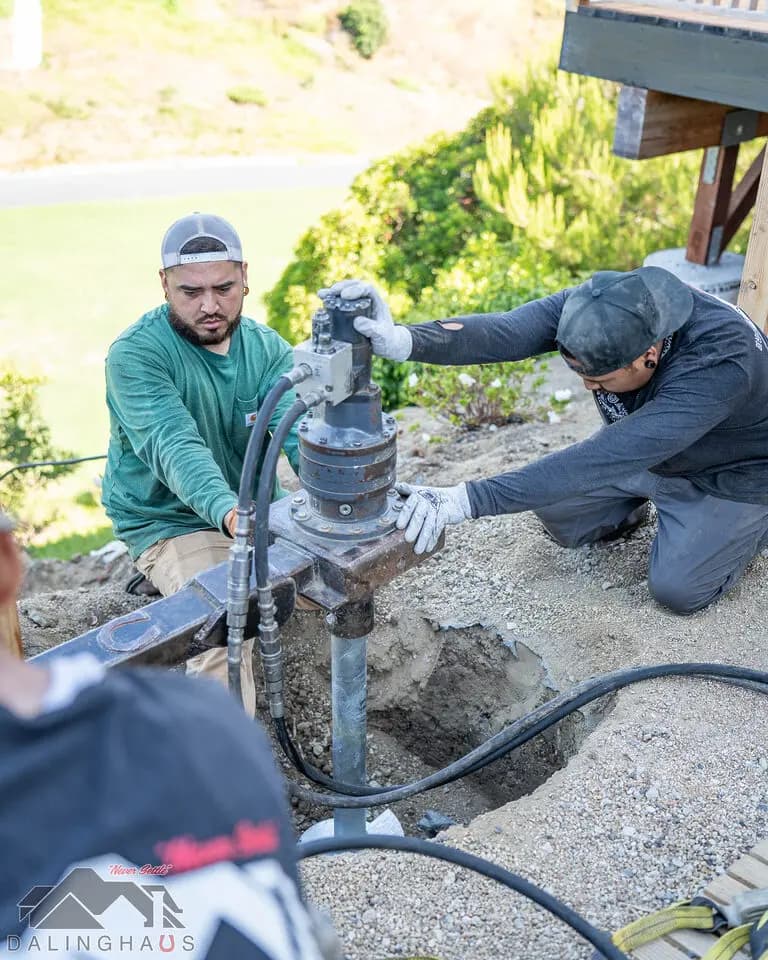
Helical Deck Piers
Helical deck piers screw galvanized steel down past the surface clay that heaves and shrinks with the seasons, so your deck stands on ground that has stopped arguing with the weather.
Learn moreFrom free evaluation to installed push piers.
How a push piers project moves from diagnosis to completed installation.
Schedule your free evaluation.
A local specialist visits your home, evaluates the foundation, and answers your questions on site. No cost, no obligation.
Receive an estimate based on your needs.
We provide a clear, written estimate with a scope of work tailored to your home's specific issues.
Get your repairs.
Our crews complete the work on schedule, with the findings and scope in writing from the first visit.

Get the Free Foundation Repair Guide
Most foundation problems show early signs. This guide shows you what to look for, what can cause it, and how a lasting repair works, before you call anyone.
- A room by room checklist to walk your home with
- Why soil moves homes in Southern California, Arizona and Nevada
- How piers, foam injection and lifts actually work
- What a clear written proposal should include
More than 1,000 Google reviews across our offices, averaging 4.9 stars.
Before you choose who installs your push piers, read how homeowners across California and Arizona rate our work.
Start with a free evaluation.
Share a few details and a local specialist will follow up as soon as possible to set your evaluation.
- A local foundation specialist on site
- A complete walk-through of the findings
- A clear written estimate at no cost
- No obligation, no pressure
Not sure which service you need?
A free evaluation covers all of it: one visit, clear findings, written estimate.