
Clay mineralogy
Certain clay minerals absorb water between their particle layers and physically expand, then contract as they dry. Soils rich in these clays change volume dramatically with moisture.
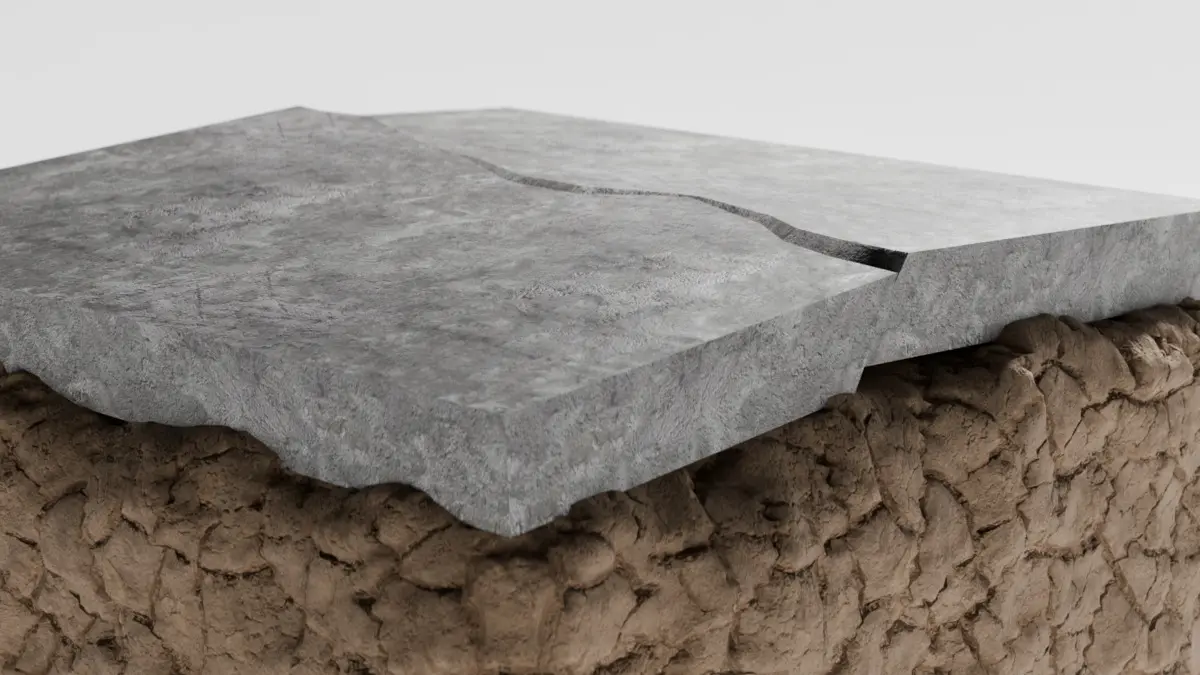
Clay that swells when wet and shrinks when dry is the engine behind most foundation damage in the Southwest. Understanding it explains almost everything else.

A local specialist will evaluate your foundation, walk you through the findings, and send a clear estimate. No cost, no pressure.
Expansive soil is clay rich ground that swells when it absorbs water and shrinks as it dries, and that cycle drives most foundation damage in the Southwest. It is not a symptom you see; it is the cause behind the symptoms you do. The clay is made of microscopic plate shaped particles that absorb water between their layers, and when they do, the soil physically grows, swelling with enough force to lift slabs, push walls, and rack a wood framed house. When the moisture leaves, the soil shrinks back, and the foundation that rode up now rides down, rarely evenly. A home on expansive soil is effectively floating on a material that changes size with the weather, and the damage vocabulary is familiar: drywall and stucco cracks that open and close with the seasons while trending worse, doors that stick in some months and swing free in others, slab cracks, sloping floors, stair step cracking in masonry, and gaps at ceilings and baseboards. What makes expansive soil distinctive is the rhythm. Damage driven by it breathes with the moisture calendar, worsening after wet winters or during deep droughts, and it concentrates wherever moisture is uneven: the heavily irrigated side of a house versus the dry side, the corner near a downspout, the zone over a slow leak. Southern California, Arizona, and Nevada are heavily mapped with these clays, which is why foundation work here is less about fixing concrete and more about managing the relationship between a house, its water, and a soil that refuses to hold still.
For the repair side of this, the foundation repair solutions page lists every method Dalinghaus installs, including the ones that fix problems other than expansive soil.
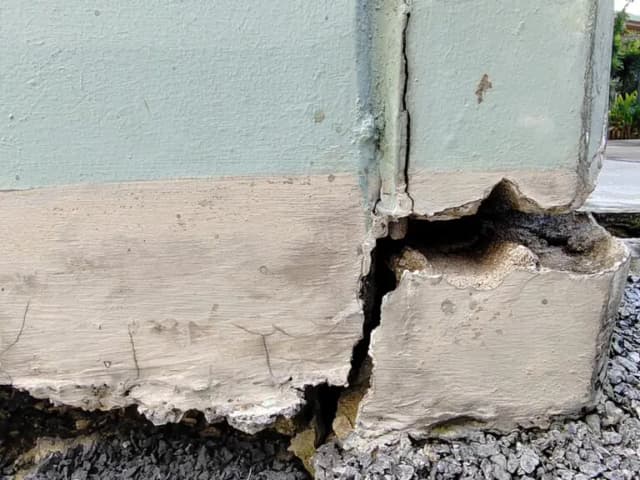
Certain clay minerals absorb water between their particle layers and physically expand, then contract as they dry. Soils rich in these clays change volume dramatically with moisture.
Wet winters swell the soil and long dry seasons shrink it, so foundations on expansive clay move up and down a little every year, and never quite evenly.
Irrigation on one side, a downspout at one corner, or a leak under one room wets the clay unevenly, and uneven swelling is what actually damages structures.
Homes built before modern soil practices, or where the clay's potential was underestimated, sit directly on soil that was always going to move under them.
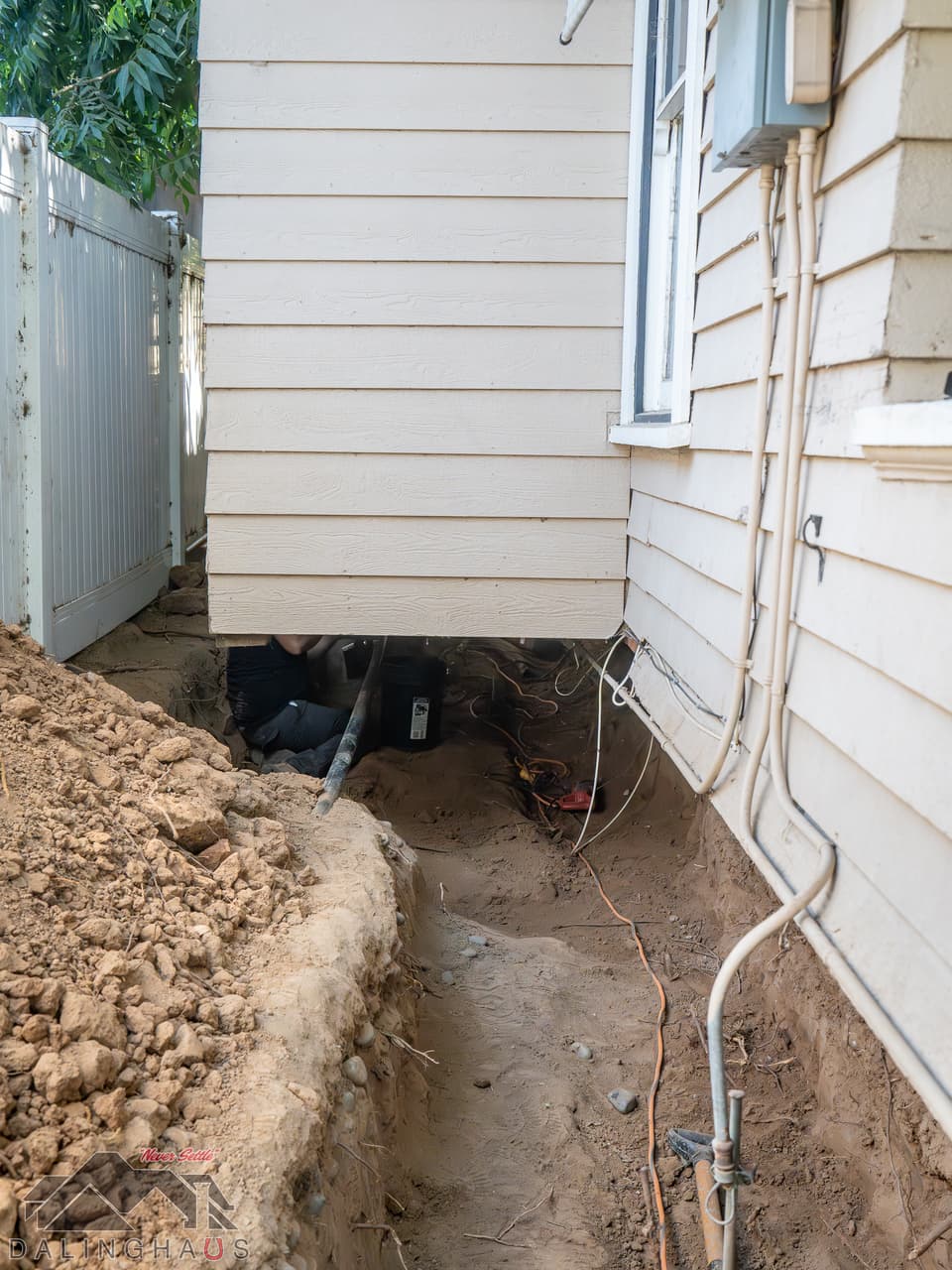
Solving expansive soil means addressing the underlying soil, pressure, or settlement cause. Not just patching the visible damage. Below are the engineered solutions we install most often for this symptom in California, Arizona, and Nevada homes.
If your home is showing expansive soil, the team you call matters. Dalinghaus crews handle foundation repair and related structural work across California, Arizona, and Nevada, and nothing else.
Foundation repair, concrete leveling, and crawl space repair are our entire focus. Not a sideline.
More than 2,000 projects on the clay and desert soils of California, Arizona, and Nevada since 2011.
CSLB License #983851 in California, ROC #330307 in Arizona, and License #0089738 in Nevada. Look us up with the state before we ever set foot on your property.
Warranty terms come in writing with every proposal, and the terms that apply to your job are stated in that job's paperwork. Ask your project specialist during the free evaluation.


Don't see your question here? Our team is happy to help. Reach out anytime.
Soil rich in clay minerals that absorb water and physically swell, then shrink as they dry. The volume change is powerful enough to lift and drop foundations, and because moisture is never perfectly even under a home, the movement is never even either. That unevenness, not the movement itself, is what cracks structures.
How a repair moves from free evaluation to completed work once expansive soil is diagnosed.
A local specialist walks the areas showing expansive soil, measures what is moving, and answers your questions on site. No cost, no obligation.
The method is matched to the cause behind the expansive soil, with scope and pricing in writing. No pressure in either direction.
A Dalinghaus crew corrects the movement behind the expansive soil, and leaves the site cleaner than we found it.
Most foundation problems show early signs. This guide shows you what to look for, what can cause it, and how a lasting repair works, before you call anyone.
Before you call anyone about expansive soil, read how homeowners across California and Arizona rate our work.
Share a few details and a local specialist will follow up as soon as possible to set your evaluation.
A free evaluation pins down the cause: one visit, clear findings, written estimate.