
Hydrostatic pressure
Rain, irrigation, and tidal lag leave water trapped behind the wall. When drainage cannot relieve it, that water pushes the wall outward with enormous, patient force.

Bowing or leaning means the load behind the wall has outgrown what is holding it. Here is what drives the movement and how it gets stopped.

A local specialist will evaluate your foundation, walk you through the findings, and send a clear estimate. No cost, no pressure.
A healthy seawall stands straight. When a section starts to curve outward or the whole wall tilts toward the water, the lateral pressure behind it, from saturated soil and trapped groundwater, has exceeded what the wall and its anchors can resist. This is the sign to take most seriously, because a leaning wall is a structural failure in progress, not a cosmetic complaint. The physics are unforgiving: as the wall rotates, its geometry gets weaker, joints and the cap open up, more water enters, more soil escapes, and the pressure imbalance grows. Movement that took years to reach a visible lean can finish the job in a few storm cycles. The usual drivers are hydrostatic pressure from poor drainage or clogged weep holes, and the quiet failure of the anchor rods that were installed to hold the wall back, which corrode in the marine environment until they stretch or snap. Sight down the wall line from one end, or hold a level against the face. If you can see the lean without instruments, the wall is asking for help now, and an evaluation with real measurements is the next step. A leaning wall is fighting pressure it can no longer match, so the repair adds capacity and removes load. Helical anchors driven to verified torque tie the wall back into stable ground, void filling injection restores the soil the movement disturbed, and drainage relief bleeds off the trapped groundwater doing the pushing. Start with a measured lean assessment so the repair is sized to numbers rather than impressions.
For the repair side of this, the seawall repair solutions page lists every method Dalinghaus installs, including the ones that fix problems other than bowing or leaning seawall.
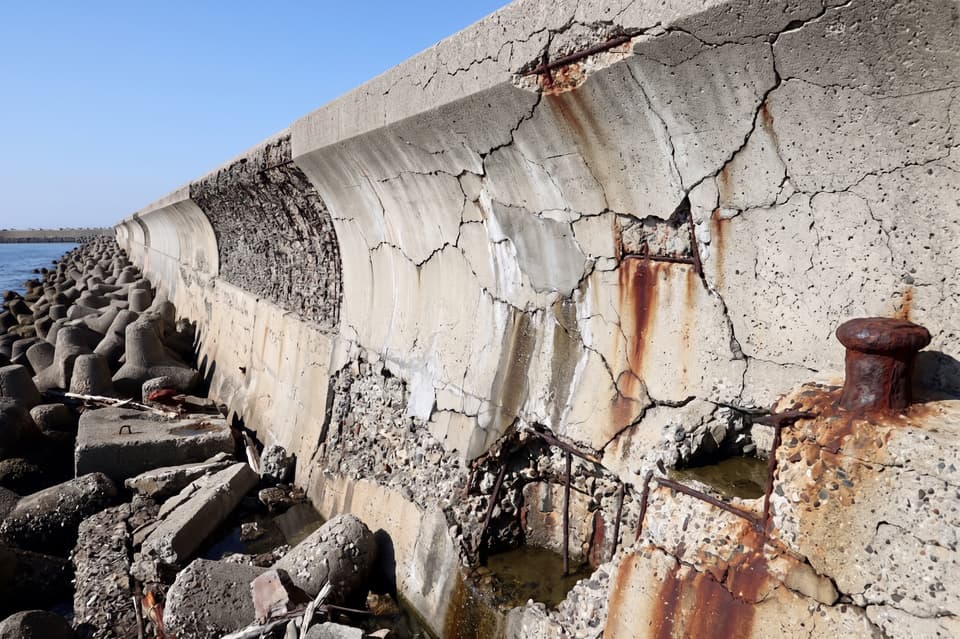
Rain, irrigation, and tidal lag leave water trapped behind the wall. When drainage cannot relieve it, that water pushes the wall outward with enormous, patient force.
Many walls depend on buried steel anchors for lateral restraint. Saltwater corrodes them over the years, and when they stretch or snap, the wall starts to rotate.
Soil behind the wall gets heavier and pushes harder when saturated. Each wet season leans on the wall a little more than the structure was designed to take.
Weep holes exist to let water out. When they clog with soil or marine growth, the pressure they were relieving builds against the wall instead.
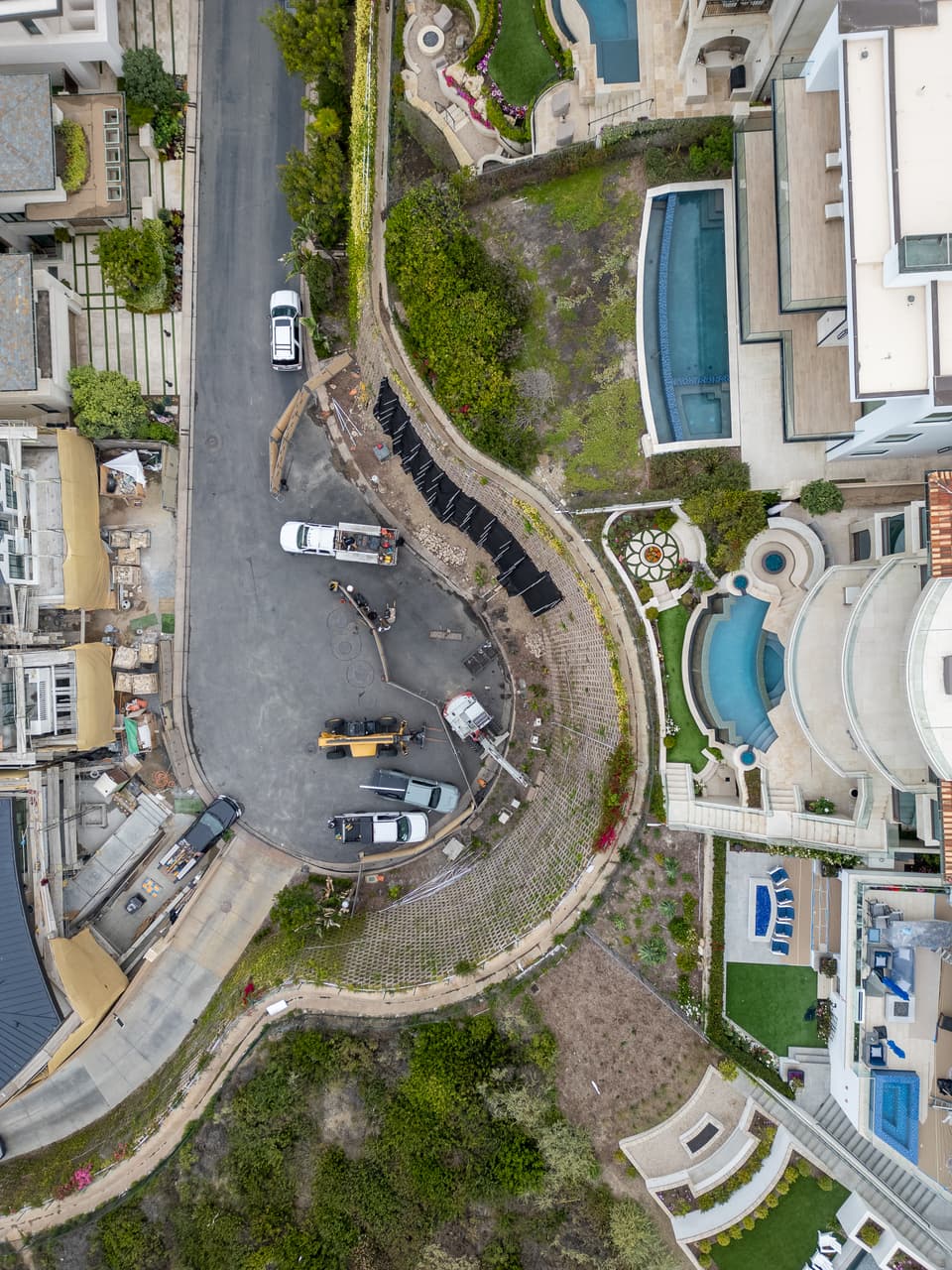
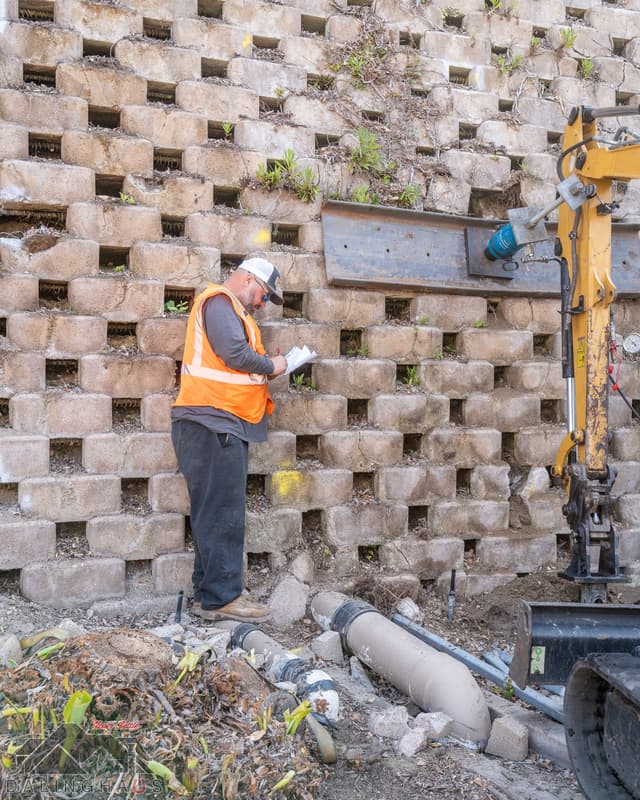
Solving bowing or leaning seawall means addressing the underlying soil, pressure, or settlement cause. Not just patching the visible damage. Below are the engineered solutions we install most often for this symptom in coastal California homes.
If your home is showing bowing or leaning seawall, the team you call matters. Dalinghaus crews handle seawall repair and related structural work across coastal California, and nothing else.
Foundation repair, concrete leveling, and crawl space repair are our entire focus. Not a sideline.
More than 2,000 projects on the clay and desert soils of California, Arizona, and Nevada since 2011.
CSLB License #983851 in California, ROC #330307 in Arizona, and License #0089738 in Nevada. Look us up with the state before we ever set foot on your property.
Warranty terms come in writing with every proposal, and the terms that apply to your job are stated in that job's paperwork. Ask your project specialist during the free evaluation.


Don't see your question here? Our team is happy to help. Reach out anytime.
Any lean you can see by eye deserves an evaluation, because walls fail by rotating and the process accelerates as geometry weakens. The honest threshold is not a number you can eyeball; it comes from measuring the wall, the soil, and the anchors together, which is what the free evaluation does.
How a repair moves from free evaluation to completed work once bowing or leaning seawall is diagnosed.
A local specialist walks the areas showing bowing or leaning seawall, measures what is moving, and answers your questions on site. No cost, no obligation.
The method is matched to the cause behind the bowing or leaning seawall, with scope and pricing in writing. No pressure in either direction.
A Dalinghaus crew corrects the movement behind the bowing or leaning seawall, and leaves the site cleaner than we found it.
Before you call anyone about bowing or leaning seawall, read how homeowners across coastal California rate our work.
Share a few details and a local specialist will follow up as soon as possible to set your evaluation.
A free evaluation pins down the cause: one visit, clear findings, written estimate.