

Sun and age breaking down joint filler
UV exposure and heat dry joint material out until it cracks, shrinks, and pulls away from the concrete edges. In this region, filler usually fails long before the slabs do.
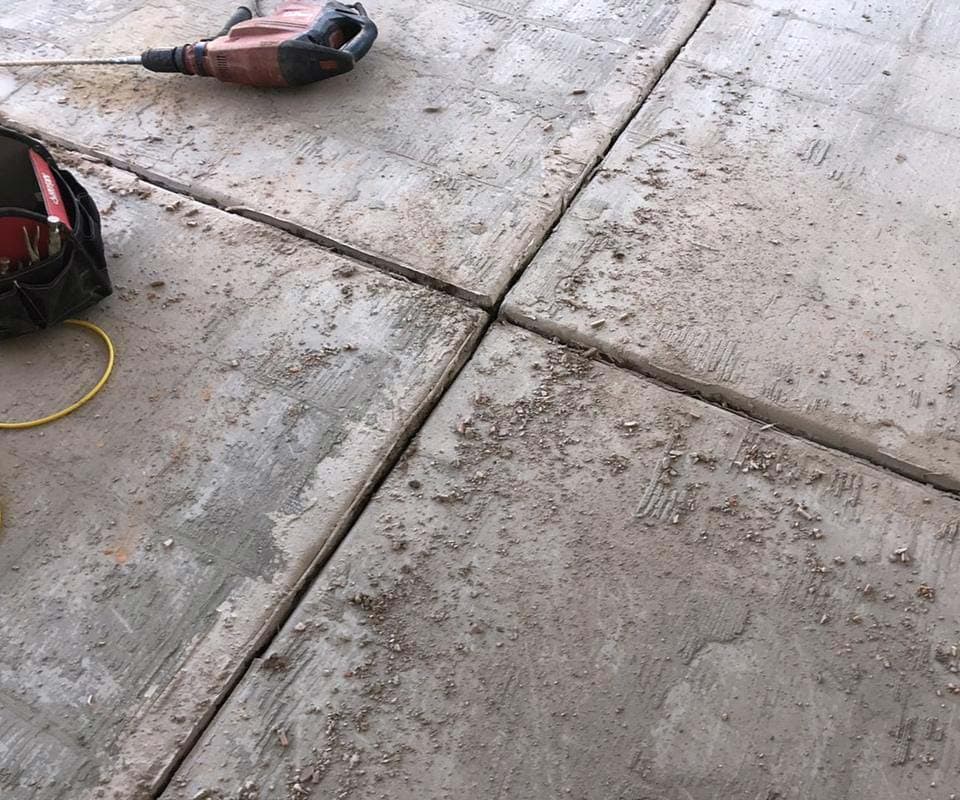
A joint's whole job is to absorb movement and keep water out. When the filler cracks or pulls away, both jobs stop getting done. Here is what happens next.

A local specialist will evaluate your foundation, walk you through the findings, and send a clear estimate. No cost, no pressure.
Expansion joints are the deliberate gaps built into concrete so slabs can grow and shrink with temperature without cracking each other. The joint filler has two jobs: flex with that movement, and keep water from reaching the soil below. When the filler dries out, cracks, or pulls away from the concrete edge, both jobs fail at once. You will see cracked or crumbling filler lines, gaps where the material has separated from the slab, weeds or debris colonizing the joint, and, as the failure matures, secondary problems arriving on schedule: slab edges chipping where panels now press or grind against each other, sunken sections where water slipped through the open joint and eroded the base, and cracks spreading from the joint into the slab field. In California, Arizona, and Nevada the sun does most of the damage, baking the flexibility out of joint material years before the concrete around it wears out, while big daily temperature swings in the desert markets work the joints harder than almost anywhere. Failed joints are one of the cheapest concrete problems to fix and one of the most expensive to ignore, because the joint is the front door for the water that causes settlement.
For the repair side of this, the concrete repair solutions page lists every method Dalinghaus installs, including the ones that fix problems other than cracking expansion joints.
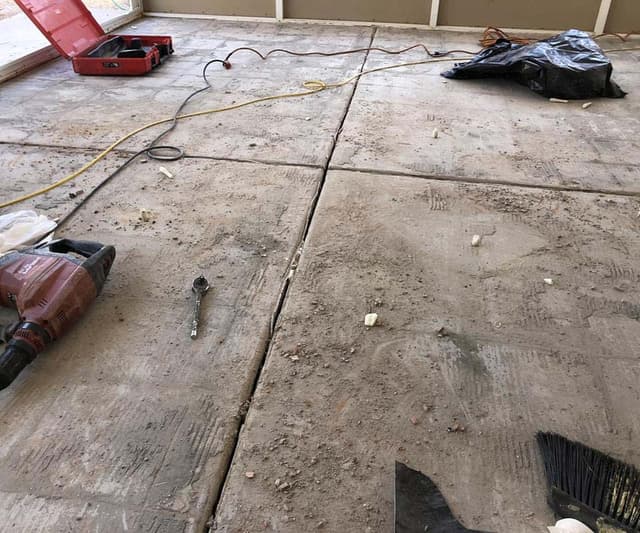
UV exposure and heat dry joint material out until it cracks, shrinks, and pulls away from the concrete edges. In this region, filler usually fails long before the slabs do.
Concrete expands in heat and contracts at night, and desert temperature swings make that a daily workout. Joints without enough flexibility left simply tear.
Joints that are too far apart, too shallow, or poorly bonded cannot absorb the movement they were built for, so the concrete cracks beside them instead.
Once the seal fails, every rain and rinse sends water through the joint to erode the base beneath the adjacent slabs, which is how a joint problem becomes a settlement problem.
Solving cracking expansion joints means addressing the underlying soil, pressure, or settlement cause. Not just patching the visible damage. Below are the engineered solutions we install most often for this symptom in California, Arizona, and Nevada homes.
If your home is showing cracking expansion joints, the team you call matters. Dalinghaus crews handle concrete repair and related structural work across California, Arizona, and Nevada, and nothing else.
Foundation repair, concrete leveling, and crawl space repair are our entire focus. Not a sideline.
More than 2,000 projects on the clay and desert soils of California, Arizona, and Nevada since 2011.
CSLB License #983851 in California, ROC #330307 in Arizona, and License #0089738 in Nevada. Look us up with the state before we ever set foot on your property.
Warranty terms come in writing with every proposal, and the terms that apply to your job are stated in that job's paperwork. Ask your project specialist during the free evaluation.


Don't see your question here? Our team is happy to help. Reach out anytime.
Water uses the open joint to reach the soil under your slabs, where it erodes the base and starts settlement. Meanwhile the panels grind against each other instead of moving freely, chipping the edges. A joint reseal caught early is quick and inexpensive; the settled slab it prevents is neither.
How a repair moves from free evaluation to completed work once cracking expansion joints is diagnosed.
A local specialist walks the areas showing cracking expansion joints, measures what is moving, and answers your questions on site. No cost, no obligation.
The method is matched to the cause behind the cracking expansion joints, with scope and pricing in writing. No pressure in either direction.
A Dalinghaus crew corrects the movement behind the cracking expansion joints, and leaves the site cleaner than we found it.
Before you call anyone about cracking expansion joints, read how homeowners across California and Arizona rate our work.
Share a few details and a local specialist will follow up as soon as possible to set your evaluation.
A free evaluation pins down the cause: one visit, clear findings, written estimate.