
Give the wall something stronger than the soil to hold onto.
Anchor reinforcement, with helical tiebacks, wall anchors, and soil nails, reaches past the failing backfill into ground that does not move, then pulls the wall back toward plumb and keeps it there.

Let's take the first step toward solid ground.
A local specialist will evaluate your foundation, walk you through the findings, and send a clear estimate. No cost, no pressure.
What to know about anchor reinforcement, and when it's the right call.
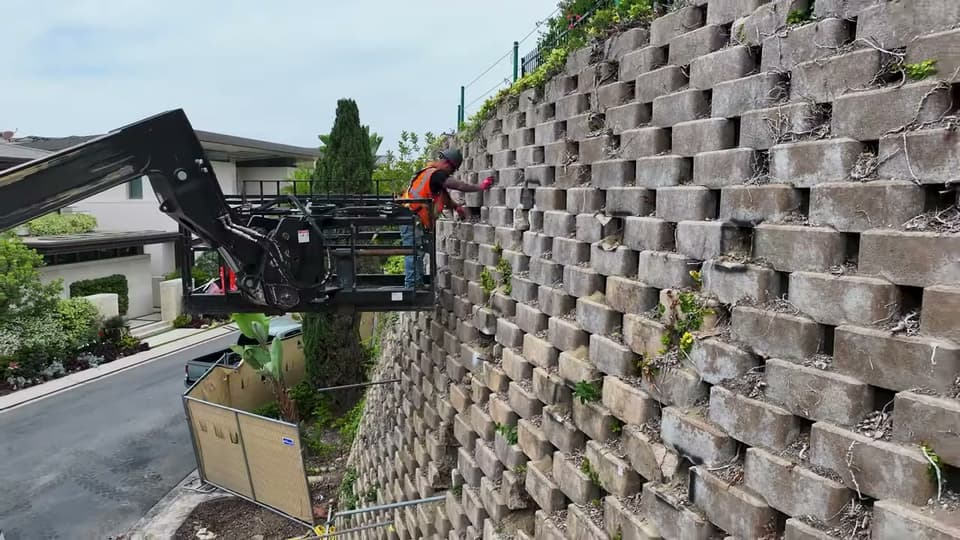
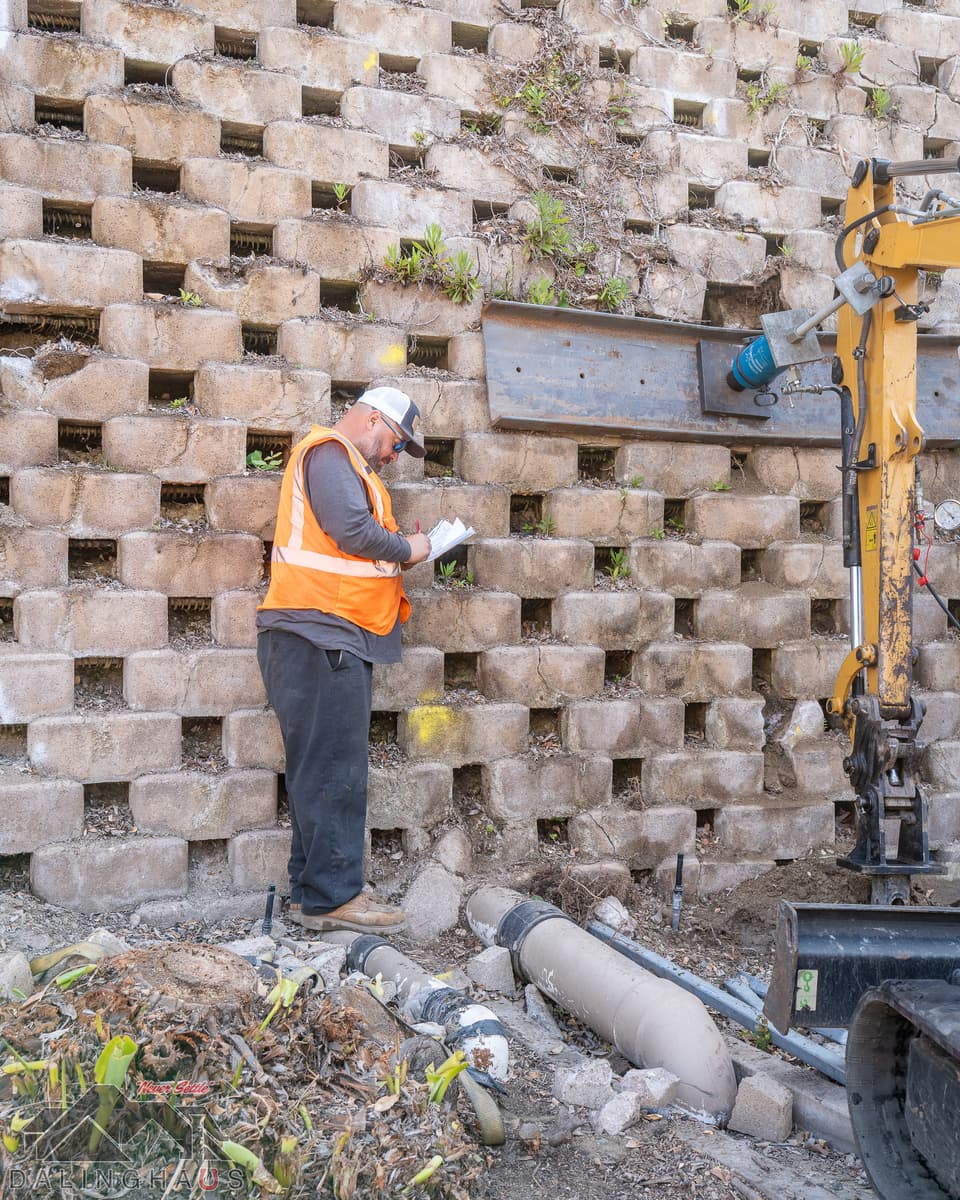
Every anchor works on the same principle: the ground close behind a failing retaining wall is part of the problem, but the ground farther back is part of the solution. Helical tiebacks are hydraulically rotated through a small opening in the wall and advance into that stable zone, with the crew reading torque in real time as the screw plates bite. When the reading meets the engineered target, the tieback is fixed to the wall face through a plate or a waler beam, a horizontal steel member that spreads the anchor's pull across a wider stretch of wall, and the soil pressure that was tipping the wall now routes through steel into ground that can carry it. Wall anchors follow the same logic with a rod and earth anchor, and their tensioning can gradually draw a leaning wall back toward its original position. Soil nails skip the wall face and reinforce the soil mass directly, turning loose, slipping backfill into a coherent block. Because the most common accelerant behind wall failure is trapped water, anchor work is usually paired with drainage corrections, from cleared weep holes to new drains, so hydrostatic pressure stops rebuilding behind the repaired wall. Anchors rarely work alone: where the wall face itself has cracked, carbon fiber installation on the wall restores the tensile strength masonry lacks, where erosion has carved voids polyurethane injection behind the wall rebuilds the backfill, and every anchor project starts from the measurements gathered in a retaining wall inspection.
The symptoms that usually lead to anchor reinforcement are on the retaining wall repair problem signs page, alongside the other signs that point to the same underlying cause.
How we install anchor reinforcement.
Free evaluation and anchor plan
A specialist measures the wall's lean and bulge, evaluates the soil and drainage behind it, and determines which anchor system fits the wall and where each anchor goes. You get the findings in writing.
Prepare the wall
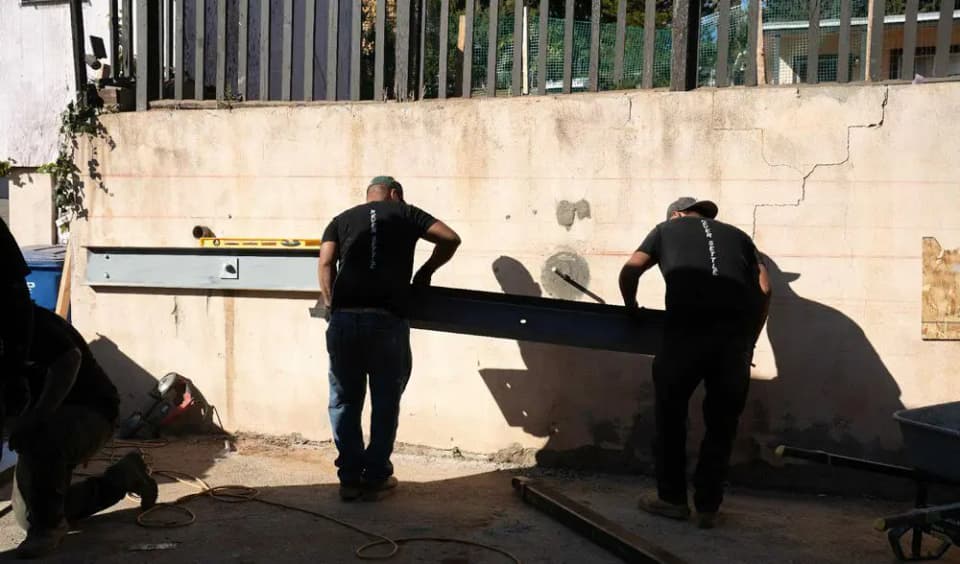
Small openings are cored at each anchor location, and waler beams or plates are staged where the wall face needs load spread across a wider area.
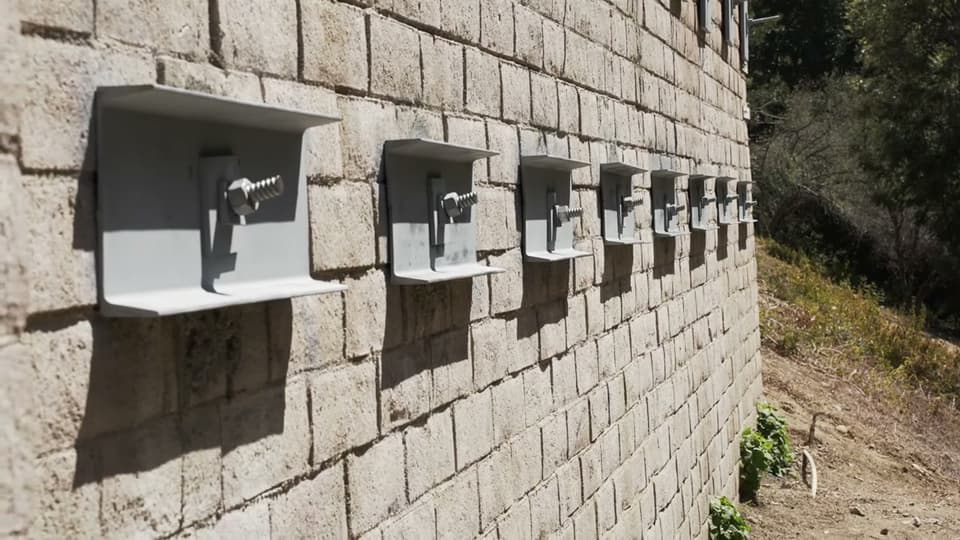
Drive to verified capacity
Each tieback or anchor is driven into the stable soil behind the wall until its torque or load reading meets the engineered target, so every anchor proves its own strength before it is trusted.
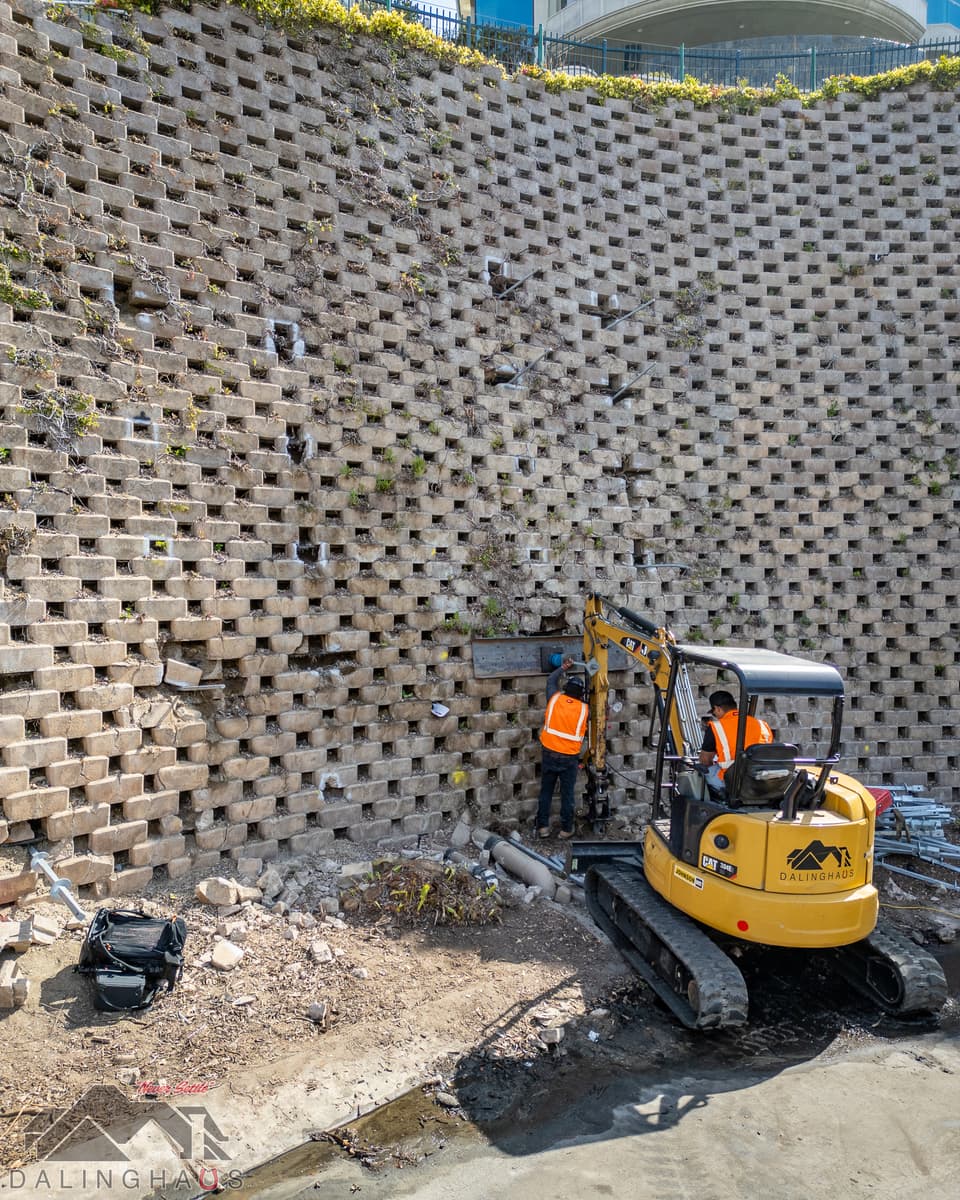
Tension and correct
Anchors are attached to the wall face and tensioned, pulling the wall back toward plumb where its condition safely allows and locking it against future movement.
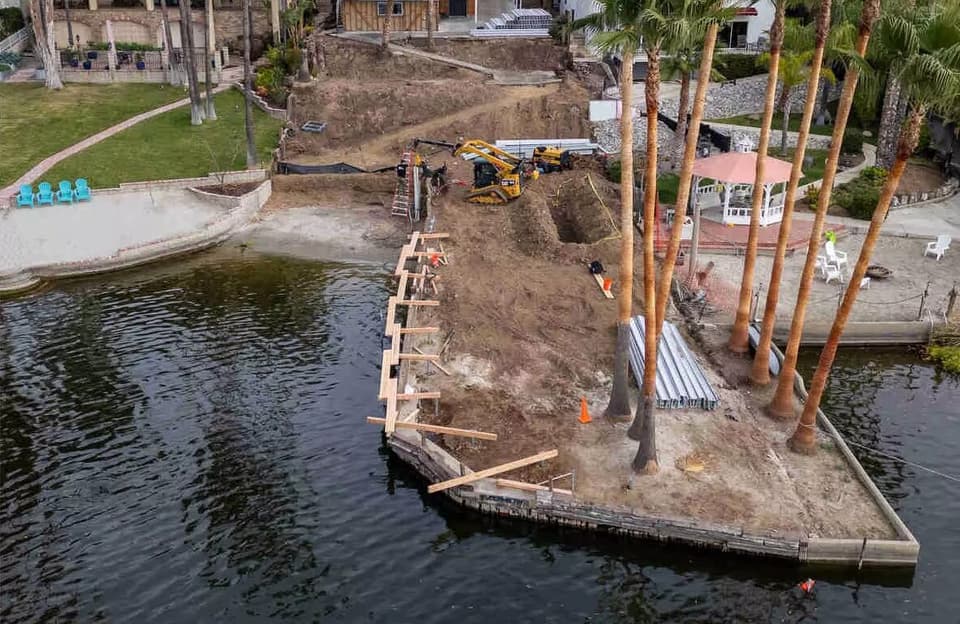
Fix the water and verify
Drainage corrections keep pressure from rebuilding, the wall's position is checked against the starting measurements, and the site is cleaned before we call it done.
The wall gets pulled back.
A steel rod runs from a plate on the wall out to a helical anchor set deep in stable soil. Tension the rod and the soil itself holds the wall, and can straighten it over time.
Anchor Reinforcement on our job sites.
Photos from our own crews and projects. Swipe or use the arrows to see more.
Anchor Reinforcement on a real project.
Anchor reinforcement, with helical tiebacks, wall anchors, and soil nails, reaches past the failing backfill into ground that does not move, then pulls the wall back toward plumb and keeps it there.

Care and expertise from a team that's been doing this since 2011.
When the fix is anchor reinforcement, the installer matters as much as the method. Dalinghaus crews handle foundation, concrete, and crawl space work across California, Arizona, and Nevada, and nothing else.
Foundation repair, concrete leveling, and crawl space repair are our entire focus. Not a sideline.
More than 2,000 projects on the clay and desert soils of California, Arizona, and Nevada since 2011.
CSLB License #983851 in California, ROC #330307 in Arizona, and License #0089738 in Nevada. Look us up with the state before we ever set foot on your property.
Warranty terms come in writing with every proposal, and the terms that apply to your job are stated in that job's paperwork. Ask your project specialist during the free evaluation.


Answers to common questions about Anchor Reinforcement.
Don't see your question here? Our team is happy to help. Reach out anytime.
All three connect a failing wall to ground that is not moving, but they grip differently. Helical tiebacks screw into stable soil and verify their capacity by installation torque. Wall anchors pair a face plate with an earth anchor and a tensioned rod, useful where gradual correction is the goal. Soil nails reinforce the retained soil itself, stabilizing the mass behind the wall. The evaluation determines which fits your wall, and some projects combine them.
Other retaining wall repair solutions we install.
Every solution is engineered for a specific soil profile and failure mode. Browse the full toolkit.
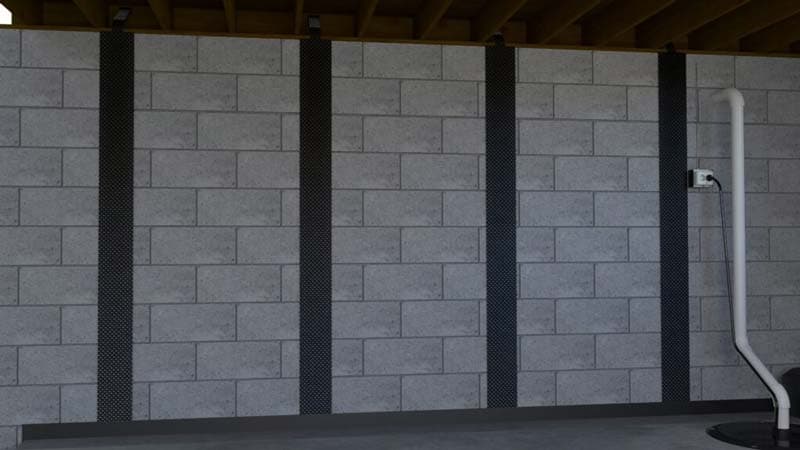
Carbon Fiber Installation
Carbon fiber installation bonds straps to a cracked or bowing retaining wall. They refuse to stretch, so the crack stops spreading and the wall face stays together under load.
Learn more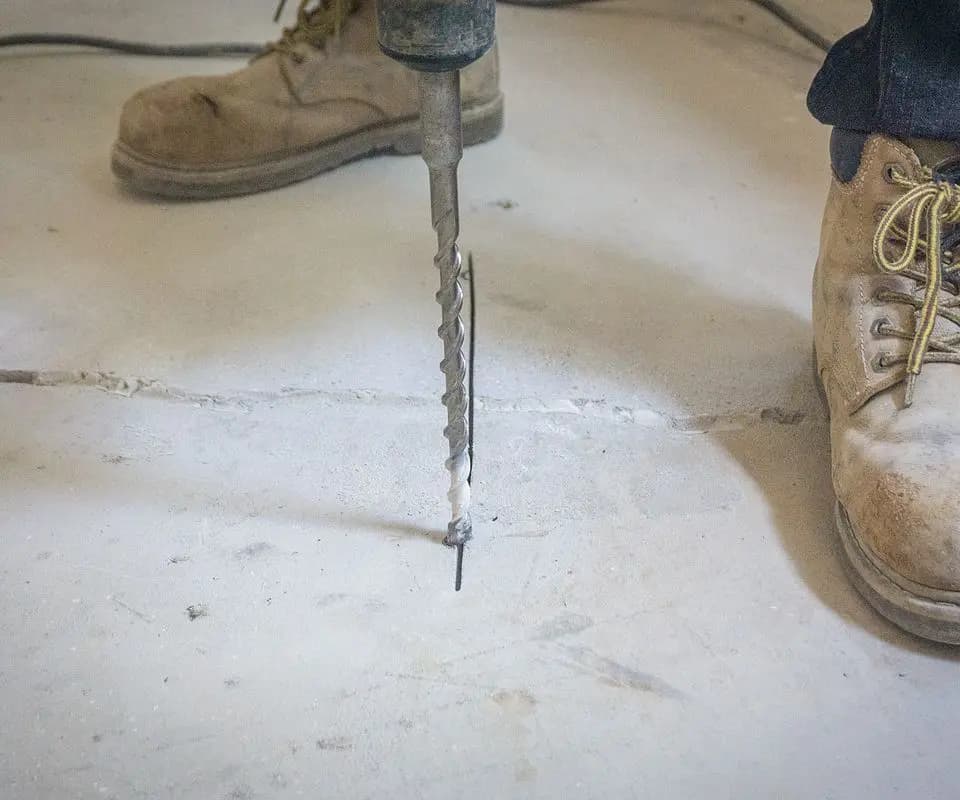
Polyurethane Injection
Polyurethane injection binds loose backfill, fills the voids water carved out, and closes the paths that let pressure build, all through holes smaller than a coin.
Learn more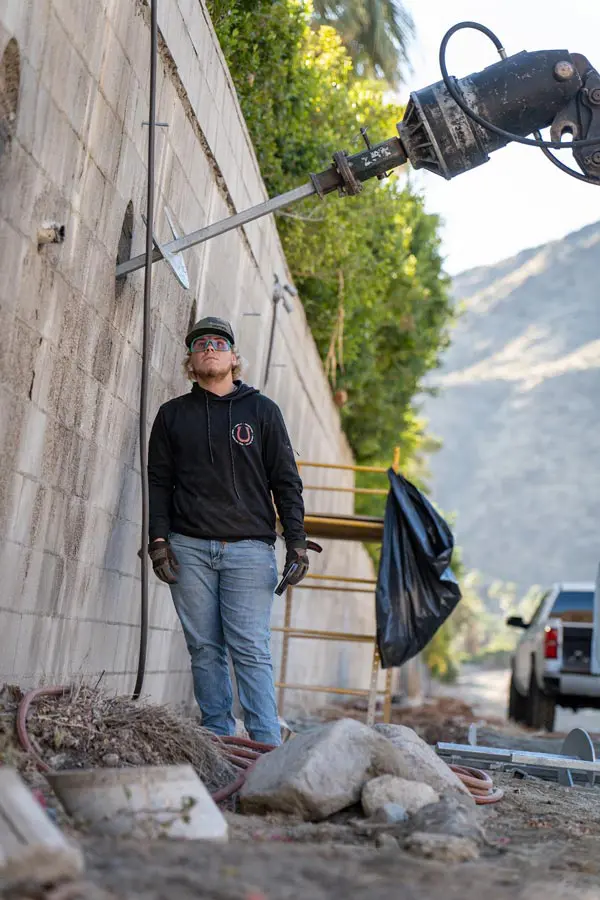
Retaining Wall Anchoring Systems
Anchoring systems tie a leaning retaining wall into stable ground beyond the soil that is pushing it, stopping the movement for a fraction of the cost and disruption of demolition.
Learn moreFrom free evaluation to installed anchor reinforcement.
How an anchor reinforcement project moves from diagnosis to completed installation.
Schedule your free evaluation.
A local specialist visits your home, evaluates the foundation, and answers your questions on site. No cost, no obligation.
Receive an estimate based on your needs.
We provide a clear, written estimate with a scope of work tailored to your home's specific issues.
Get your repairs.
Our crews complete the work on schedule, with the findings and scope in writing from the first visit.
More than 1,000 Google reviews across our offices, averaging 4.9 stars.
Before you choose who installs your anchor reinforcement, read how homeowners across California and Arizona rate our work.
Start with a free evaluation.
Share a few details and a local specialist will follow up as soon as possible to set your evaluation.
- A local foundation specialist on site
- A complete walk-through of the findings
- A clear written estimate at no cost
- No obligation, no pressure
Not sure which service you need?
A free evaluation covers all of it: one visit, clear findings, written estimate.