
Differential foundation settlement
When one section of the footing drops, the brick wall above is forced to bend. Mortar joints crack first, and continued movement drives cracks through the bricks themselves.
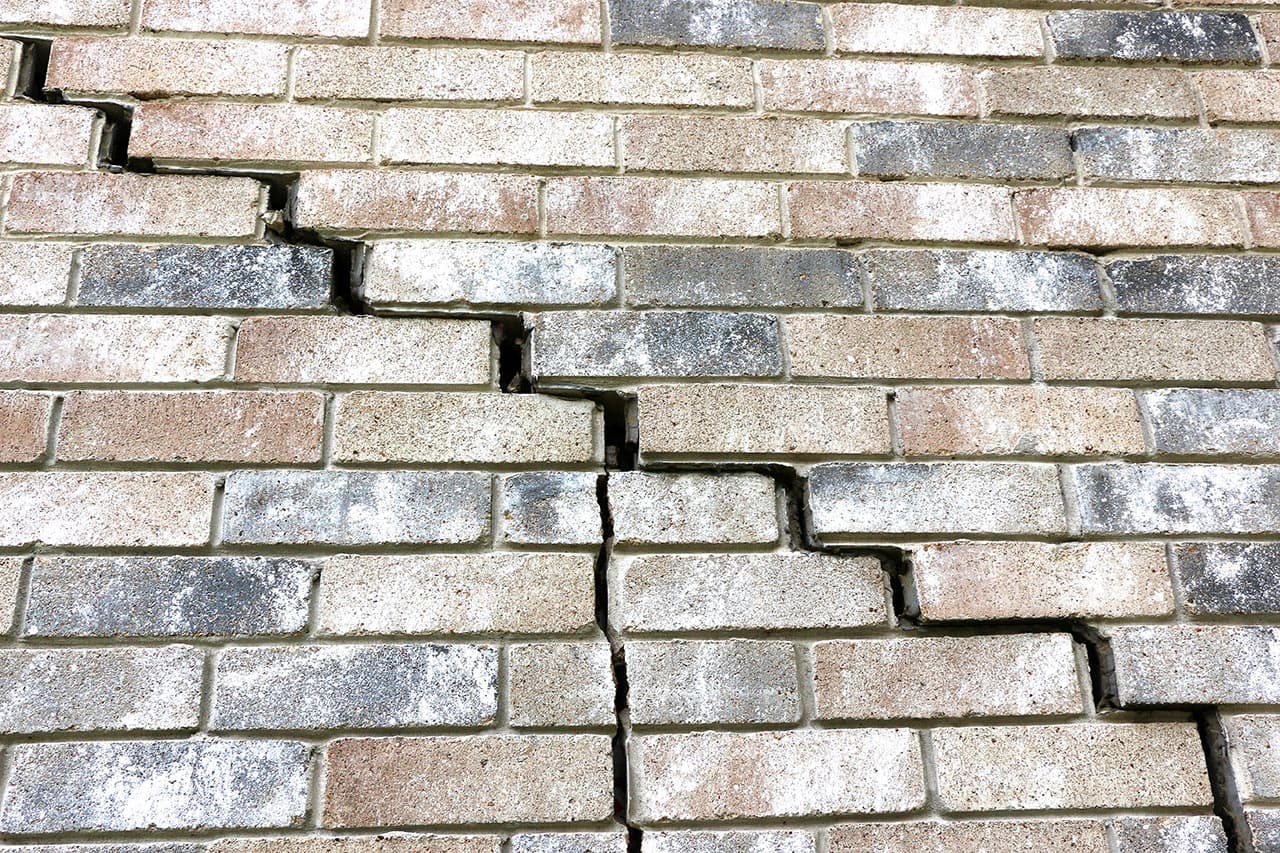
Mortar cracks first because it is the weak link. A crack running through the brick means the stress kept building. Here is what that tells you.

A local specialist will evaluate your foundation, walk you through the findings, and send a clear estimate. No cost, no pressure.
A crack through the brick itself, not the mortar, means the wall has run out of easier ways to relieve stress. Brick walls have a built in hierarchy of failure: mortar is intentionally softer than the brick it joins, so when a foundation shifts and the wall is forced to bend, the mortar joints give first, usually in the familiar stair step pattern. A crack that cuts straight through the bricks themselves tells you the story has advanced: the stress exceeded what the joints could relieve, and the wall broke along the shortest path regardless of material. You will see cracked bricks most often near the corners of the structure, around window and door openings, above garage doors, and along planter or veneer walls, wherever loads concentrate. The force behind it is almost always differential foundation movement. When soil under one section compresses, erodes, or shrinks during drought, that part of the footing drops and the rigid masonry above spans the difference until it cannot. In Southern California, Arizona, and Nevada, expansive clay is the usual engine, swelling through the wet season and shrinking through the dry one, and each cycle works the wall a little harder. A single hairline through one brick is worth photographing and watching. Cracks through multiple bricks, cracks with offset between the faces, or brick cracking paired with sticking doors and interior cracks mean the movement is real and likely still underway.
For the repair side of this, the foundation repair solutions page lists every method Dalinghaus installs, including the ones that fix problems other than cracked bricks.
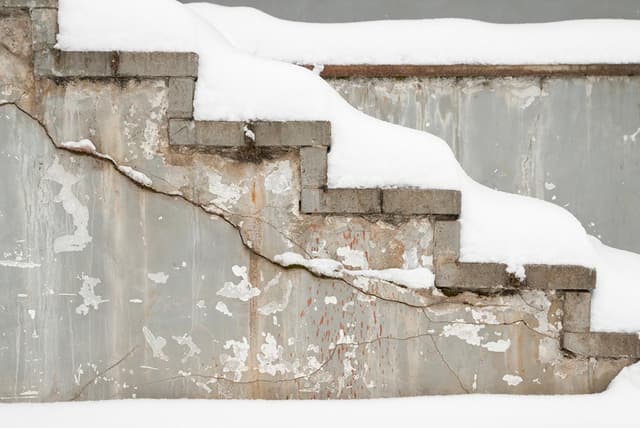
When one section of the footing drops, the brick wall above is forced to bend. Mortar joints crack first, and continued movement drives cracks through the bricks themselves.
Clay soil swelling against and beneath the foundation pushes walls unevenly. The wet and dry cycle repeats every year, accumulating stress in the masonry.
Water from poor drainage or leaks carries soil out from under bearing areas, leaving parts of the wall effectively unsupported until something cracks.
Lintels over garage doors and windows carry wall weight across a gap. When the foundation moves, these spots concentrate the stress and often crack first.
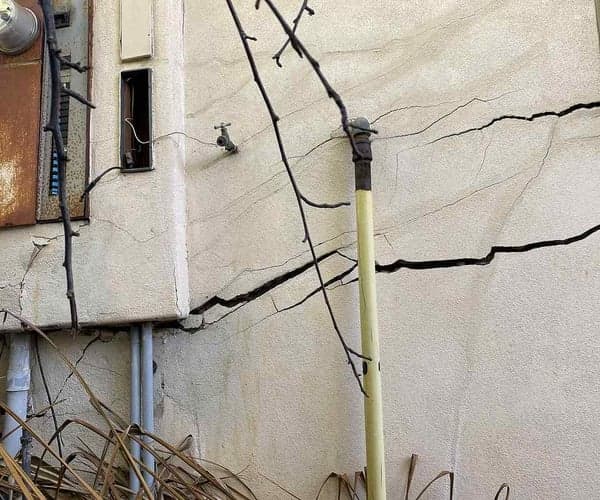
Solving cracked bricks means addressing the underlying soil, pressure, or settlement cause. Not just patching the visible damage. Below are the engineered solutions we install most often for this symptom in California, Arizona, and Nevada homes.
If your home is showing cracked bricks, the team you call matters. Dalinghaus crews handle foundation repair and related structural work across California, Arizona, and Nevada, and nothing else.
Foundation repair, concrete leveling, and crawl space repair are our entire focus. Not a sideline.
More than 2,000 projects on the clay and desert soils of California, Arizona, and Nevada since 2011.
CSLB License #983851 in California, ROC #330307 in Arizona, and License #0089738 in Nevada. Look us up with the state before we ever set foot on your property.
Warranty terms come in writing with every proposal, and the terms that apply to your job are stated in that job's paperwork. Ask your project specialist during the free evaluation.


Don't see your question here? Our team is happy to help. Reach out anytime.
Uneven foundation movement, in nearly every case that matters. Brick walls are rigid, so when soil movement drops one section of the footing, the wall bends and cracks, first through the mortar joints and eventually through the bricks themselves if the stress keeps building. Thermal movement and minor material flaws cause occasional hairlines, but cracks through multiple bricks point to the foundation.
How a repair moves from free evaluation to completed work once cracked bricks is diagnosed.
A local specialist walks the areas showing cracked bricks, measures what is moving, and answers your questions on site. No cost, no obligation.
The method is matched to the cause behind the cracked bricks, with scope and pricing in writing. No pressure in either direction.
A Dalinghaus crew corrects the movement behind the cracked bricks, and leaves the site cleaner than we found it.
Most foundation problems show early signs. This guide shows you what to look for, what can cause it, and how a lasting repair works, before you call anyone.
Before you call anyone about cracked bricks, read how homeowners across California and Arizona rate our work.
Share a few details and a local specialist will follow up as soon as possible to set your evaluation.
A free evaluation pins down the cause: one visit, clear findings, written estimate.