
Soil washing through cracks and joints
Every opening in the wall is an exit. Tidal cycling pumps water through open cracks and failed joints, and the outbound flow carries fine soil with it, grain by grain.
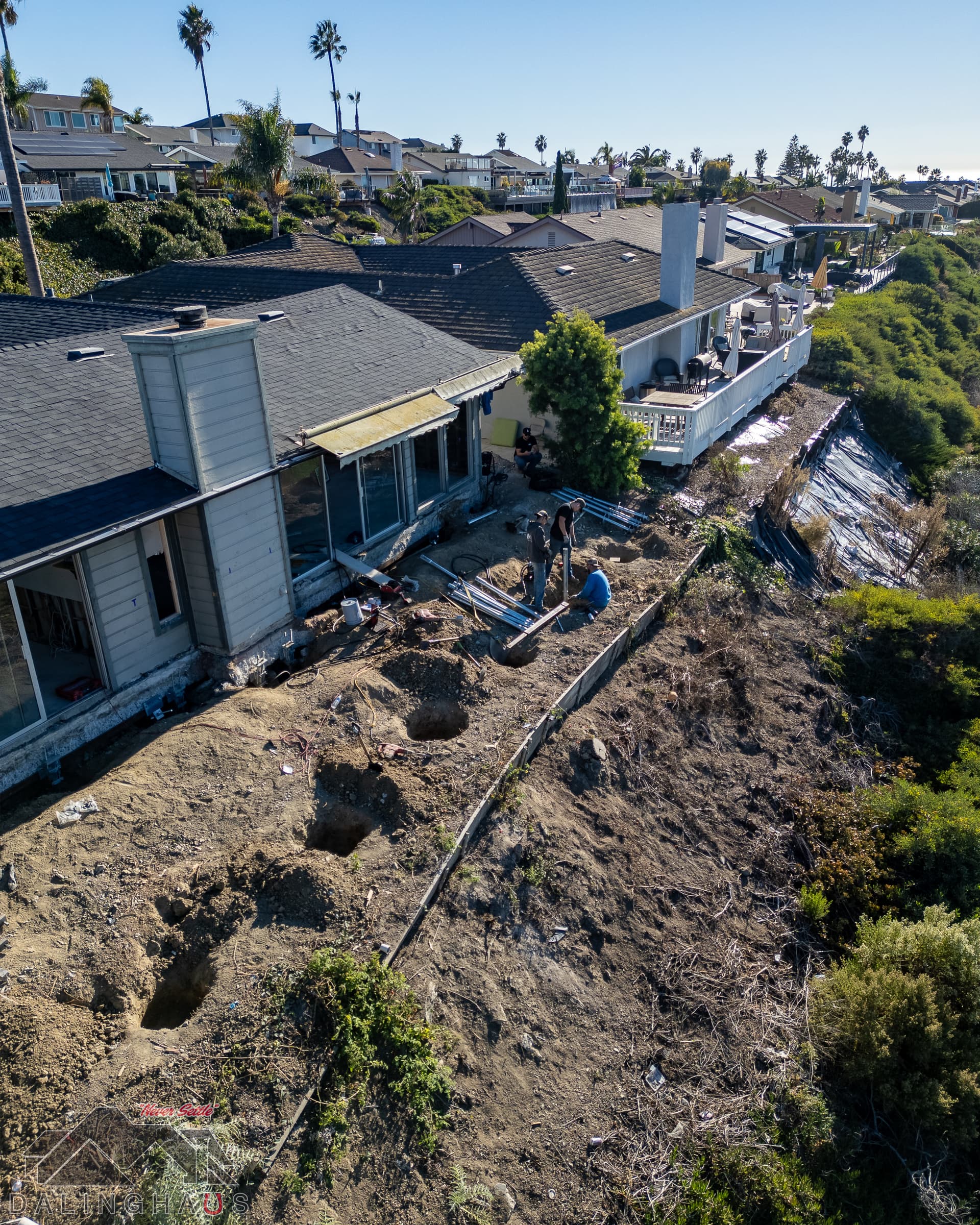
Soft spots, dips, and sunken pavers behind a seawall mean soil is escaping through the wall. Here is where it is going and how to stop it.

A local specialist will evaluate your foundation, walk you through the findings, and send a clear estimate. No cost, no pressure.
Settlement behind a seawall is a disappearing act. The lawn develops soft spots. A depression forms along the wall line. Pavers or a patio slab near the wall start to sink, tree roots surface as soil drops away around them, and in advanced cases a sinkhole opens outright. The soil is not compressing in place; it is leaving, carried out through cracks, failed joints, and unfiltered weep holes by the water that cycles through the wall with every tide and every rain. Each departing load of soil leaves a void, the ground above slumps into it, and the surface shows a dip. Settlement matters twice over. First, whatever sits on that ground, landscaping, hardscape, pools, even the house, is standing on soil that is being removed from underneath. Second, the wall itself needs the backing: a seawall with voids behind it flexes more under wave load and fails faster. Soft ground near a seawall is never just a landscaping problem. It is the visible end of an erosion path that starts at the water, and finding the exit point is exactly what an evaluation is for. The repair fills what the water carved and closes the route it used. Void filling polyurethane is injected behind and beneath the wall, expanding to fill the erosion paths and densify the loosened soil, and it cures in the presence of water, which is the environment it will be working in. Where the settlement traveled with wall movement, tie back reinforcement holds the corrected system in place. Sinkholes and fast growing depressions should be treated as urgent and evaluated promptly.
For the repair side of this, the seawall repair solutions page lists every method Dalinghaus installs, including the ones that fix problems other than settlement.
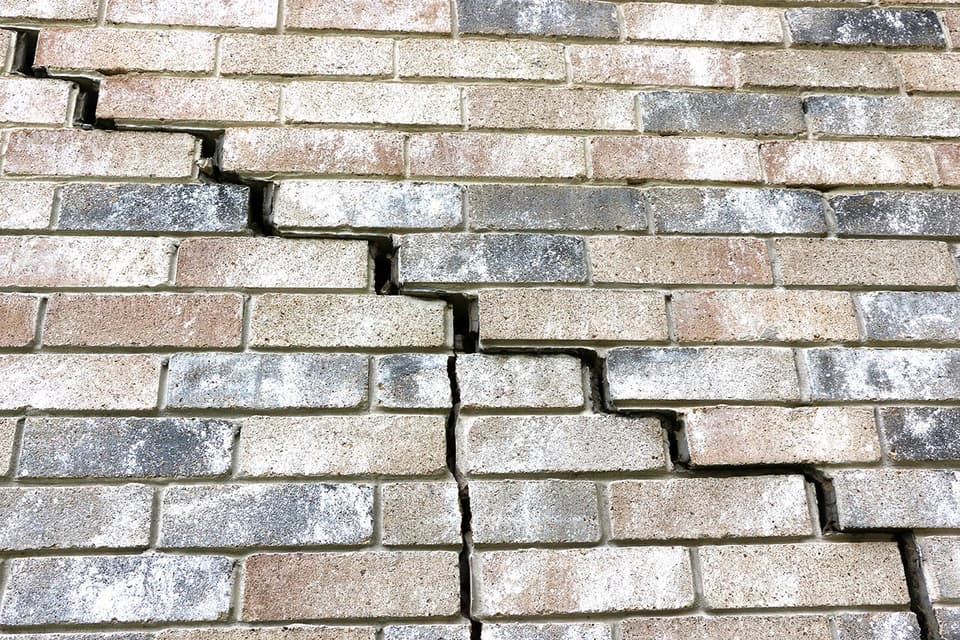
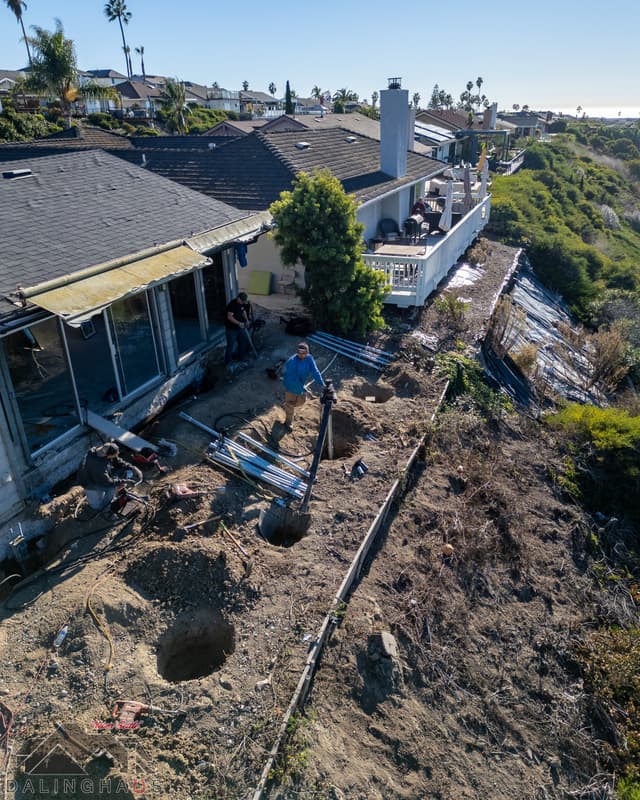
Every opening in the wall is an exit. Tidal cycling pumps water through open cracks and failed joints, and the outbound flow carries fine soil with it, grain by grain.
Weep holes must let water out while holding soil back, relieving the same water pressure they were designed for. Without working filters, they drain the ground behind the wall along with the water.
The twice daily cycle of water in and water out hollows voids behind and beneath the wall, and the surface soil slumps down into them, which is exactly what a documented ground check is built to catch.
Scour at the toe of the wall lets soil escape from underneath it, so the ground behind settles even where the wall face looks intact, the pattern void filling injection is designed to reverse.
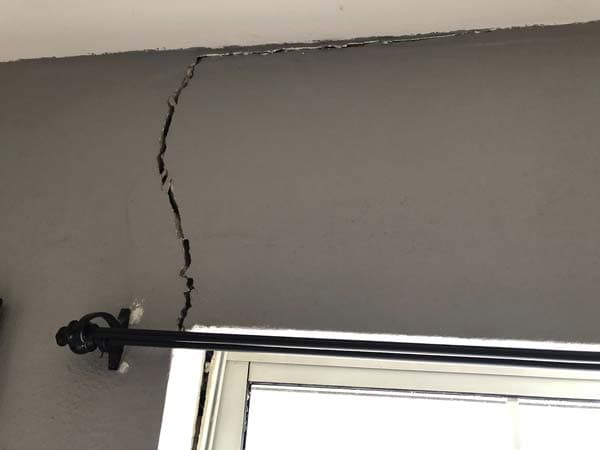
Solving settlement means addressing the underlying soil, pressure, or settlement cause. Not just patching the visible damage. Below are the engineered solutions we install most often for this symptom in coastal California homes.
If your home is showing settlement, the team you call matters. Dalinghaus crews handle seawall repair and related structural work across coastal California, and nothing else.
Foundation repair, concrete leveling, and crawl space repair are our entire focus. Not a sideline.
More than 2,000 projects on the clay and desert soils of California, Arizona, and Nevada since 2011.
CSLB License #983851 in California, ROC #330307 in Arizona, and License #0089738 in Nevada. Look us up with the state before we ever set foot on your property.
Warranty terms come in writing with every proposal, and the terms that apply to your job are stated in that job's paperwork. Ask your project specialist during the free evaluation.


Don't see your question here? Our team is happy to help. Reach out anytime.
Because soil is leaving through the wall. Water cycles through cracks, failed joints, and unfiltered weep holes with every tide and rain, and it carries fine soil out with it. Voids form where that soil used to be, and the surface slumps into them. The dip you see is the end of an erosion path that starts at the water.
How a repair moves from free evaluation to completed work once settlement is diagnosed.
A local specialist walks the areas showing settlement, measures what is moving, and answers your questions on site. No cost, no obligation.
The method is matched to the cause behind the settlement, with scope and pricing in writing. No pressure in either direction.
A Dalinghaus crew corrects the movement behind the settlement, and leaves the site cleaner than we found it.
Before you call anyone about settlement, read how homeowners across coastal California rate our work.
Share a few details and a local specialist will follow up as soon as possible to set your evaluation.
A free evaluation pins down the cause: one visit, clear findings, written estimate.