
Aging concrete
Decades of sun, salt, and wet and dry cycling fatigue the concrete itself, and shrinkage lines from the original pour widen as the material weathers.
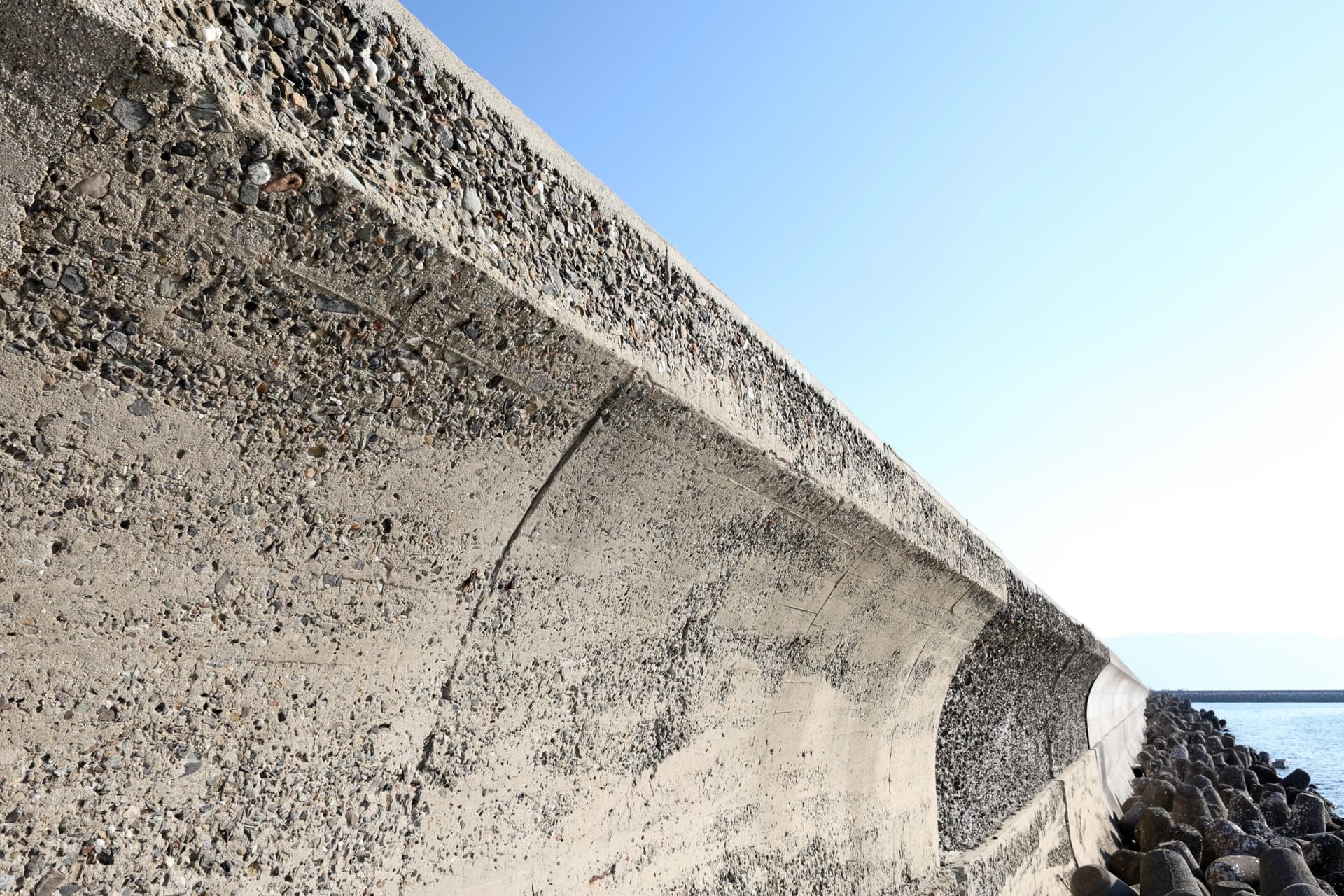
Water moves through seawall cracks in both directions, and it takes your soil with it on the way out. Here is what the cracks mean and when to act.

A local specialist will evaluate your foundation, walk you through the findings, and send a clear estimate. No cost, no pressure.
Cracks are usually the first sign a seawall gives you, and they rarely stay the size you found them. Every tidal cycle pushes water into the crack and pulls it back out, and the outbound trip carries fine soil from behind the wall with it. Grain by grain, voids form in the ground the wall is supposed to be retaining. As the wall loses that even backing, stress concentrates around the weak point and the crack widens, which moves more water, which moves more soil. That feedback loop is why a crack you could ignore for a year suddenly seems to grow every month. Not every crack is an emergency: concrete shrinks as it cures, and old walls carry hairline lines that have not moved in a decade. The ones that matter tend to announce themselves, widening over time, showing rust stains from the reinforcing steel corroding inside, weeping water after the tide drops, or pairing up with soft, sunken ground behind the wall. Telling the two kinds apart is a measurement job, and it is exactly what a free evaluation is for. The repair follows the diagnosis. Cracks that are leaking soil get sealed and the ground behind them stabilized with marine safe polyurethane, which fills the voids the tide carved and shuts the erosion path. Cracks that came from wall movement need the movement addressed, typically with tie back anchoring. A documented wall evaluation tells you which story your cracks are telling, in writing, before you spend on either.
For the repair side of this, the seawall repair solutions page lists every method Dalinghaus installs, including the ones that fix problems other than cracks in the seawall.
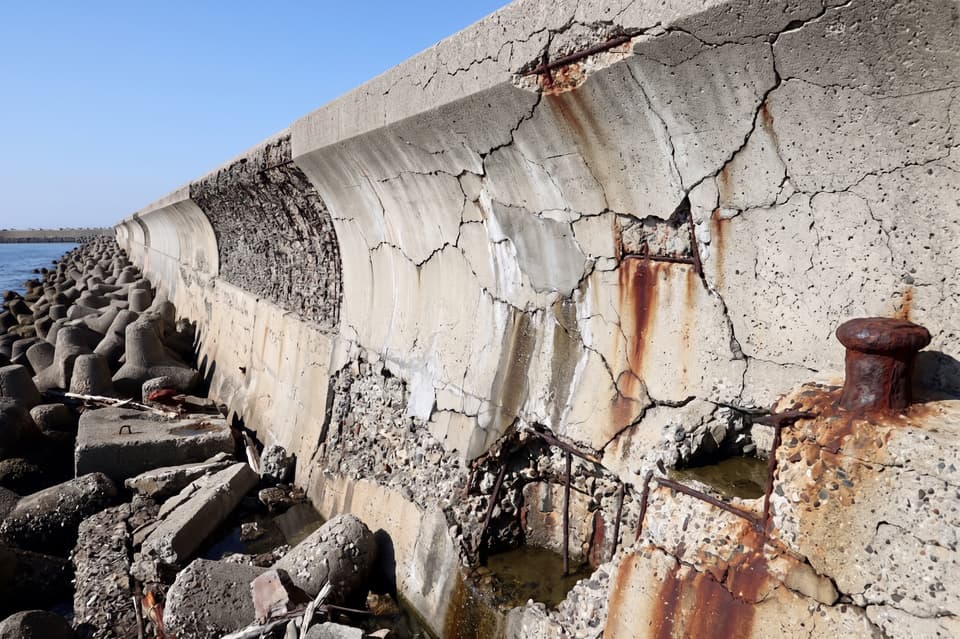
Decades of sun, salt, and wet and dry cycling fatigue the concrete itself, and shrinkage lines from the original pour widen as the material weathers.
Rain and groundwater trapped in the soil behind the wall push outward. When drainage cannot relieve that pressure, the wall cracks where the stress concentrates.
Once water starts escaping through a joint or crack, it carries soil with it and the ground behind the wall begins to settle. The wall loses its even backing, flexes under wave loads, and cracks further.
Saltwater reaches the steel inside the concrete, and rusting steel expands. The expansion splits the concrete from within, which is why rust stains around a crack are a serious sign.
Solving cracks in the seawall means addressing the underlying soil, pressure, or settlement cause. Not just patching the visible damage. Below are the engineered solutions we install most often for this symptom in coastal California homes.
If your home is showing cracks in the seawall, the team you call matters. Dalinghaus crews handle seawall repair and related structural work across coastal California, and nothing else.
Foundation repair, concrete leveling, and crawl space repair are our entire focus. Not a sideline.
More than 2,000 projects on the clay and desert soils of California, Arizona, and Nevada since 2011.
CSLB License #983851 in California, ROC #330307 in Arizona, and License #0089738 in Nevada. Look us up with the state before we ever set foot on your property.
Warranty terms come in writing with every proposal, and the terms that apply to your job are stated in that job's paperwork. Ask your project specialist during the free evaluation.


Don't see your question here? Our team is happy to help. Reach out anytime.
No. Concrete shrinks as it cures, and many walls carry old hairline lines that never move. The serious ones widen over time, show rust staining, weep water after the tide drops, or come with soft ground behind the wall. If a crack has any of those companions, have it evaluated now rather than next season.
How a repair moves from free evaluation to completed work once cracks in the seawall is diagnosed.
A local specialist walks the areas showing cracks in the seawall, measures what is moving, and answers your questions on site. No cost, no obligation.
The method is matched to the cause behind the cracks in the seawall, with scope and pricing in writing. No pressure in either direction.
A Dalinghaus crew corrects the movement behind the cracks in the seawall, and leaves the site cleaner than we found it.
Before you call anyone about cracks in the seawall, read how homeowners across coastal California rate our work.
Share a few details and a local specialist will follow up as soon as possible to set your evaluation.
A free evaluation pins down the cause: one visit, clear findings, written estimate.