
Soil compression under the foundation
Fill or soft native soil compressing under the home's weight drops sections of the footing. The structure spans the gap until it cracks, and the crack widens as the sinking continues.

Wide cracks in concrete or masonry are the structure yielding to soil compression or water pressure. Here is what the size and shape tell you.

A local specialist will evaluate your foundation, walk you through the findings, and send a clear estimate. No cost, no pressure.
Crack width is the single most useful number a homeowner can put on foundation damage. Hairlines are the structure whispering; a crack you can fit a coin or a finger into is the structure yielding. Large cracks form when the forces on the foundation, soil compressing and sinking away beneath it, or water pressure pushing against and under it, have moved enough material that the concrete or masonry could no longer bridge the difference. The shape tells you which force is winning. Wide diagonal or stair step cracks that taper point at differential settlement, one section of the home dropping while another holds. Long horizontal cracks in a stem or retaining wall point at lateral water and soil pressure. Cracks paired with visible offset, where one face sits proud of the other, mean the sections are displacing, not merely separating. Water usually has a hand in it either way: saturated soil is heavier and pushes harder, moving water erodes support from under footings, and in Southern California, Arizona, and Nevada the expansive clay adds its swell and shrink cycle on top. A large crack rarely appears overnight; it is the sum of seasons of smaller movement. But once cracks reach real width, the structure has lost some capacity, water has an open path in, and both problems compound, so this is a measure now rather than watch and wait symptom.
For the repair side of this, the foundation repair solutions page lists every method Dalinghaus installs, including the ones that fix problems other than large cracks from shifting or water pressure.
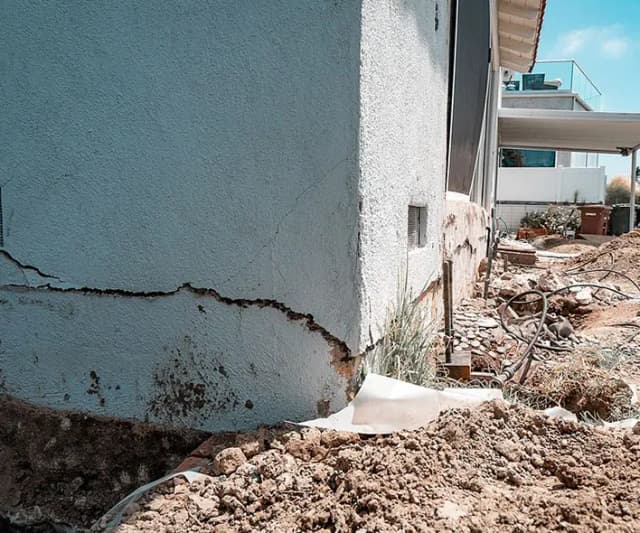
Fill or soft native soil compressing under the home's weight drops sections of the footing. The structure spans the gap until it cracks, and the crack widens as the sinking continues.
Saturated soil pushes hard against stem and retaining walls. Sustained pressure opens long horizontal cracks and can displace wall sections inward.
Moving water from poor drainage or a leak carries soil out from under bearing areas, removing support abruptly enough to open wide cracks in a single wet season.
Years of swell and shrink fatigue the concrete and masonry. Cracks that started as seasonal hairlines grow into permanent wide ones as the material gives up its elasticity.
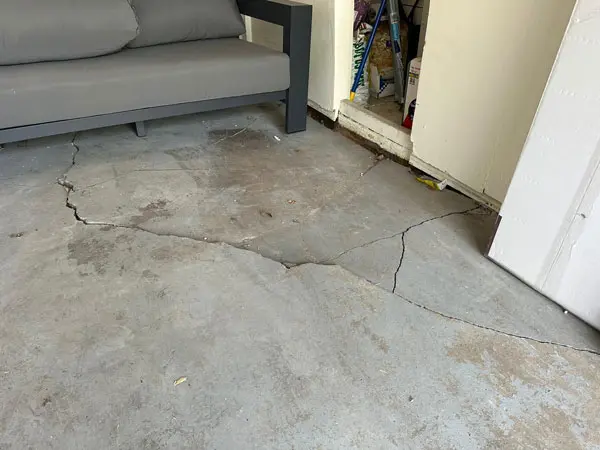
Solving large cracks from shifting or water pressure means addressing the underlying soil, pressure, or settlement cause. Not just patching the visible damage. Below are the engineered solutions we install most often for this symptom in California, Arizona, and Nevada homes.
If your home is showing large cracks from shifting or water pressure, the team you call matters. Dalinghaus crews handle foundation repair and related structural work across California, Arizona, and Nevada, and nothing else.
Foundation repair, concrete leveling, and crawl space repair are our entire focus. Not a sideline.
More than 2,000 projects on the clay and desert soils of California, Arizona, and Nevada since 2011.
CSLB License #983851 in California, ROC #330307 in Arizona, and License #0089738 in Nevada. Look us up with the state before we ever set foot on your property.
Warranty terms come in writing with every proposal, and the terms that apply to your job are stated in that job's paperwork. Ask your project specialist during the free evaluation.


Don't see your question here? Our team is happy to help. Reach out anytime.
There is no magic number, but the practical rule is that hairlines are common and often harmless, while cracks approaching an eighth of an inch or showing offset between the faces deserve professional measurement. Width matters less than trend and mechanism: a stable crack of any size is history, while a widening one is an active process that will not stop on its own.
How a repair moves from free evaluation to completed work once large cracks from shifting or water pressure is diagnosed.
A local specialist walks the areas showing large cracks from shifting or water pressure, measures what is moving, and answers your questions on site. No cost, no obligation.
The method is matched to the cause behind the large cracks from shifting or water pressure, with scope and pricing in writing. No pressure in either direction.
A Dalinghaus crew corrects the movement behind the large cracks from shifting or water pressure, and leaves the site cleaner than we found it.
Most foundation problems show early signs. This guide shows you what to look for, what can cause it, and how a lasting repair works, before you call anyone.
Before you call anyone about large cracks from shifting or water pressure, read how homeowners across California and Arizona rate our work.
Share a few details and a local specialist will follow up as soon as possible to set your evaluation.
A free evaluation pins down the cause: one visit, clear findings, written estimate.