

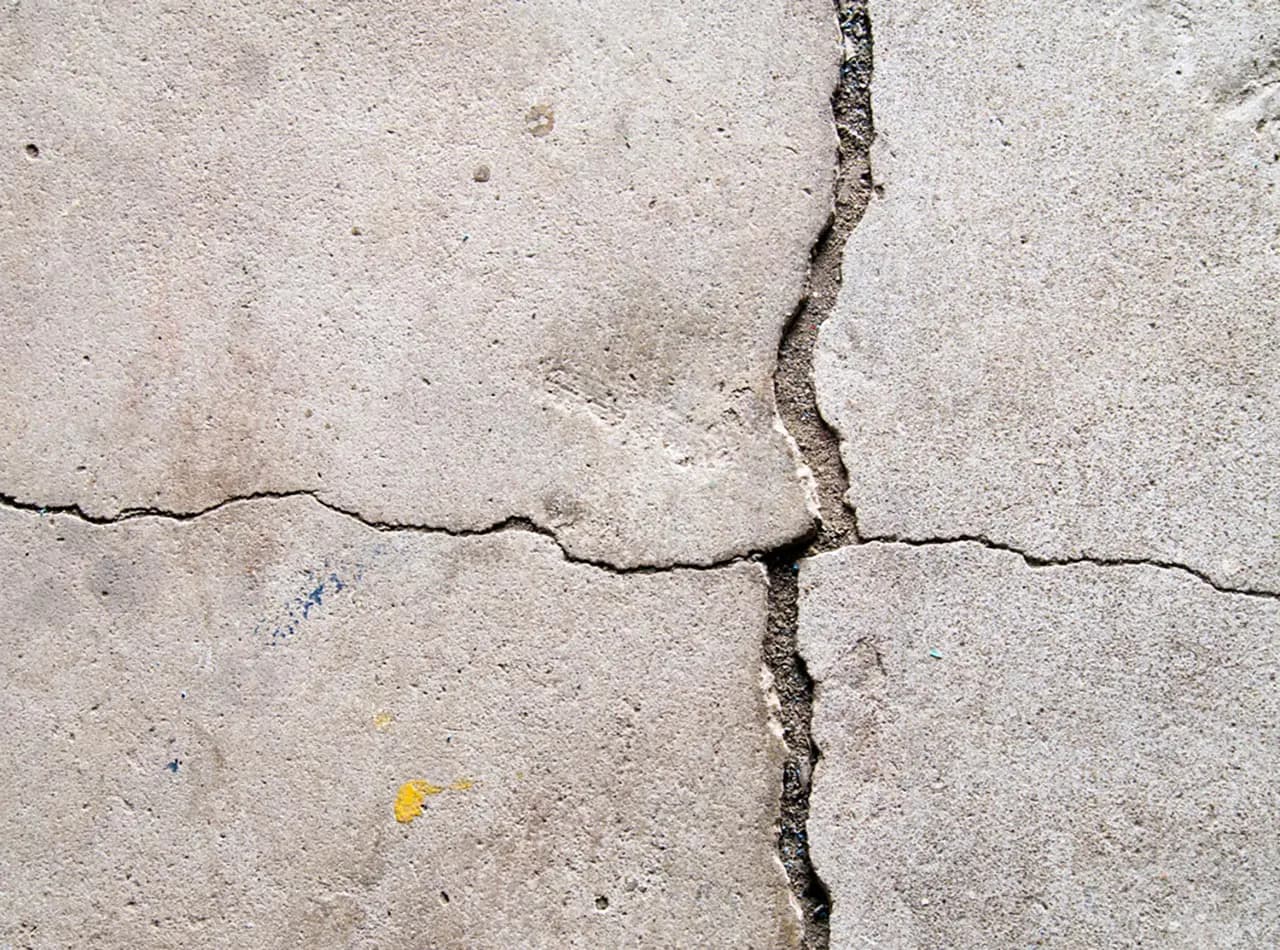
Curing shrinkage
Concrete shrinks slightly as it cures, and thin hairline cracks are the normal result. They are uniform, stable, and cosmetic, though sealing a hairline crack keeps water from turning it into something more.
Shrinkage cracks are cosmetic. Settlement cracks are structural. Knowing which one you are looking at is the difference between a sealant and a repair plan.

A local specialist will evaluate your foundation, walk you through the findings, and send a clear estimate. No cost, no pressure.
Concrete cracks for two fundamentally different reasons, and the right concrete repair depends entirely on which one is at work. The first is shrinkage: concrete loses moisture as it cures and shrinks slightly, producing thin, tight hairline cracks that appear early in a slab's life, stay uniform in width, and never show offset between the two sides. Those are cosmetic. The second reason is movement: the soil under part of the slab compresses, swells, or washes away, and the concrete cracks where the supported section meets the unsupported one. Movement cracks widen over time, often run diagonally or follow the low spots, show one side sitting higher than the other, and frequently arrive with company such as pooling water, a sinking section, or a gap at a joint. In California, Arizona, and Nevada the movers are expansive clay cycling between wet and dry, runoff eroding the base, and undercompacted fill settling under load. Water then accelerates everything, slipping through the open crack to erode or swell the soil below, which widens the crack that let it in. That loop is why a moving crack never stays the size you first noticed.
For the repair side of this, the concrete repair solutions page lists every method Dalinghaus installs, including the ones that fix problems other than cracks in concrete.
Concrete shrinks slightly as it cures, and thin hairline cracks are the normal result. They are uniform, stable, and cosmetic, though sealing a hairline crack keeps water from turning it into something more.
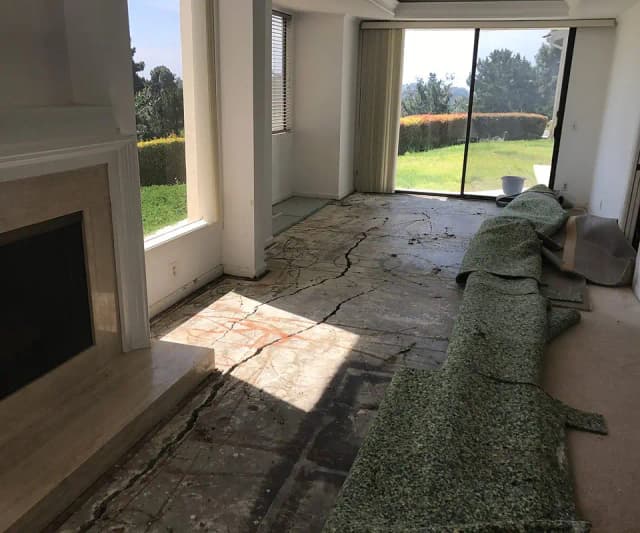
When soil compresses or washes out under one section, the slab cracks where support ends. These cracks widen with time and often show one side higher than the other.
Clay swelling in wet months and shrinking in dry ones flexes the slab from below, opening cracks that track the seasons and grow a little with each cycle.
Water entering an existing crack erodes or swells the soil underneath, undermining support and widening the crack. This is how small cracks graduate into slab failures.
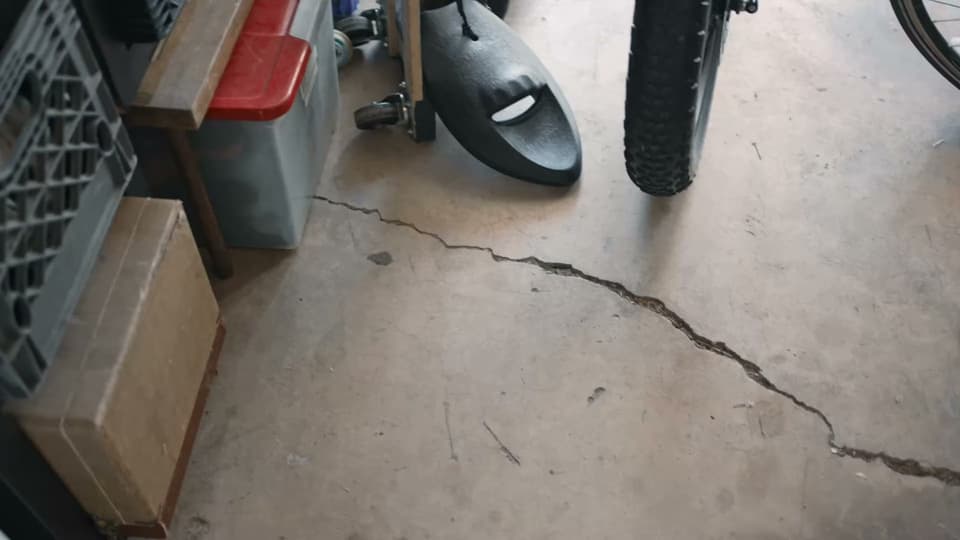
Photos from our own evaluations and job sites. Swipe or use the arrows to see more.
Solving cracks in concrete means addressing the underlying soil, pressure, or settlement cause. Not just patching the visible damage. Below are the engineered solutions we install most often for this symptom in California, Arizona, and Nevada homes.
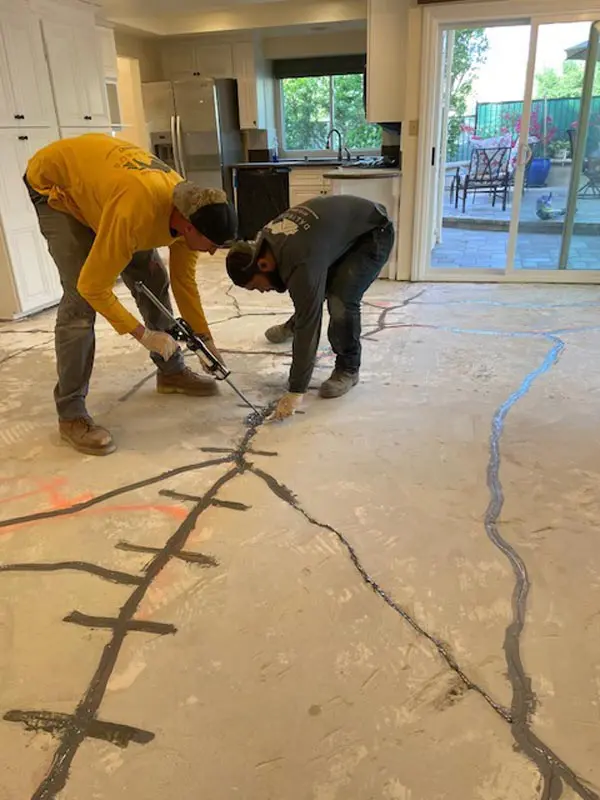
If your home is showing cracks in concrete, the team you call matters. Dalinghaus crews handle concrete repair and related structural work across California, Arizona, and Nevada, and nothing else.
Foundation repair, concrete leveling, and crawl space repair are our entire focus. Not a sideline.
More than 2,000 projects on the clay and desert soils of California, Arizona, and Nevada since 2011.
CSLB License #983851 in California, ROC #330307 in Arizona, and License #0089738 in Nevada. Look us up with the state before we ever set foot on your property.
Warranty terms come in writing with every proposal, and the terms that apply to your job are stated in that job's paperwork. Ask your project specialist during the free evaluation.


Don't see your question here? Our team is happy to help. Reach out anytime.
Worry about width, offset, and change. A crack wider than a coin's edge, a crack whose sides sit at different heights, or a crack that is measurably growing points to soil movement and deserves an evaluation. A thin, stable hairline that has looked the same for years is almost always cosmetic.
How a repair moves from free evaluation to completed work once cracks in concrete is diagnosed.
A local specialist walks the areas showing cracks in concrete, measures what is moving, and answers your questions on site. No cost, no obligation.
The method is matched to the cause behind the cracks in concrete, with scope and pricing in writing. No pressure in either direction.
A Dalinghaus crew corrects the movement behind the cracks in concrete, and leaves the site cleaner than we found it.
Before you call anyone about cracks in concrete, read how homeowners across California and Arizona rate our work.
Share a few details and a local specialist will follow up as soon as possible to set your evaluation.
A free evaluation pins down the cause: one visit, clear findings, written estimate.