CH 01
Elevation mapping: the backbone of an honest answer
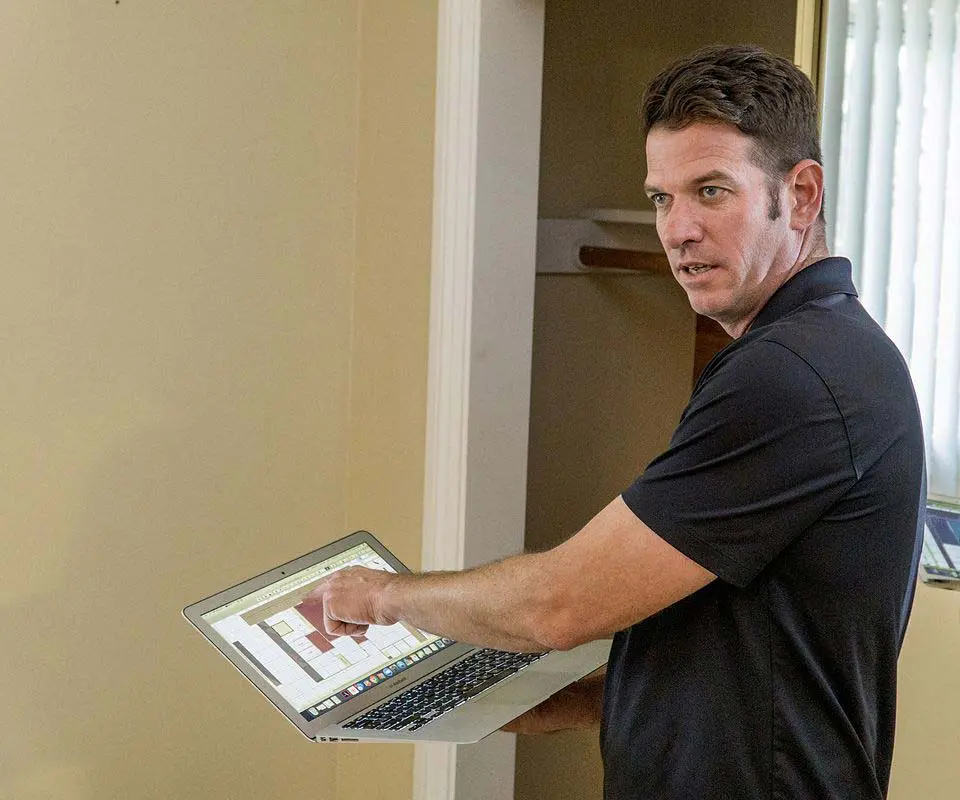
Every argument about concrete ends the same way: measure it. Elevation mapping takes readings across the slab surface at a grid of points and logs them, converting an impression like "the patio seems low by the fence" into a number with a direction: how far, which way, and relative to what. The map shows whether a slab has tilted as a unit, sagged across a section losing support, or never moved at all, and it shows the shape of the movement, which usually names the cause. Settlement over a washout void looks different on paper from clay heave, and both look different from original construction tolerance.
The readings do their best work in pairs. A single survey describes today; a second one next season measures change, and change is the whole question. Movement that has stopped is history, while movement in progress is a schedule, and the difference between concrete leveling work now versus monitoring it for a year is often exactly that reading. The numbers stay in your written report either way, so whoever measures next, us or anyone else, has a baseline.
CH 02
Void detection: sounding the slab and reading its edges
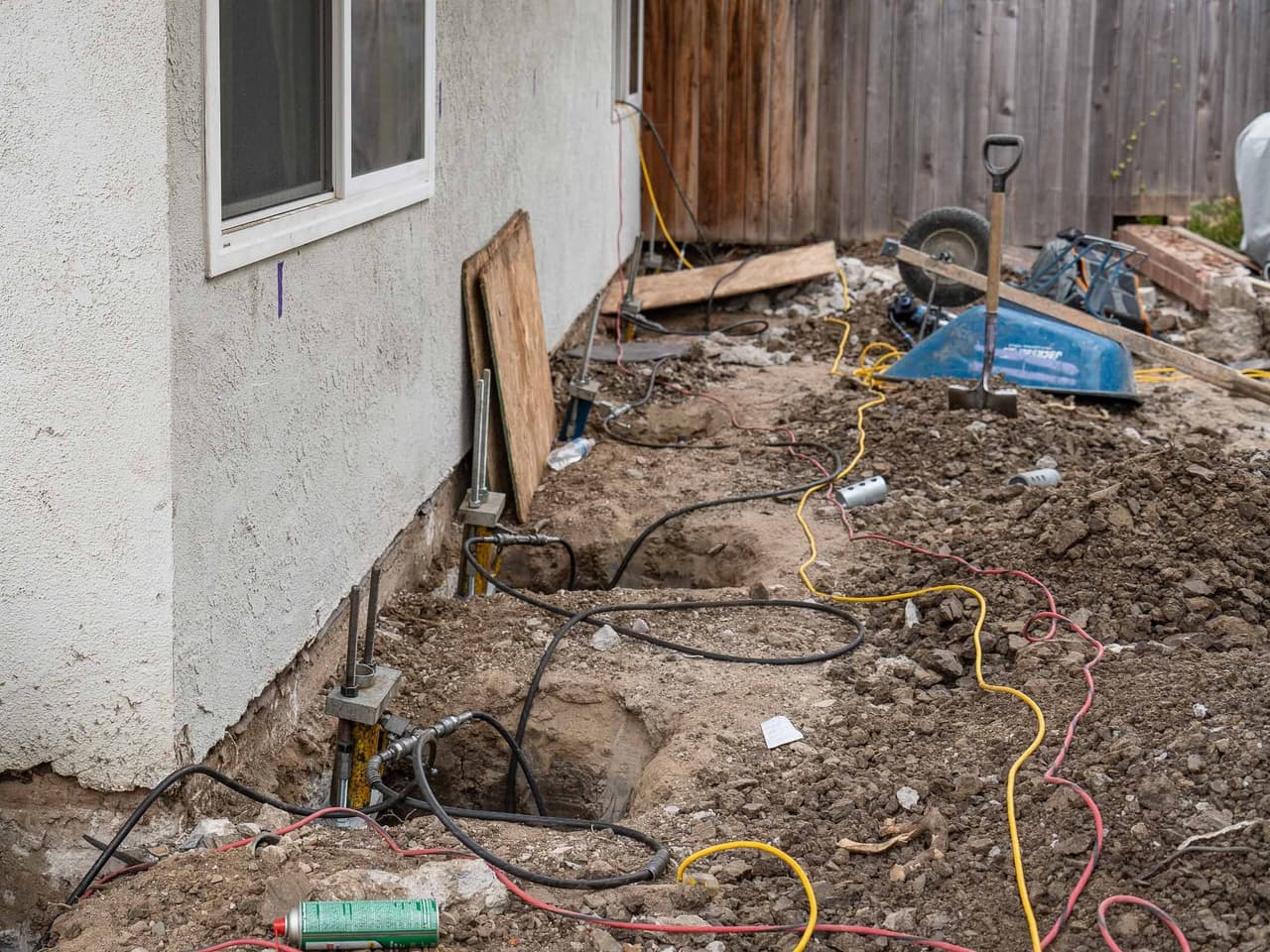
The elevation map says what moved; void detection says what is missing underneath. Sounding is the field method: tapping across the slab changes tone where the concrete has separated from the soil, a hollow drum note against the dull thud of full contact, and walking that boundary sketches the void's footprint from above without drilling anything. A hollow zone under a still intact slab is the single most valuable finding an inspection can produce, because it is the one problem that announces itself before the damage arrives, while filling the void is still a small project instead of a slab repair.
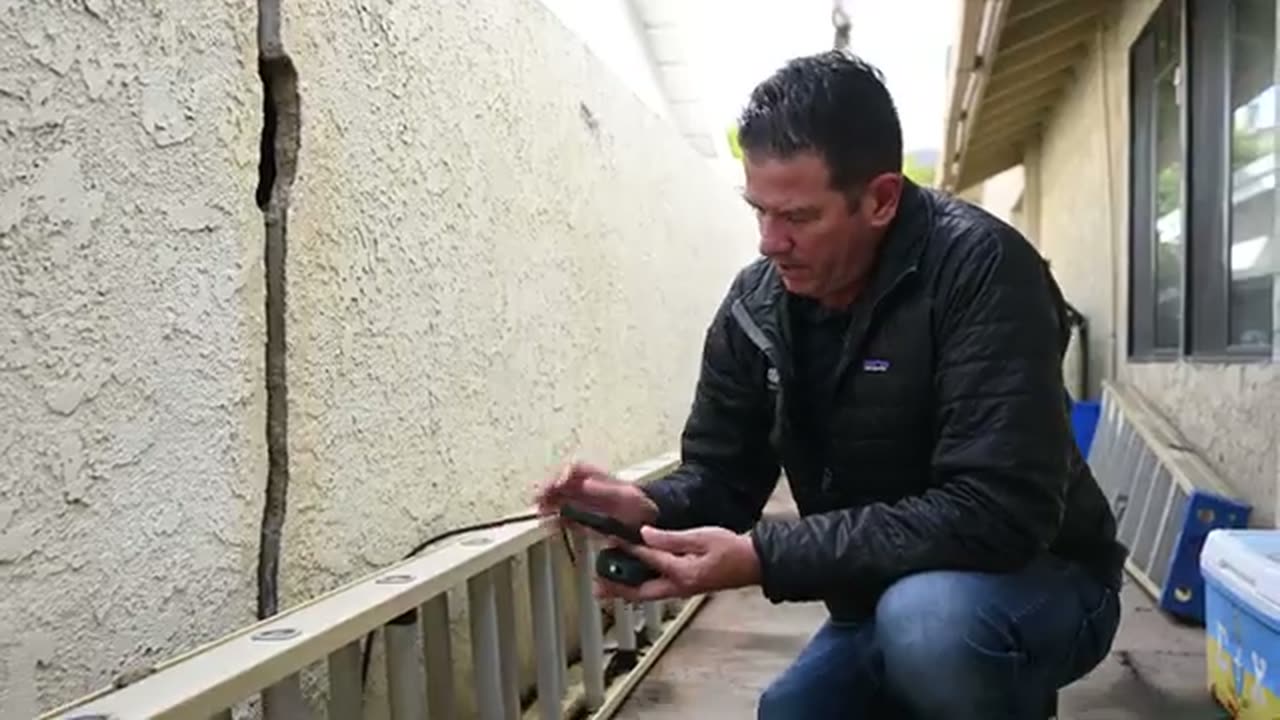
The slab edges give the second testimony. Soil pulled away from the perimeter shows the ground is shrinking or washing from under the concrete. Sediment fans mark where runoff exits with a load of fines that used to be the base. Open joints with failed filler and cracks in the slab field mark where the water gets in. Together with the sounding map, the edges usually answer not just where the void is, but which direction it is growing.
CH 03
Reading the water: drainage writes the next chapter
Almost everything the elevation map records was authored by water, so the inspection traces it like a plumber: where the downspouts discharge, where irrigation heads reach and overspray, how the surrounding grade routes storm water, and where puddles stand after rain. A slab problem diagnosed without its water source is half a diagnosis, because the repair inherits the same erosion that caused the original settlement. Most of the water fixes are modest, an extended downspout, an adjusted sprinkler head, resealed joints, and they are what make a repair permanent instead of recurring.
The water reading also catches problems on their way to becoming measurements. A downspout dumping at a slab corner that still checks level is not a finding yet, but it is next year's finding, and the report will say so. Prevention lines like that cost little or nothing to act on, and they are where an inspection pays for itself before any repair is even discussed.
CH 04
The regional baseline: what normal movement looks like here
Judging concrete requires knowing what the local soil does when nothing is wrong. The soil data we keep for our service cities shows clay dominating most of our Arizona markets, with moderate to high expansion risk in many of them, which means some seasonal movement is simply the ground breathing: swelling after wet winters, shrinking through the dry months. Much of coastal and southern California profiles sandier and lower in expansion risk, where soil does not breathe so much as wash, so erosion evidence outranks seasonal rhythm. The Las Vegas valley cities profile mostly sand and rock with low expansion risk, where the usual authors are undercompacted fill and irrigation soaking historically dry ground.
That baseline is what keeps an inspection honest in both directions. A quarter inch of seasonal cycling on expansive clay can be normal life for a slab in Chandler, while the same reading in a sandy coastal soil suggests something is actively washing. Context is the difference between a measurement and a meaning, and it is why the same numbers do not always get the same recommendation in different cities.
CH 05
When the Inspection Finds Nothing Wrong
A useful inspection has to be able to come back empty, and ours regularly do. Concrete is manufactured with tolerances, and soil in this region guarantees some movement; not every deviation is a defect, and not every crack is a project. When the readings show stable, normal variation, the report says so in plain words, recommends nothing, and the engagement ends with a handshake. Plenty of the concrete repair warning signs people call us about turn out to be exactly that. That outcome is not a failed inspection; it is the product working, because knowing you do not need a repair is worth exactly as much as knowing you do.
When something does warrant action, the report ranks it honestly: what needs repair now, what wants sealing as prevention, and what earns a line in the monitor column with a date to remeasure. Costs attach only to work that is actually warranted, and the findings are yours whether or not any of it happens with us. A company built on referrals cannot afford scare tactics, which is the structural reason, beyond the ethical one, that you will not encounter any here.