A local specialist will evaluate your foundation, walk you through the findings, and send a clear written estimate.
Concrete Repair · Since 2011
Your driveway did not fail. The ground under it did.
Cracks, dips, and a lip at the garage line mean the soil beneath your driveway moved. We lift the slabs back to level and close the cracks that movement opened.
Southern California · Arizona · NevadaSince 2011
Let's take the first step toward solid ground.
A local specialist will evaluate your foundation, walk you through the findings,
and send a clear estimate. No cost, no pressure.
CA Lic. #983851 · AZ ROC #330307 · NV Lic. #0089738
Diagnosis First
What is your driveway doing?
Driveway problems sort into a few patterns, each with a different honest answer. Pick the one that looks like yours.
Driveway sits below the garage floor, joint openingStep or gap at the garage line
The driveway slab is settling away from the garage, and the open joint feeds water under both slabs, so the gap grows. Lifting the driveway closes the step and the water path in the same visit. Worth scheduling now rather than watching.
One corner holds water after rain, no cracks yetLow corner that puddles
Early washout or shrinkage under that edge. Measure it and watch it through a wet season; if it drops further, lift it while it is still a small, cheap project. The puddle itself accelerates the erosion, so do not let it winter twice.
A crack you can catch a shoe on, edges out of planeCrack with one side higher
Offset means the slab is moving, not just cracked. Sealing alone would reopen; the low side needs lifting first, then the crack gets cleaned, filled, and sealed as the finishing step. Fixing the order is what keeps you from paying twice.
Thin, uniform cracks, both sides flush, no low spotsHairline cracks only
Uniform hairline cracking with no offset and no settlement is usually curing shrinkage, and it is cosmetic. Sealing the cracks keeps water from promoting them into something real. No lift needed, and we will say exactly that if the measurements agree.
Fragments that rock under the tiresSections broken into pieces
Concrete in pieces cannot be lifted as a unit, and we will not sell you a lift that cannot hold. The honest path is a documented inspection so you know which sections are past repair and which are still sound, then a plan built on that split.
Everything a homeowner should understand about this repair, written by the people who do it.
Read the full guideHide the full guide
CH 01
The three ways driveways fail in California, Arizona, and Nevada
Driveway settlement in our region almost always traces to one of three mechanisms, and knowing which one is at work decides the repair. The first is edge washout. A driveway is a watershed: it collects roof runoff, sprinkler overspray, and street splash and sheds them along its edges, and moving water carries soil fines with it. In Arizona the monsoon compresses that erosion into violent bursts, a single storm cutting a channel under a slab edge that a normal year of rain never would. The second is expansive clay, the most common dominant soil in the survey data for our Arizona service cities: it swells wet and shrinks dry, flexing the slab from below until a corner is left hanging over a gap. The third is fill compression. Many driveways sit on soil placed at construction and never compacted for vehicle loads, so it consolidates a little more every year under the weight of the cars, always fastest in the wheel paths.
The failure pattern reads like a signature. Washout drops edges and corners and leaves sediment fans where the water exits. Clay movement tracks the seasons, worse after wet winters and dry summers. Fill compression shows up as gradual sinking across the whole slab, often with cracks along the wheel paths. And the fourth pattern worth naming is not soil at all: a mature tree within reach of the driveway, lifting one section with its roots while displacing the soil under another. The evaluation tells them apart with measurements rather than guesses.
CH 02
Diagnosis: mapping the driveway before anyone drills
Every driveway project starts with numbers. We take elevation readings across each slab and along the apron and garage line, which shows exactly how far each section has dropped and which way it tilts. We sound the surface for the hollow note that marks a void, trace its footprint, and check the edges for soil pulled away from the concrete, the visible signature of washout. We also read the water: where the downspouts discharge, where the hose and sprinklers reach, where puddles stand after rain, because the repair only lasts if that water gets a new route.
The garage line gets special attention. A gap or step where the driveway meets the garage floor means the driveway slab is settling away from the structure, and that joint is also the front door for water headed under the garage. If the readings suggest the garage slab itself is moving, the same visit covers it, because garage floor repair is the same physics one room over. Everything measured goes into written findings you keep, whether or not you hire us.
CH 03
What Happens to Your Driveway on Lift Day
The crew arrives with a rig, not a demolition crew. Holes about the size of a coin are drilled through the sunken sections at the points the elevation map chose. Expanding polyurethane foam goes in through each hole in small, watched shots: it fills the void first, densifies the loose soil around it, and then lifts the slab in fine increments while the crew checks elevations between injections. The lift stops at grade. Holes are patched with concrete, joints and cracks are cleaned and sealed, and the driveway is typically walkable immediately and parking cars the same day.
Driveways get polyurethane because it is light, water resistant, and precise. The older cement slurry method pumps a far heavier material under the slab, and Dalinghaus does not use it. Before anything is drilled, we will tell you plainly whether a lift is the right repair for your driveway.
CH 04
When we will not lift a driveway
Some driveways are past lifting, and pretending otherwise wastes your money. A slab that has broken into small pieces cannot be raised as a unit: foam under fragments moves fragments. Severe scaling or deep spalling that has eaten much of the slab thickness leaves too little sound concrete to support loads even at level. And occasionally the slab is fine but the diagnosis says do nothing yet: a hairline shrinkage crack with no offset and no low spot needs sealing the surface, not a lift, and a slab that measured level needs a second set of readings next season, not a project.
When a driveway is genuinely done, the written findings say so, along with why. A repour is not a service we sell, so that conclusion arrives with no pitch attached, and you can take the findings to any flatwork contractor for the rebuild. What we protect in that conversation is the part most repours skip: if the soil problem that killed the first driveway is not addressed, the new one inherits it.
CH 05
Keeping the repair: the water has to lose
The foam under your driveway is water resistant and permanent, but the soil around it is the same soil that failed once, and water will test it again. So the project ends with the water plan: downspouts extended past the slab edges, irrigation heads adjusted off the concrete, and the joints and cracks sealed so runoff crosses the driveway instead of slipping beneath it. The expansion joints matter more than most owners expect, because sun bakes the flexibility out of joint filler here years before the concrete around it wears out, and a failed joint is an open drain into the base.
None of this is complicated or expensive, and most of it is a maintenance habit rather than a service: keep water moving off the slab, keep the joints sealed, and glance at the edges after big storms. Do that, and a lifted driveway has every reason to stay where we put it.
Which Solution Is Right?
Which driveway repair fits sunken slabs, hairline cracks, or failed joints?
Driveway slabs are intact but have sunk, leaving a dip or a step down from the garage floor. Foam fills the space below and lifts them back toward level.
The driveway has broken into pieces that rock under the tires, or deep surface damage has worn away much of the slab's thickness.
Uniform hairline cracking runs across the driveway, the crack edges sit level with each other, and no section has sunk.
A crack edge sits high enough to catch a shoe, or cracks gather over a sunken section. The low section is lifted first, and the cracks are sealed last.
The driveway joint filler has turned brittle or pulled away while the slabs still sit level. An open joint can let runoff into the soil below.
The driveway has dropped at the joint, such as where it meets the garage floor. The low slab is lifted before the joint is rebuilt.
A table is a starting point, not a diagnosis. Which method fits your home is confirmed on site during the free evaluation.
Regional Context
Why concrete sinks and cracks across the Southwest
Driveways, patios, and walkways in our service area sit directly on the same expansive clay and desert fills that move foundations. When the soil under a slab swells, shrinks, or washes out, the slab follows: it tilts, drops at a joint, and cracks where the support disappeared. Lifting the slab is only half the job; the soil that let it sink has to be addressed too.
2,000+
Foundation repair projects completed
Across CA, AZ, and NV since 2011
4.9
Average Google rating
Across 1,000+ reviews at our offices
8
Local offices
Southern California and Arizona
2011
Serving the Southwest since
Founded in Lake Elsinore, CA
Why Choose Dalinghaus
Care and expertise from a team that's been doing this since 2011.
Work like concrete driveway repair is not a sideline for us. Dalinghaus crews handle concrete repair and related structural work across California, Arizona, and Nevada, and nothing else.
01
Specialized expertise.
Foundation repair, concrete leveling, and crawl space repair are our entire focus. Not a sideline.
02
Locally owned since 2011.
More than 2,000 projects on the clay and desert soils of California, Arizona, and Nevada since 2011.
03
Licensed in California, Arizona and Nevada.
CSLB License #983851 in California, ROC #330307 in Arizona, and License #0089738 in Nevada. Look us up with the state before we ever set foot on your property.
04
Warrantied solutions.
Warranty terms come in writing with every proposal, and the terms that apply to your job are stated in that job's paperwork. Ask your project specialist during the free evaluation.
Brian DalinghausCO-FOUNDER · SINCE 2011Brad DalinghausCO-FOUNDER · SINCE 2011
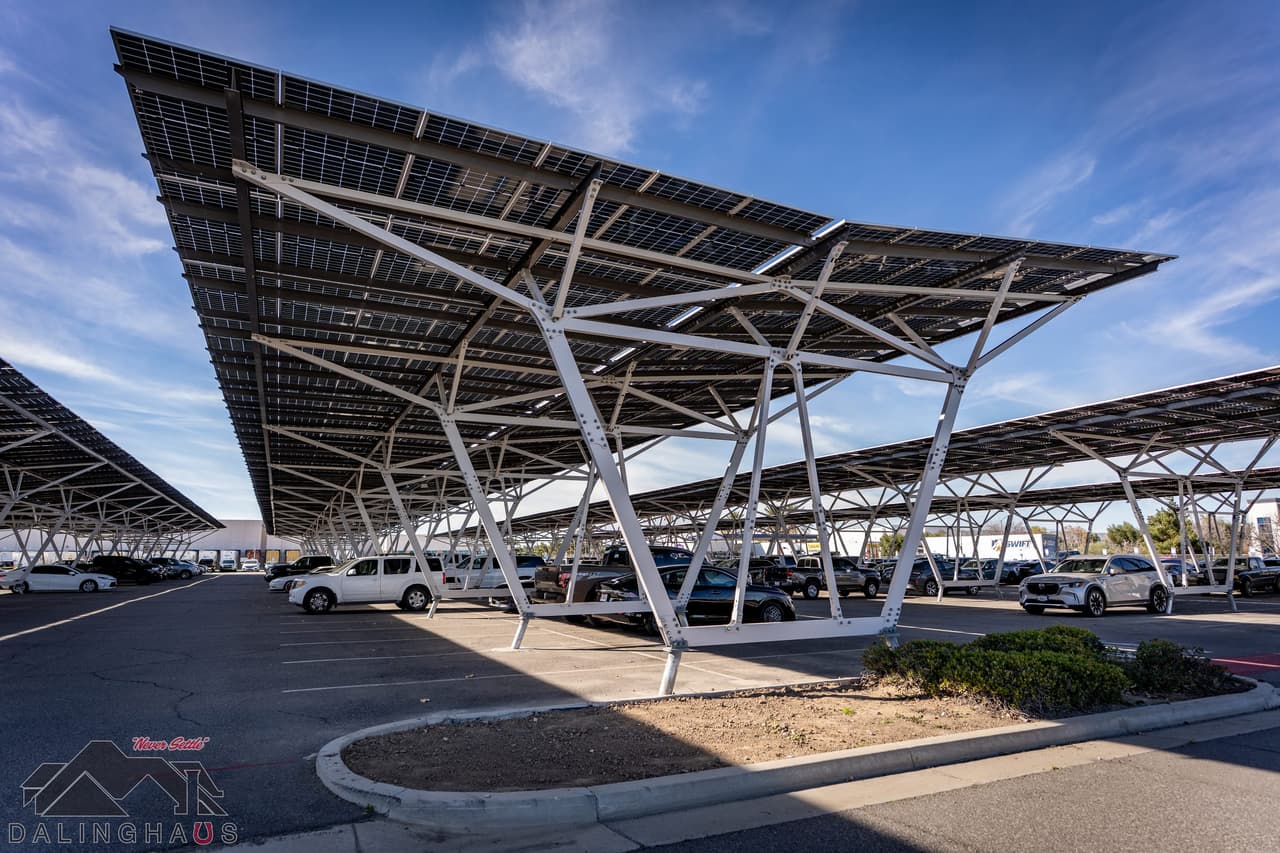
Helical pile foundation for a solar canopy in Southern California
Helical PilesPull Testing
Dalinghaus installed the helical pile foundation and erected the structure for a solar canopy over a staff parking lot in Southern California, working in four phases so the lot stayed open.
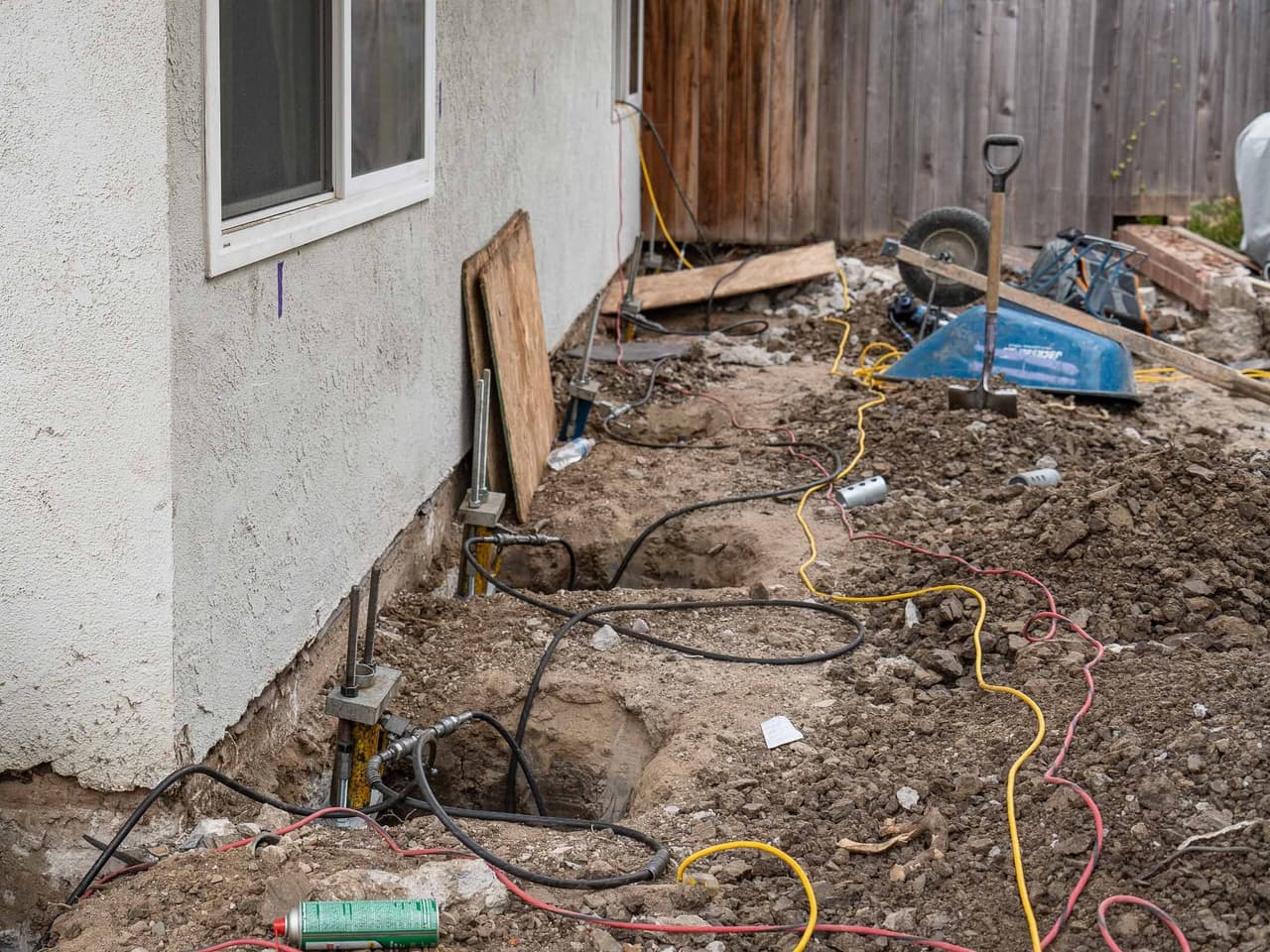
Lifting a settled Irvine home 3 inches with helical piers
Helical PiersHydraulic Lift
The back of an Irvine home had settled about 3 inches over roughly ten years. Ten helical piers went in over two days, and a 30 minute lift brought the back half of the home up 3 inches.
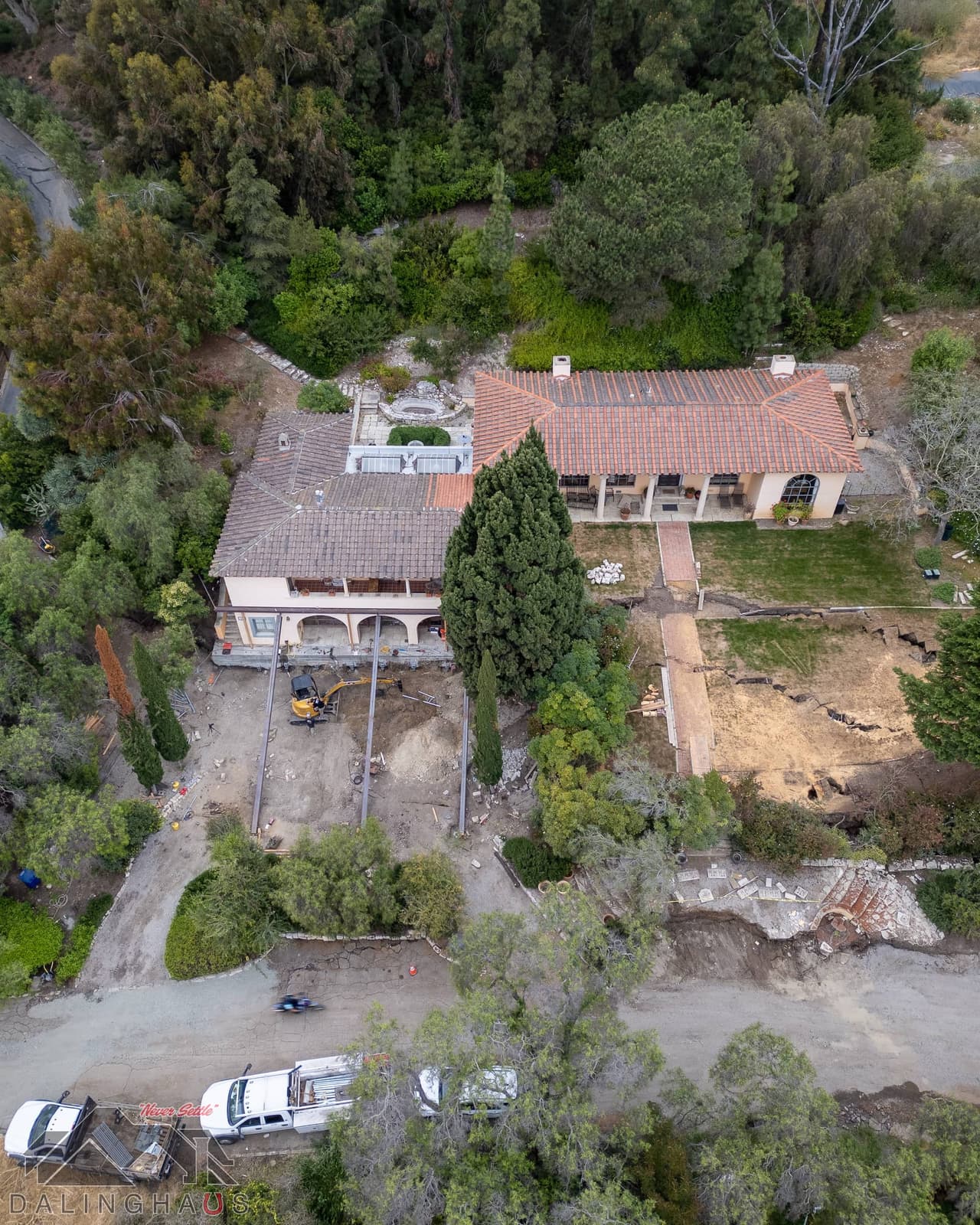
Helical piers to bedrock under a Rancho Palos Verdes home caught in a landslide
Helical Piers
A hillside home in Rancho Palos Verdes split in half as the ground slid toward the slope. Dalinghaus installed helical piers about 30 feet down to competent strata or bedrock beneath it.
Steel piers for a Rancho Palos Verdes home that settled 16 inches
Steel PiersFoundation Stabilization
A beachside home in Rancho Palos Verdes settled 16 inches in a couple of months. Steel piers were driven to load bearing soil or bedrock at each excavated location, with a lift planned once they were in.
Lifting a San Clemente hillside home that settled 2 inches
Helical PiersHelical Tieback Anchors
A San Clemente hillside home had settled about 2 inches and was moving toward the slope behind it. Vertical helical piers and helical tieback anchors stabilized the home and recovered part of the drop.
Answers to common questions about Concrete Driveway Repair.
Don't see your question here? Our team is happy to help. Reach out anytime.
The soil under it stopped holding it up. The usual culprits here are clay that swells and shrinks with moisture, water washing soil out from under the slab edges, and fill that was never compacted for vehicle loads. The slab drops into whatever space the soil leaves behind, usually a section at a time.
Usually, yes. If the slabs are structurally sound, polyurethane foam injection raises them back to level through coin sized holes, with no demolition and same day use in most cases. Replacement only makes sense when the concrete itself has broken apart too badly to lift, and we will tell you honestly which situation you have.
That gap usually means the driveway slab is settling away from the garage, and it tends to grow because water follows it down and erodes more soil. Lifting the slab closes the gap and restores a smooth transition, and sealing the joint keeps water from reopening it.
Most lifting and crack sealing projects are finished in hours, not days. Polyurethane foam cures within minutes of injection, so the driveway is typically ready for foot traffic immediately and vehicles the same day. Your written estimate includes the expected timeline for your specific repair.
Yes. Warranty terms are provided in writing with your estimate, so you know exactly what is covered before work begins. Ask your project specialist during the free evaluation.
Pricing & Scope
Honest pricing & honest limits
Every home is different, so every estimate is written for the home in front of us. A free on site evaluation gives you a written estimate that reflects your specific scope, access, and conditions.
How pricing works
Repair pricing varies by load, depth, and access. Your written estimate comes from the free evaluation.
When this isn't the right fix
Not appropriate for purely cosmetic cracks with no structural movement. We will tell you at the evaluation.
Why our estimates are honest
Licensed contractor serving California, Arizona, and Nevada.
The Process
How we approach Concrete Driveway Repair
A straightforward path from free evaluation to completed repairs.
Step 01
Free evaluation
We measure how far each section has settled, check drainage, and find where the supporting soil went.
Step 02
Lift the sunken slabs
Polyurethane foam injected through small holes fills the voids and raises the driveway back to level in controlled stages.
Step 03
Seal cracks and joints
Cracks are cleaned, filled, and sealed so water stops eroding the soil beneath the slab.
Step 04
Verify and hand back
Final elevations are checked, holes are patched, and the driveway is typically back in service the same day.