CH 01
Why seawalls lean: the arithmetic of pressure behind the wall
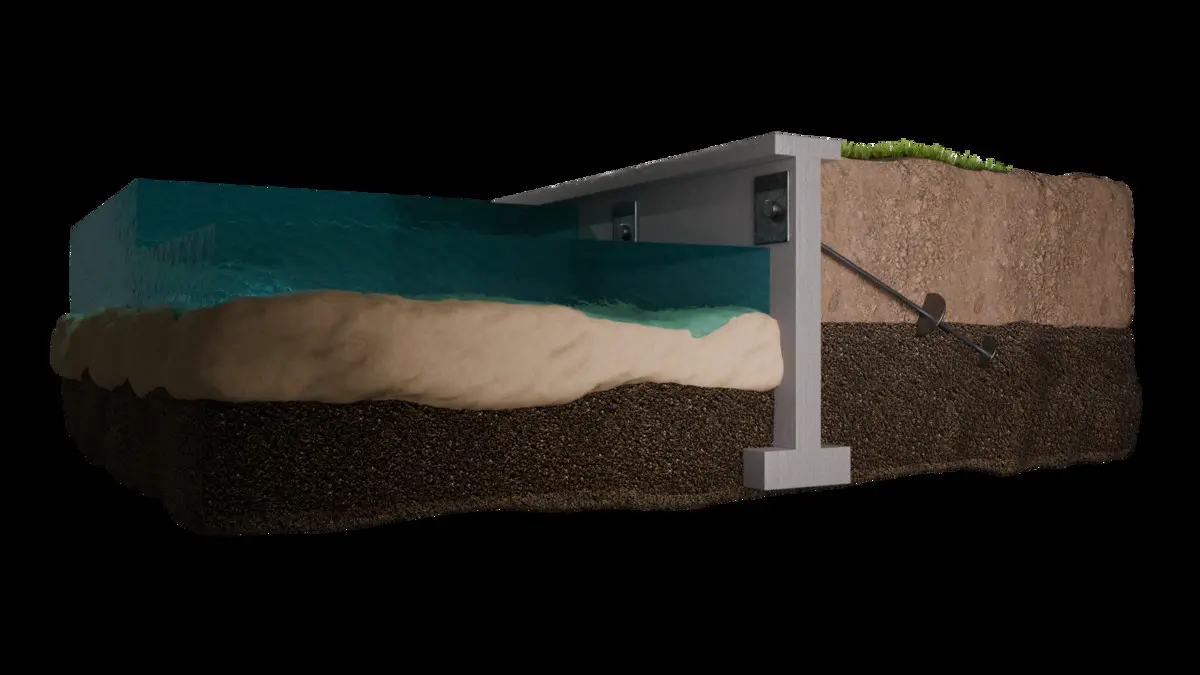
A seawall leans when the push from behind exceeds what the wall and its anchors can resist, and along the San Diego coastline that push has a rhythm. Every rain saturates the soil the wall retains; every high tide raises the water table behind it; every low tide drops the supporting water in front while the saturated soil keeps pushing. That twice daily imbalance is why engineers treat the falling tide as a seawall's hardest working hour: the wall briefly holds back wet ground with less water bracing its face.
Trapped groundwater turns the push into hydrostatic pressure, the same force that causes walls to bow or lean everywhere water cannot drain. San Diego area soils compound it: USDA survey data shows clay dominating the ground here, with expansion risk rated high, and saturated clay both holds water against the wall and swells while it does. A wall built decades ago was designed for a drained backfill, not for clay that stays loaded through the rainy season.
CH 02
Helical tiebacks: an anchor that proves itself on the way in
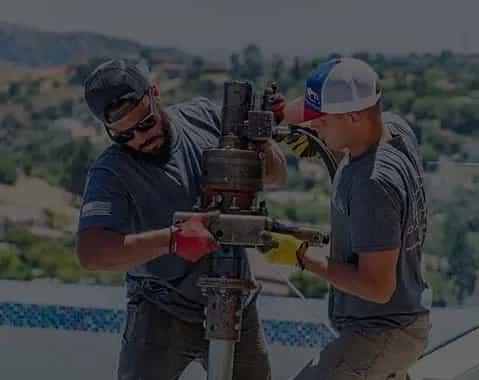
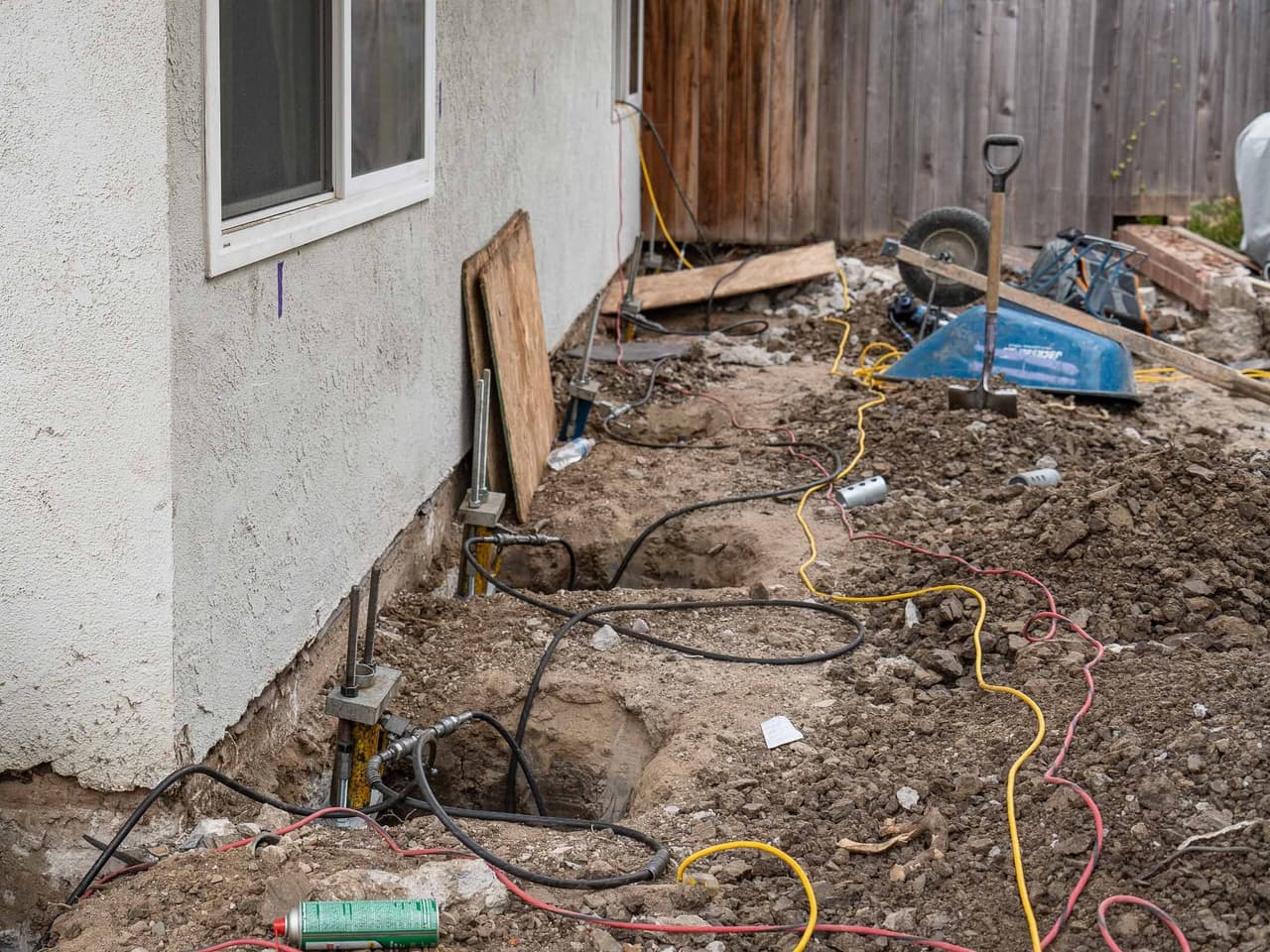
The modern anchoring workhorse is the helical tie back anchor: a steel shaft with screw plates, driven at a downward angle through the weak, water loaded soil near the wall and into the dense, stable ground beyond it. The installation is its own load test. The torque required to advance the anchor corresponds to the strength of the soil gripping it, so the crew keeps driving until the reading proves the anchor has the capacity the wall needs. Holding power is measured during installation, not assumed afterward.
Once each anchor reaches verified capacity, it is fastened to the wall face with marine grade hardware and tensioned. The wall now has a third force on its side: a mechanical connection to ground that does not move, resisting the soil and water pressure that was winning. Anchor count and spacing are set by the wall's length, height, and condition, so the load is shared instead of concentrating at one stress point.
CH 03
Sequencing: why anchors come after the soil is stabilized
Anchoring a wall that is still losing soil behind it is defending a position that is dissolving. If tidal cycling has been carrying fines out through cracks and failed joints, voids sit behind the wall, and anchors tensioned against a voided backfill hold a wall that keeps settling around them. So the sequence matters: polyurethane injection fills the voids and stabilizes the retained soil first, drainage relief addresses trapped groundwater where weep holes have failed, and the anchors then lock a stabilized system in place.
The wall's documented evaluation determines the order for your wall specifically. Some walls need anchors alone. Some need soil work alone and no anchors at all. The plan you get in writing shows which forces are actually acting on your wall and which tools answer them, in what order.
CH 04
The original tie rods: the failure your wall was born with
Many older walls were built with buried steel tie rods connecting the wall face to a deadman anchor in the soil behind it. Those rods have spent decades in the harshest environment steel can occupy, damp salty soil, and their corrosion is one of the most common root causes of seawall lean. The failure is invisible: the rod thins underground until it snaps or stretches, the wall section it held begins to move, and the first visible evidence is the lean itself, or rust staining at the rod's wall connection. Our anchor rod deterioration page covers the warning signs.
Replacement helical tiebacks are engineered for the environment that defeated the original rods: the shafts reach soil well behind the splash zone, and the wall side hardware is marine grade, specified for salt exposure. The new system does not depend on the old rods, so a wall can be re anchored without excavating the failed hardware.
CH 05
When anchoring is not the answer
A wall that stands plumb, with no soil loss behind it and no movement between evaluations, does not need anchors regardless of its age. Cracks alone often call for sealing and soil stabilization rather than anchoring. Trapped water pushing on a structurally sound wall may need drainage relief first and nothing more. And a wall past saving needs to be called that plainly, not anchored as a gesture.
The evaluation is where those calls get made, with measurements: the wall's lean documented against plumb, the ground behind it checked for the depressions and soft spots that betray soil loss, joints and weep holes inspected, and the findings put in writing whether or not any work follows. If your wall is moving, you will know how much, and what it takes to stop it.