
Saltwater corrosion
Anchor rods sit in damp, salty soil, and corrosion thins them continuously. Steel that has spent decades buried behind a seawall has been under chemical attack the entire time.
Anchor rods hold a seawall against the soil pushing behind it. Anchor rod deterioration takes away that grip long before the wall looks damaged.

A local specialist will evaluate your foundation, walk you through the findings, and send a clear estimate. No cost, no pressure.
Many seawalls stand straight not because the wall alone is strong enough, but because buried steel anchor rods tie it back into the ground behind it. Those rods carry constant tension against soil and water pressure, and they live in the harshest environment steel can occupy: damp, salty soil. Corrosion thins them year after year, and pressure cycles fatigue them, until one day a rod stretches or snaps and its share of the load lands on its neighbors. The failure is invisible while it happens, which is what makes anchor rod deterioration the quietest serious problem a seawall can have. The signs surface indirectly: rust stains bleeding from the points where rods connect to the wall face, anchor plates or rod ends that are visibly rusty, bent, or newly exposed by soil loss, and, most telling, a wall that has begun to bow or lean between anchor points. If your wall is decades old and its anchors are original, assume the steel has been paying the salt tax the whole time. An evaluation reads the wall for the load pattern and tells you whether the anchoring is still doing its job. Failed rods do not get repaired; they get replaced by a system that does not share their weakness. Modern helical tie backs are installed to measured torque and fastened with marine grade hardware, taking over the job without excavating the old steel. Where the rod failure let the wall move and soil shift, structural foam injection restores the ground before the new anchors are tensioned. The starting point is our seawall anchoring service.
For the repair side of this, the seawall repair solutions page lists every method Dalinghaus installs, including the ones that fix problems other than anchor rod deterioration.
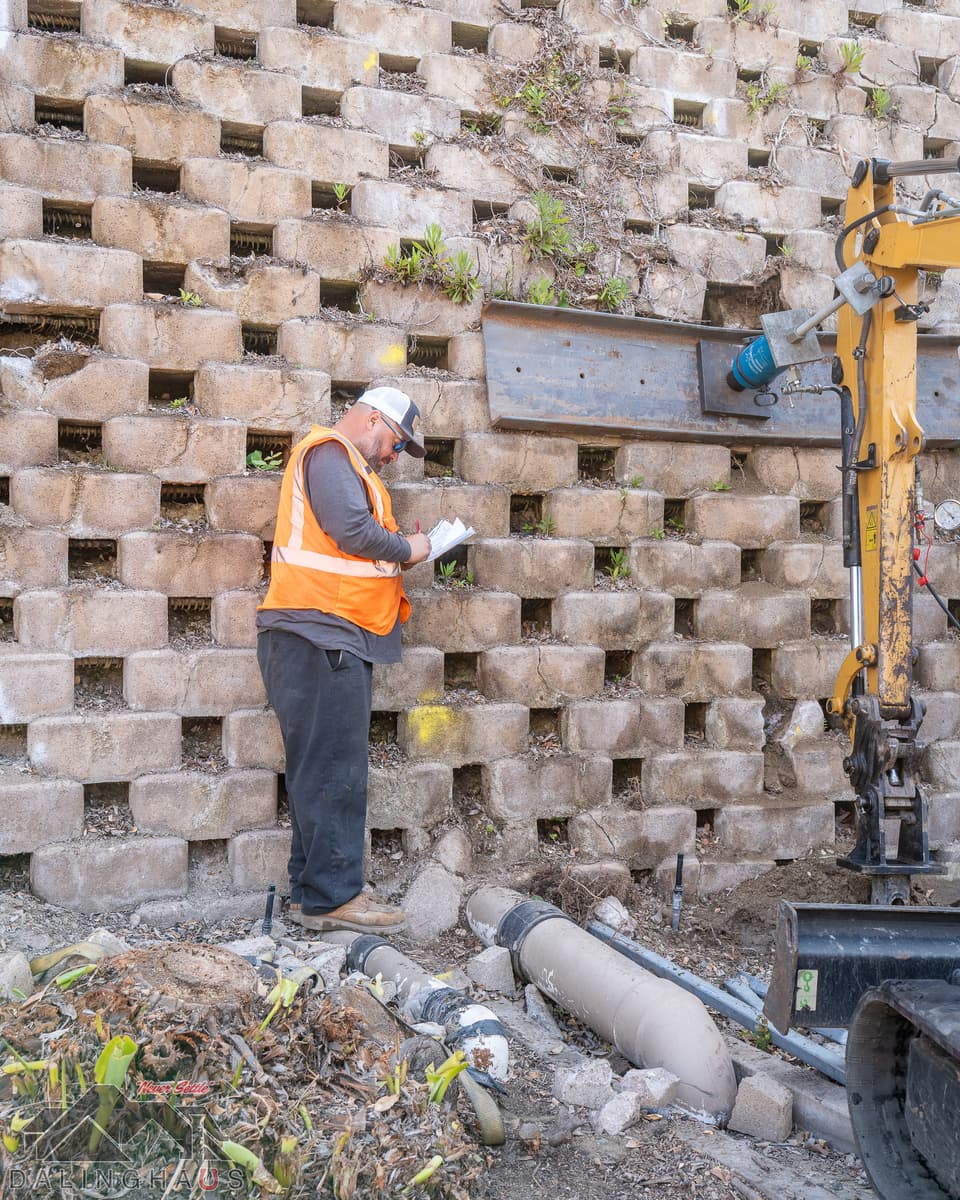
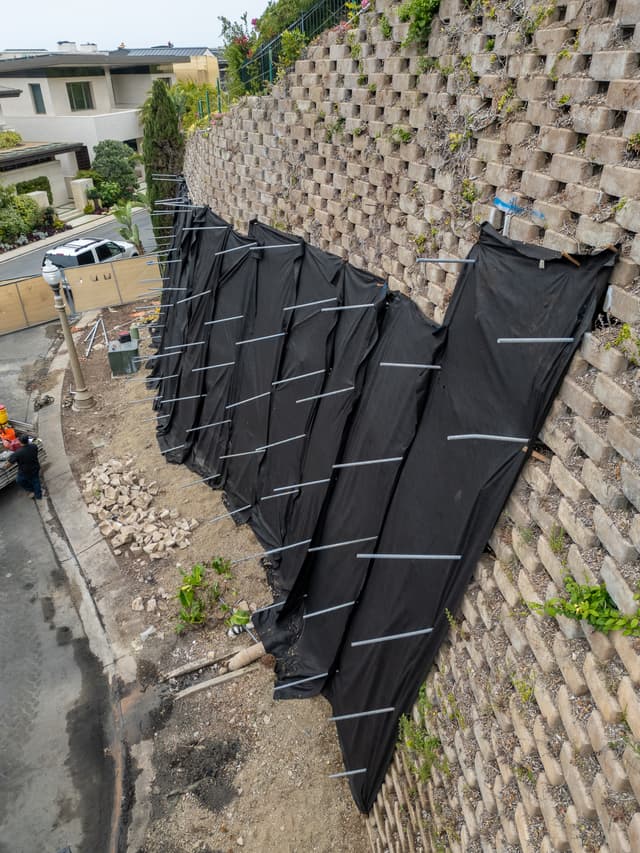
Anchor rods sit in damp, salty soil, and corrosion thins them continuously. Steel that has spent decades buried behind a seawall has been under chemical attack the entire time.
Tides, storms, and wet seasons load and unload the rods over and over. Metal under cyclic tension fatigues, and fatigued metal fails suddenly rather than gradually.
As soil erodes from around a rod or its buried anchor block, the rod loses the ground that gave it grip, and can bend or pull rather than hold.
Older walls were often anchored with unprotected or minimally protected steel, well short of what modern seawall anchoring specifies today. Those systems had a service life, and on many walls it has already elapsed.
Solving anchor rod deterioration means addressing the underlying soil, pressure, or settlement cause. Not just patching the visible damage. Below are the engineered solutions we install most often for this symptom in coastal California homes.
If your home is showing anchor rod deterioration, the team you call matters. Dalinghaus crews handle seawall repair and related structural work across coastal California, and nothing else.
Foundation repair, concrete leveling, and crawl space repair are our entire focus. Not a sideline.
More than 2,000 projects on the clay and desert soils of California, Arizona, and Nevada since 2011.
CSLB License #983851 in California, ROC #330307 in Arizona, and License #0089738 in Nevada. Look us up with the state before we ever set foot on your property.
Warranty terms come in writing with every proposal, and the terms that apply to your job are stated in that job's paperwork. Ask your project specialist during the free evaluation.

Don't see your question here? Our team is happy to help. Reach out anytime.
Read the wall instead. Rust stains at connection points, rusty or bent hardware where rods meet the face, and bowing or lean developing between anchor points are the wall reporting on steel you cannot see. An evaluation puts measurements behind those signs.
How a repair moves from free evaluation to completed work once anchor rod deterioration is diagnosed.
A local specialist walks the areas showing anchor rod deterioration, measures what is moving, and answers your questions on site. No cost, no obligation.
The method is matched to the cause behind the anchor rod deterioration, with scope and pricing in writing. No pressure in either direction.
A Dalinghaus crew corrects the movement behind the anchor rod deterioration, and leaves the site cleaner than we found it.
Before you call anyone about anchor rod deterioration, read how homeowners across coastal California rate our work.
Share a few details and a local specialist will follow up as soon as possible to set your evaluation.
A free evaluation pins down the cause: one visit, clear findings, written estimate.