Photo related to leaning or bowing walls
Retaining Wall Repair · Problem Signs · Since 2011

A retaining wall should not have a favorite direction.

Lean and bulge mean the soil load has outgrown the wall. Caught early, anchors end the argument. Ignored, the hillside finishes it.

Southern California · Arizona · Nevada Since 2011

Let's take the first step toward solid ground.

A local specialist will evaluate your foundation, walk you through the findings, and send a clear estimate. No cost, no pressure.

Licensed Contractor
1,000+ Google Reviews
CA Lic. #983851 · AZ ROC #330307 · NV Lic. #0089738
What this symptom means

Leaning or Bowing Walls: diagnosed and explained.

Stand at one end of your retaining wall and sight down its length. A healthy wall reads as a straight line at a consistent angle. A failing one leans away from the soil it retains, or bulges outward in a swollen section where the pressure is concentrated. Leaning usually means the whole wall is rotating forward, often because the footing is giving or the soil load has simply exceeded what the wall can resist. Bowing means the wall face itself is bending between its supports, the classic signature of lateral soil pressure and water trapped in the backfill. Both get worse the same way: gradually through the dry months, then in jumps after wet weather saturates the soil behind the wall. In California, Arizona, and Nevada, clay rich backfill swells every time it takes on water, poor drainage lets hydrostatic pressure stack on top of the soil load, and every wet season pushes the wall a little further past plumb. The physics only run one direction. A wall that leans this year will lean more next year unless something changes, and the earlier the movement is caught, the more likely the wall can be anchored and saved instead of rebuilt. The repair conversation usually starts with helical tiebacks and wall anchors to tie the wall to stable ground, adds carbon fiber installation where the face itself is bending, and begins in every case with the measurements from a retaining wall inspection.

For the repair side of this, the retaining wall repair solutions page lists every method Dalinghaus installs, including the ones that fix problems other than leaning or bowing walls.

Do You Need a Retaining Wall? | Soil Erosion & Usable Space Solutions. Video preview.
DALINGHAUS · SINCE 2011

Do You Need a Retaining Wall? | Soil Erosion & Usable Space Solutions

DALINGHAUS FOUNDATION REPAIR
Diagnosis First

How far along is your leaning wall?

Lean and bow are stages, not verdicts. How much the wall has moved, and whether it is still moving, decide what can save it. Pick the closest match.

Slight lean that has not changed

Barely off plumb, identical photos year over year

Some walls take a small set early in life and then hold. A slight lean that has not changed across wet seasons deserves a measured baseline and periodic rechecks rather than immediate repair. The measurement matters, because eyes cannot tell a stable quarter inch from a growing one.

Catch It Early

What to check alongside the lean

  • How the lean is changing Photograph the wall from a fixed spot and compare across seasons. A lean that grows after wet weather is active failure, not history.
  • Cracks joining the party Horizontal cracks across the wall face or stair step cracks through mortar joints alongside a lean mean the wall is bending, not just tilting.
  • Soil escaping or slumping Soil washing out at the base or settling into a dip behind the top of the wall means the backfill is on the move, and the wall is losing its grip on it.
  • Water pooling at the base Standing water below the wall or damp patches on its face mean the drainage is not doing its share, so pressure keeps building behind the wall.
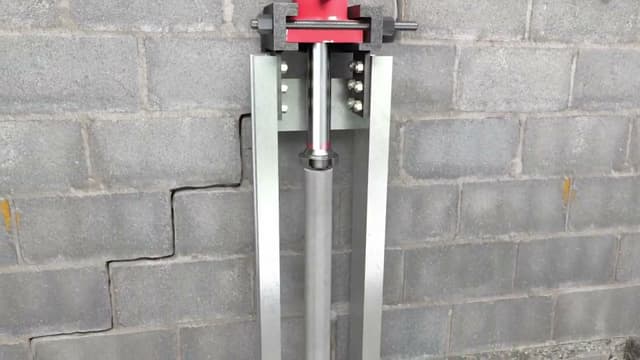
Dalinghaus Foundation Repair installing push piers with a hydraulic ram, for bowing concrete block walls with a stair-step
Most Common Causes

What causes leaning or bowing walls in regional homes.

CAUSE 01

Lateral soil pressure

The retained soil pushes sideways against the wall constantly, and clay rich soil pushes hardest when wet. When that pressure exceeds the wall's design capacity, the wall rotates or bends, and the lean you can see is the running total.

CAUSE 02

Poor drainage and saturated backfill

Weep holes that are clogged or missing leave water no way out of the backfill. Trapped water adds hydrostatic pressure on top of the soil load and softens the ground the wall stands on, a combination that bends walls faster than either force alone.

CAUSE 03

Footing failure or undercut base

If the soil under the wall footing settles, erodes, or washes out, the wall tips forward from the bottom. A lean that grows from the base, with soil loss visible at the toe, points here.

CAUSE 04

Undersized construction

A wall built without enough reinforcement, buried depth at its base, or drainage for its height carries a structural deficit from day one. It may stand straight for years, then start moving once the backfill finds its weight.

CAUSE 05

Added load above the wall

New structures, vehicles, pools, or heavy landscaping above a retaining wall add surcharge load, extra weight pressing down on the retained soil, that the wall may never have been designed to hold. The wall answers with lean.

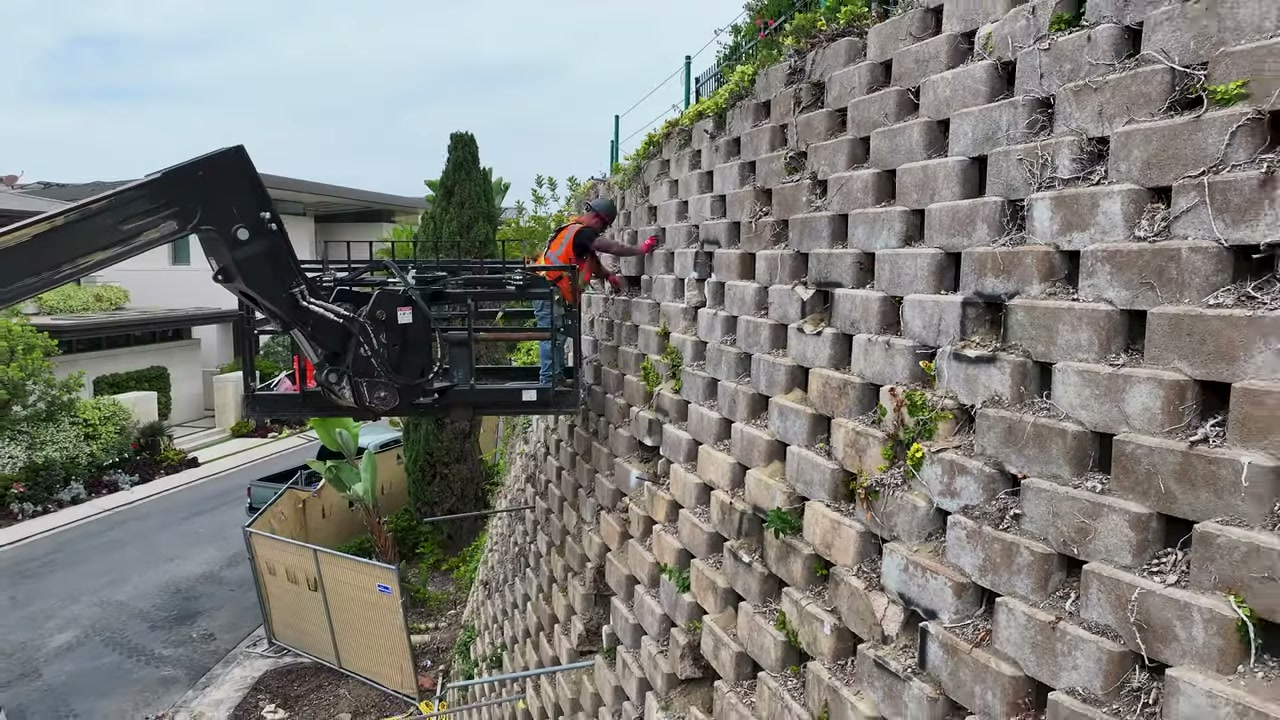
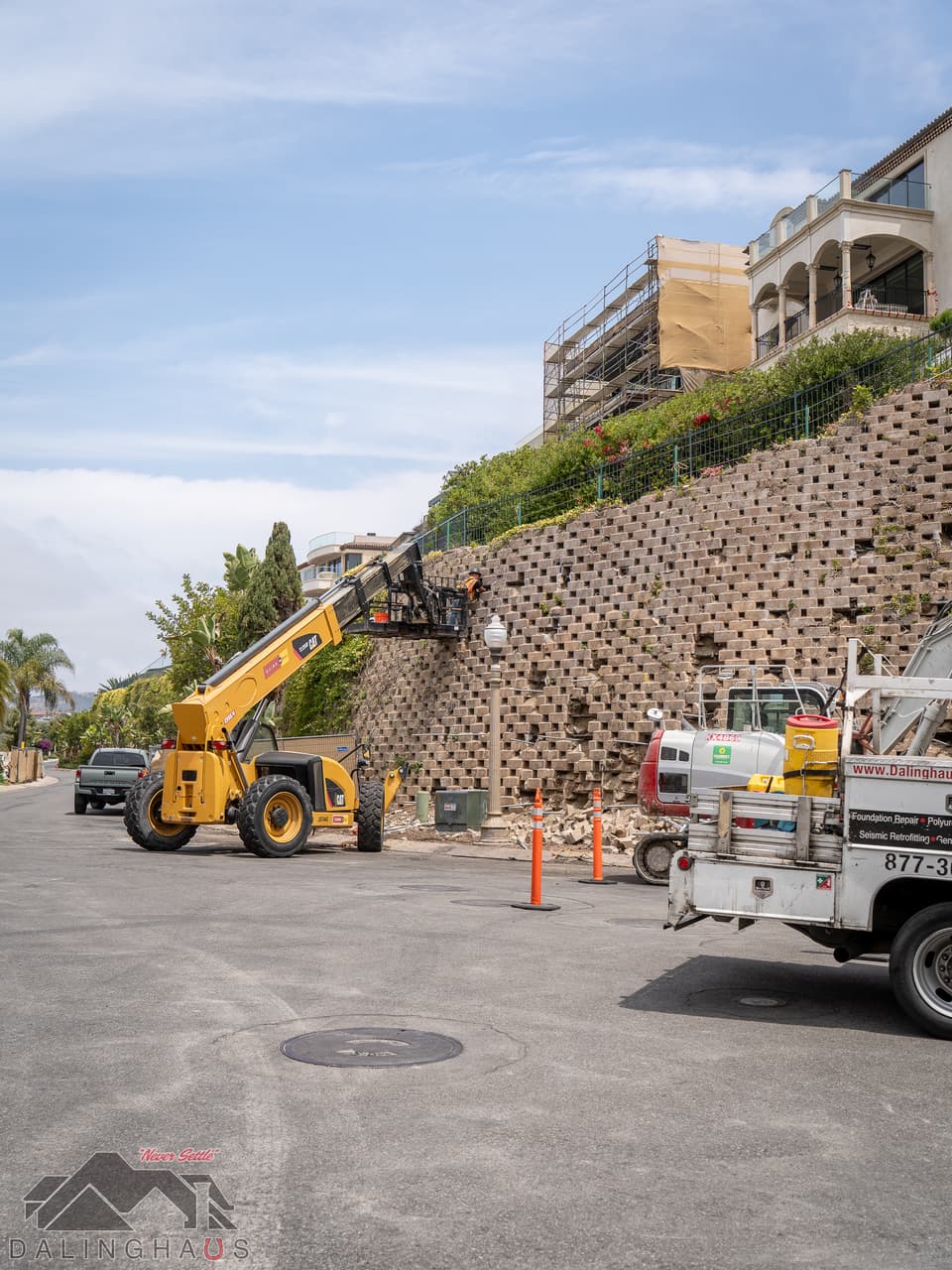
Dalinghaus Foundation Repair crew using a telehandler to work on a failing retaining wall in Dana Point.
Project Photos

Leaning or Bowing Walls on real homes.

Photos from our own evaluations and job sites. Swipe or use the arrows to see more.

Repair Solutions

How retaining wall repair specialists actually fix leaning or bowing walls.

Solving leaning or bowing walls means addressing the underlying soil, pressure, or settlement cause. Not just patching the visible damage. Below are the engineered solutions we install most often for this symptom in California, Arizona, and Nevada homes.

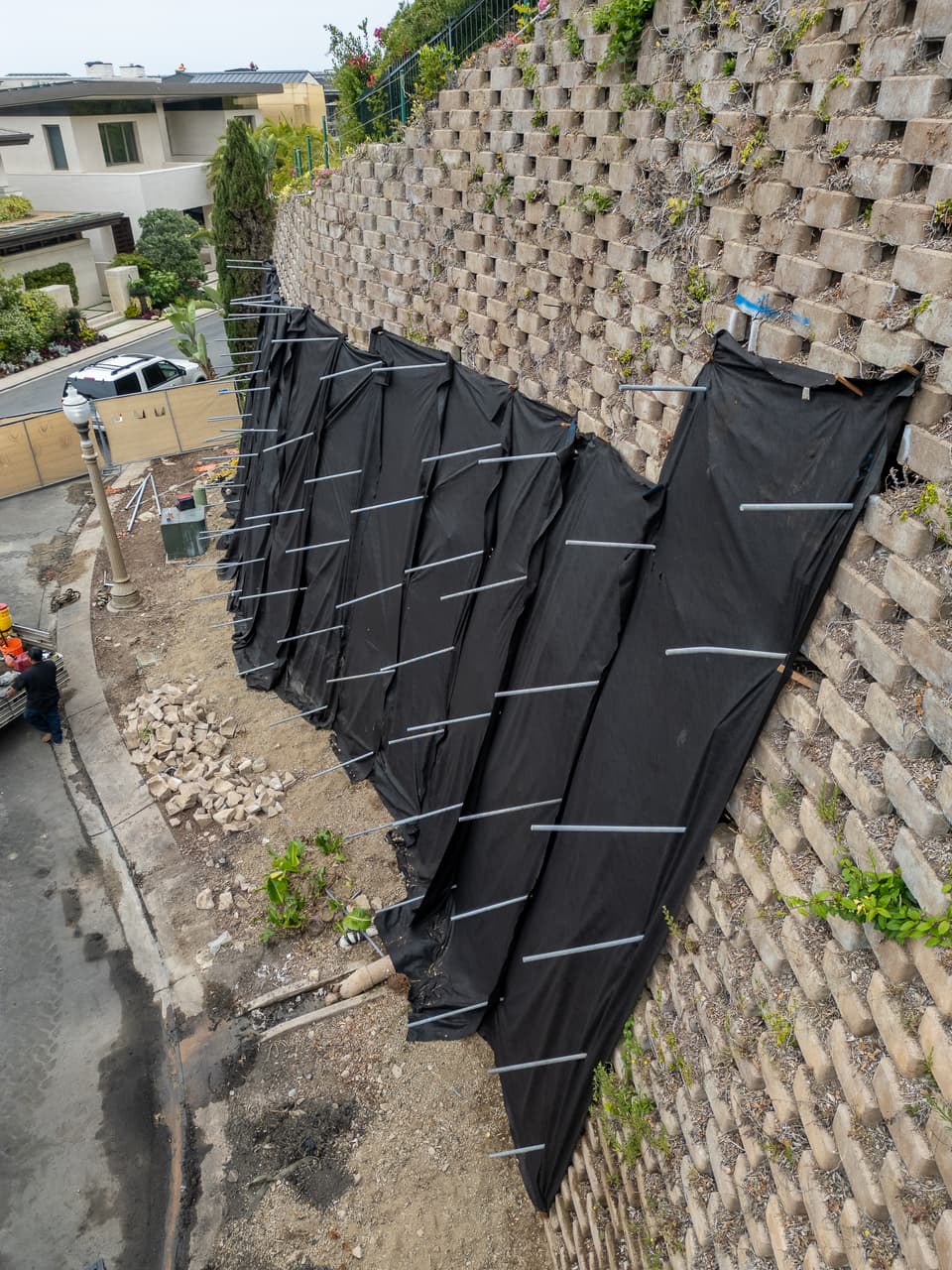
Dalinghaus Foundation Repair stabilizing a concrete block retaining wall with tieback anchors and geotextile fabric.
Why Choose Dalinghaus

Care and expertise from a team that's been doing this since 2011.

If your home is showing leaning or bowing walls, the team you call matters. Dalinghaus crews handle retaining wall repair and related structural work across California, Arizona, and Nevada, and nothing else.

01
Specialized expertise.

Foundation repair, concrete leveling, and crawl space repair are our entire focus. Not a sideline.

02
Locally owned since 2011.

More than 2,000 projects on the clay and desert soils of California, Arizona, and Nevada since 2011.

03
Licensed in California, Arizona and Nevada.

CSLB License #983851 in California, ROC #330307 in Arizona, and License #0089738 in Nevada. Look us up with the state before we ever set foot on your property.

04
Warrantied solutions.

Warranty terms come in writing with every proposal, and the terms that apply to your job are stated in that job's paperwork. Ask your project specialist during the free evaluation.

Brian Dalinghaus, co-founder of Dalinghaus Foundation Repair
Brian Dalinghaus CO-FOUNDER · SINCE 2011
Brad Dalinghaus, co-founder of Dalinghaus Foundation Repair
Brad Dalinghaus CO-FOUNDER · SINCE 2011
Frequently Asked Questions

Answers to common questions about Leaning or Bowing Walls.

Don't see your question here? Our team is happy to help. Reach out anytime.

Any visible lean deserves measurement, because the trend matters more than the snapshot. A wall slightly out of plumb that has not moved in years is a different animal from one that moves a little more each wet season. Measuring the lean and comparing it over time is exactly what an evaluation establishes, and it costs nothing to get that baseline.

Our Process

From leaning or bowing walls to a fixed home.

How a repair moves from free evaluation to completed work once leaning or bowing walls is diagnosed.

Step 01

Schedule your free evaluation.

A local specialist walks the areas showing leaning or bowing walls, measures what is moving, and answers your questions on site. No cost, no obligation.

Step 02

Get your written estimate.

The method is matched to the cause behind the leaning or bowing walls, with scope and pricing in writing. No pressure in either direction.

Step 03

Repairs, done right.

A Dalinghaus crew corrects the movement behind the leaning or bowing walls, and leaves the site cleaner than we found it.

Customer Reviews

More than 1,000 Google reviews across our offices, averaging 4.9 stars.

Before you call anyone about leaning or bowing walls, read how homeowners across California and Arizona rate our work.

Free Evaluation

Start with a free evaluation.

Share a few details and a local specialist will follow up as soon as possible to set your evaluation.

What to expect
  • A local foundation specialist on site
  • A complete walk-through of the findings
  • A clear written estimate at no cost
  • No obligation, no pressure
Prefer to call
877-360-9227
Southern California · Arizona · NevadaSince 2011
Dalinghaus Foundation Repair

Let's take the first step toward solid ground.

A local specialist will evaluate your foundation, walk you through the findings, and send a clear estimate. No cost, no pressure.

Licensed Contractor
1,000+ Google Reviews
CA Lic. #983851 · AZ ROC #330307 · NV Lic. #0089738

Seeing leaning or bowing walls? Get the cause diagnosed.

A free evaluation pins down the cause: one visit, clear findings, written estimate.