CH 01
Why one panel sinks while its neighbor stays put
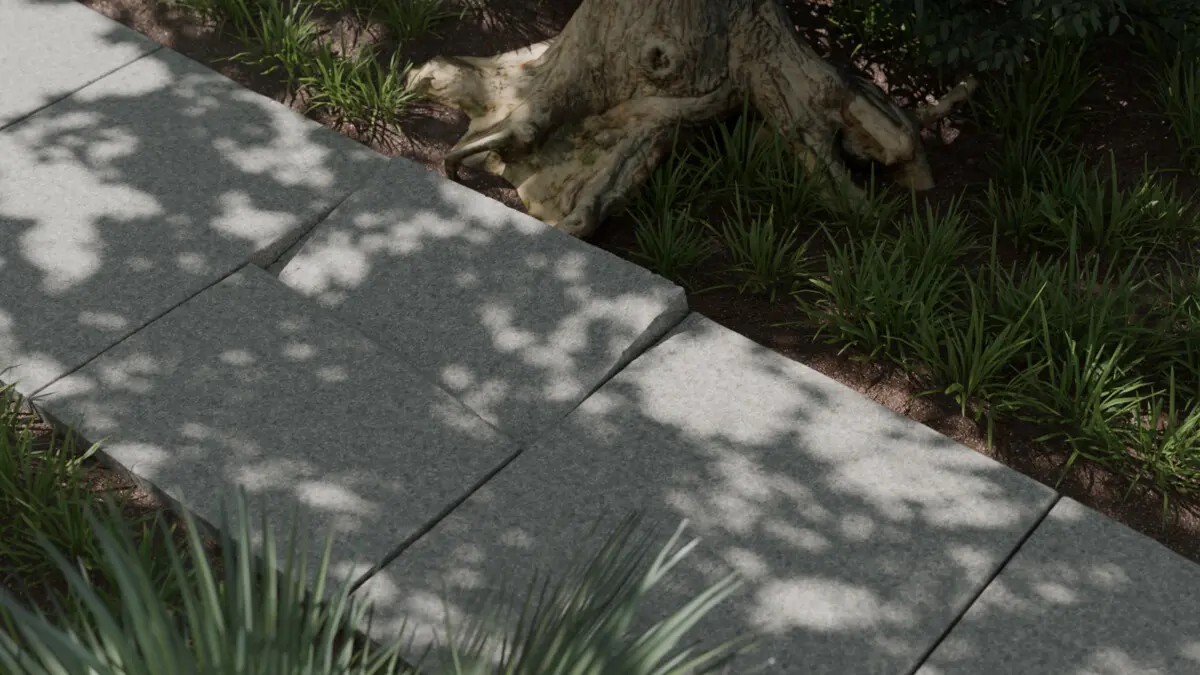
A sidewalk is not one slab; it is a chain of small independent slabs, each riding its own few square feet of soil. That independence is deliberate, joints exist so panels can move without cracking each other, but it also means every panel succeeds or fails alone. When a sprinkler line soaks the base under one panel, or a decades old root decays and leaves a void, or fill under a single section consolidates, that panel drops or tilts while its neighbors hold, and the joint between them becomes a raised edge at exactly shoe height. The mechanics are covered in full on our sinking sidewalks page.
The panel by panel nature of the failure is also why the repair is efficient. We are not treating a hundred feet of walkway; we are lifting the two or three panels that lost their base, back flush with the chain. The elevation survey identifies exactly which panels moved and how far, so the fix is surgical rather than wholesale.
CH 02
Roots, water, or fill: the diagnosis that keeps the repair honest
Sunken panels get lifted, but what put them down decides whether they stay up. Water erosion calls for sealing joints and rerouting the runoff that carried the fines away. Undercompacted fill, once the foam densifies it, is largely a solved problem. Roots are the driver that punishes shortcuts: a root that heaved one panel has usually disturbed the soil under two more, and root damage left unaddressed will simply relift or resink the repair on its own schedule. Where roots are involved we treat the root path along with the panels, and removing the tree is rarely necessary.
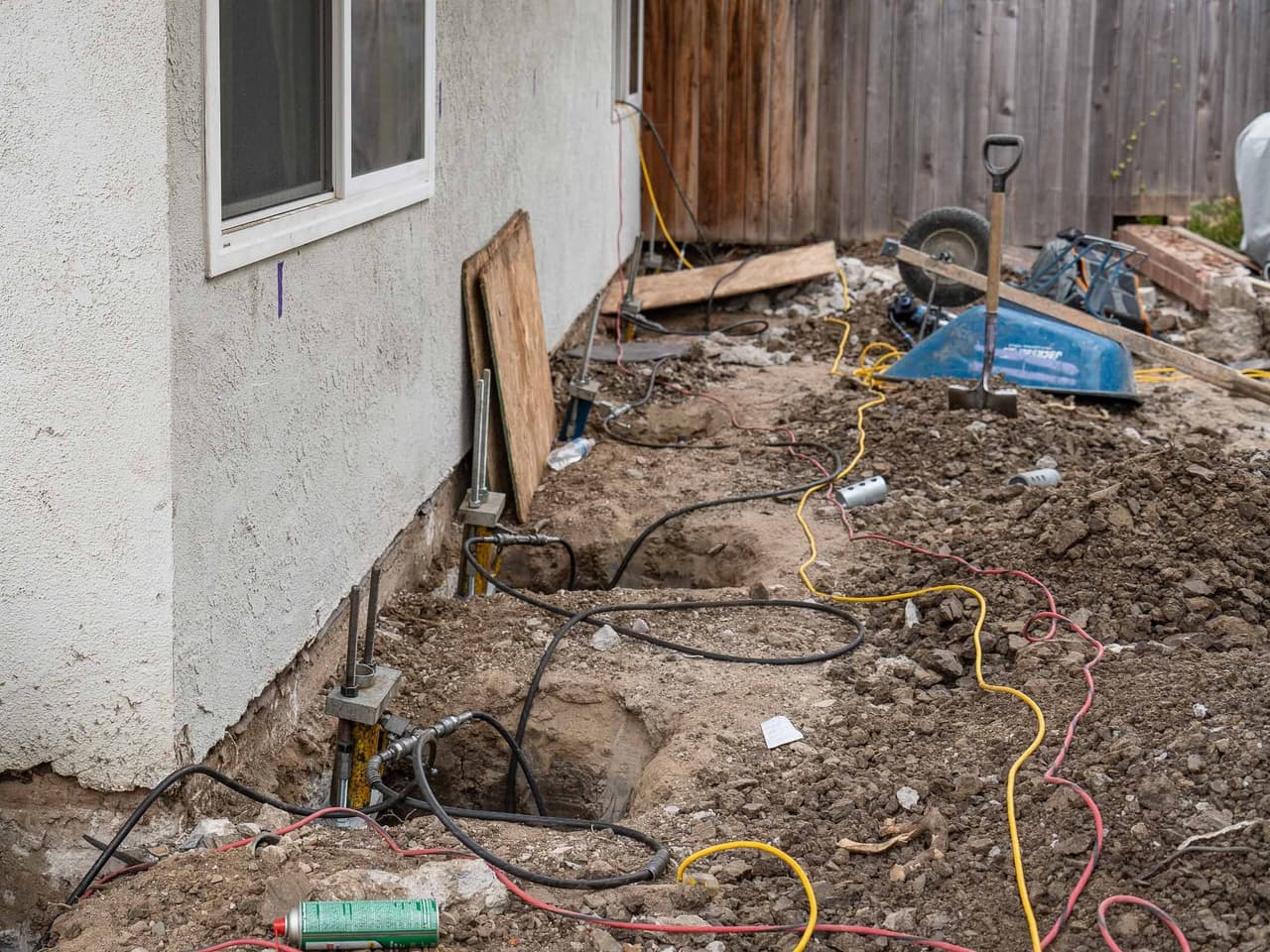
The lift itself is the standard method at small scale: coin sized holes, expanding foam placed under the low panel in watched shots, elevations checked until the panel sits flush, holes patched, joints sealed. A typical walkway is back under feet the same day, and polyurethane concrete leveling comes with its warranty terms in writing. Which method a given panel gets is a soil question rather than a preference, and our concrete repair methods is set out on its own page.
CH 03
Trip edges, liability, and the honest scope
For a homeowner, a raised sidewalk edge risks a family member's ankle. For an HOA, a property manager, or a commercial storefront, it is also a documented hazard with legal weight, because a visible edge that was left unrepaired is exactly the fact pattern liability claims are built on. Accessibility standards treat abrupt vertical edges as barriers, and the exposure compounds every season the panel keeps moving. Lifting the panel erases the hazard and the exposure in the same hour, which is why this is some of the most satisfying work we do.
The honest scope has edges of its own. A panel that has broken into pieces cannot be lifted and needs replacement, which is not a service we sell, so the findings will say so plainly and you can hand them to any flatwork contractor. And in some cities the sidewalk along the street belongs to the municipality, with programs and permits governing who may repair it; where that applies, the written findings give you exactly what you need for that conversation. What we will never do is grind an edge and call a moving panel fixed, because the panel that moved once is still sitting on the soil that moved it.