CH 01
How retaining walls fail: slowly, then all at once
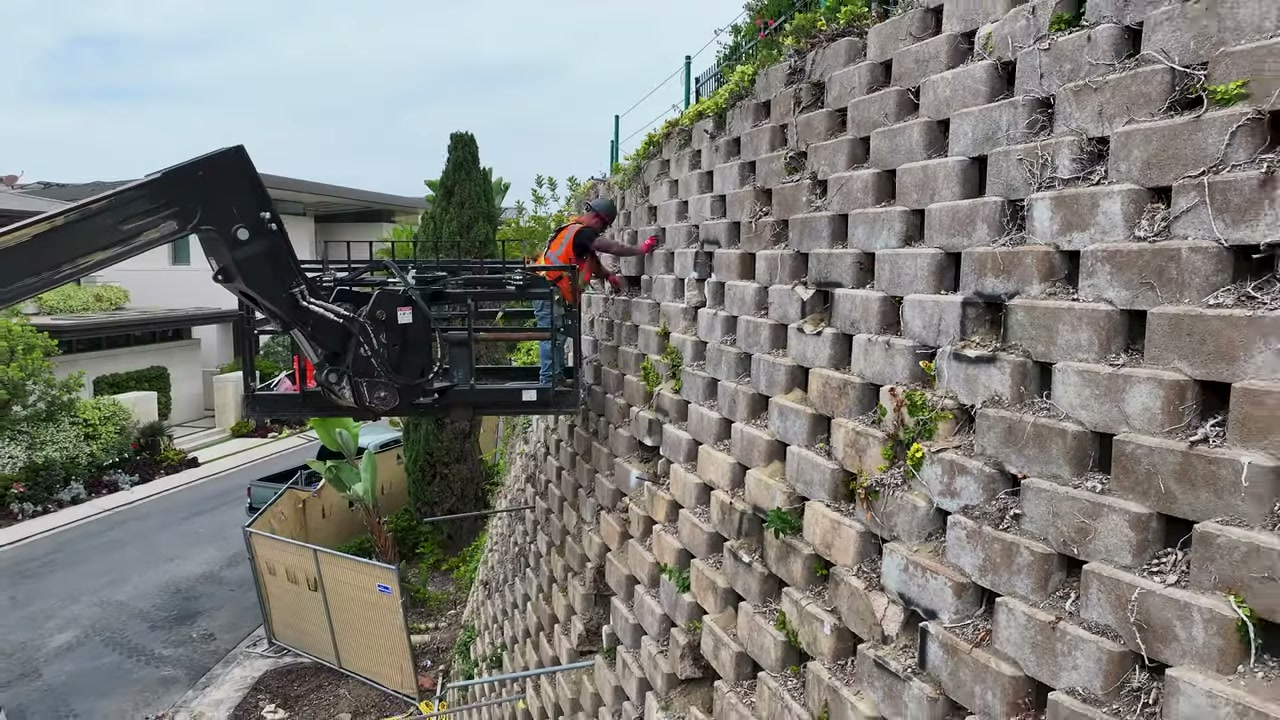
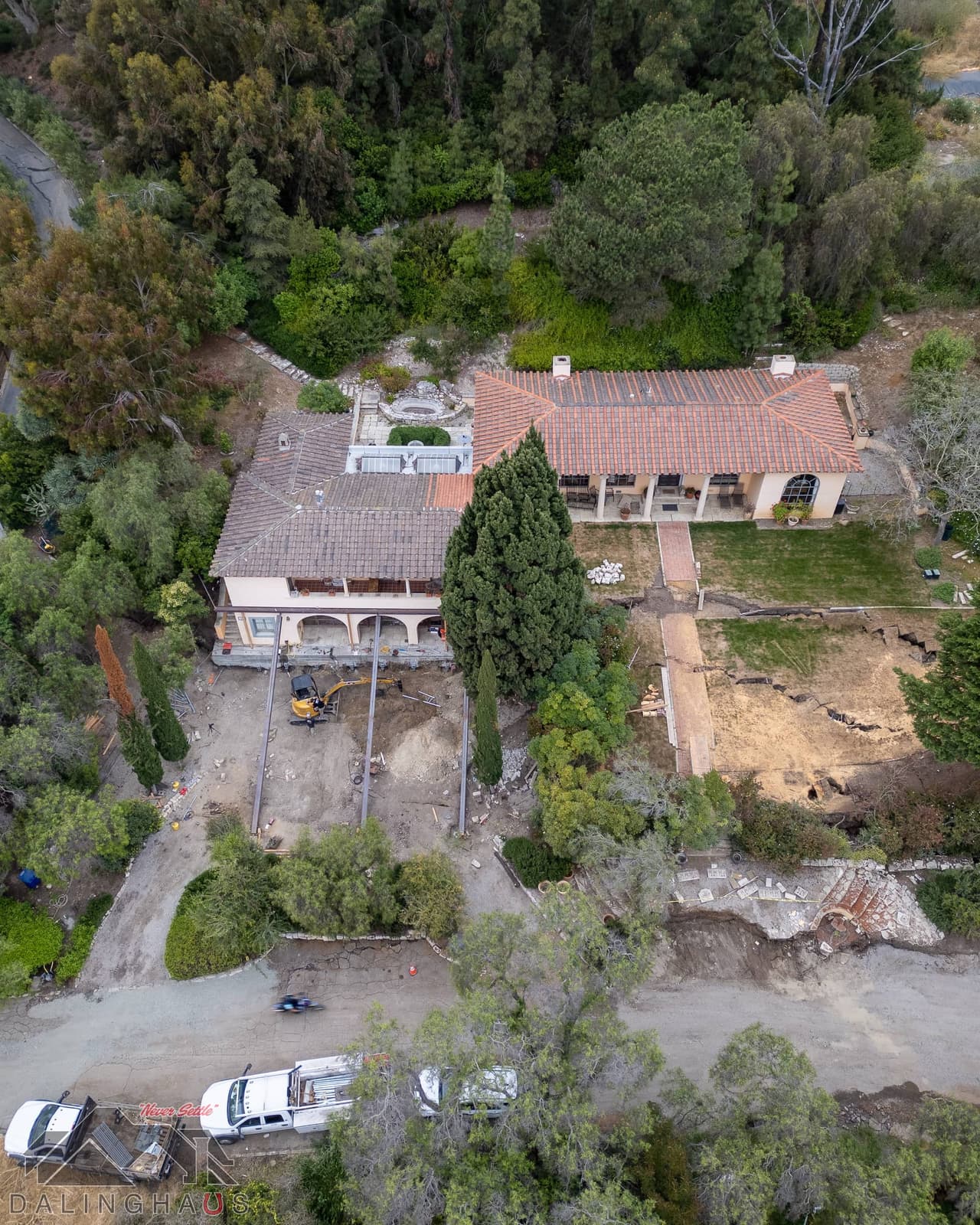
A retaining wall spends its whole life losing ground by fractions. The soil pushes constantly, the wall creeps a little further out of plumb each wet season, and mortar joints open by widths you would need a gauge to notice. Then a heavy winter saturates the backfill, hydrostatic pressure stacks on top of the soil load, and a wall that moved a quarter inch a year moves an inch in a month.
That failure curve is why inspection timing matters more than inspection frequency. The cheap, simple fixes all live on the flat part of the curve. By the time leaning or bowing is obvious from the sidewalk, the options are fewer and heavier. Cracks in a retaining wall tell the same story earlier and more quietly, which is why the inspection reads them by direction and width instead of counting them.
CH 02
What a Dalinghaus retaining wall inspection measures
The inspection walks the full length of the wall with instruments, not just eyes. Lean is measured against plumb and recorded, so next year's measurement has something to argue with. Every crack is logged by width, direction, and position. Drainage gets checked from both sides: weep holes, drain lines, grading, and where roof water actually goes. And the soil behind the wall is evaluated for saturation, settlement, and the gaps that mean backfill is migrating through or under the wall.
You get written findings either way. If the wall is healthy, the report says so and becomes your baseline. If it is not, the findings name the mechanism, not just the symptom, because the repair that follows should be aimed at whichever one is actually doing the damage.
CH 03
When you can wait, and when you cannot
If your wall was inspected recently and nothing about it has changed, a new inspection can wait; the baseline is doing its job. Walls that are short, dry, and holding garden grade rather than a slope can go longer between looks, though it helps to know the retaining wall warning signs worth watching for.
The calendar stops mattering the moment the wall changes. Cracks that need repair, a lean you can suddenly see, water pooling at the base, soil appearing at the toe of the wall, or a fence line above the wall going out of straight are all reasons to stop waiting. The same is true after the wall's environment changes: a season of unusual rain, new construction above the slope, or a drainage change on a neighboring property can load a wall faster than any normal year would.
CH 04
What Each Inspection Result Means
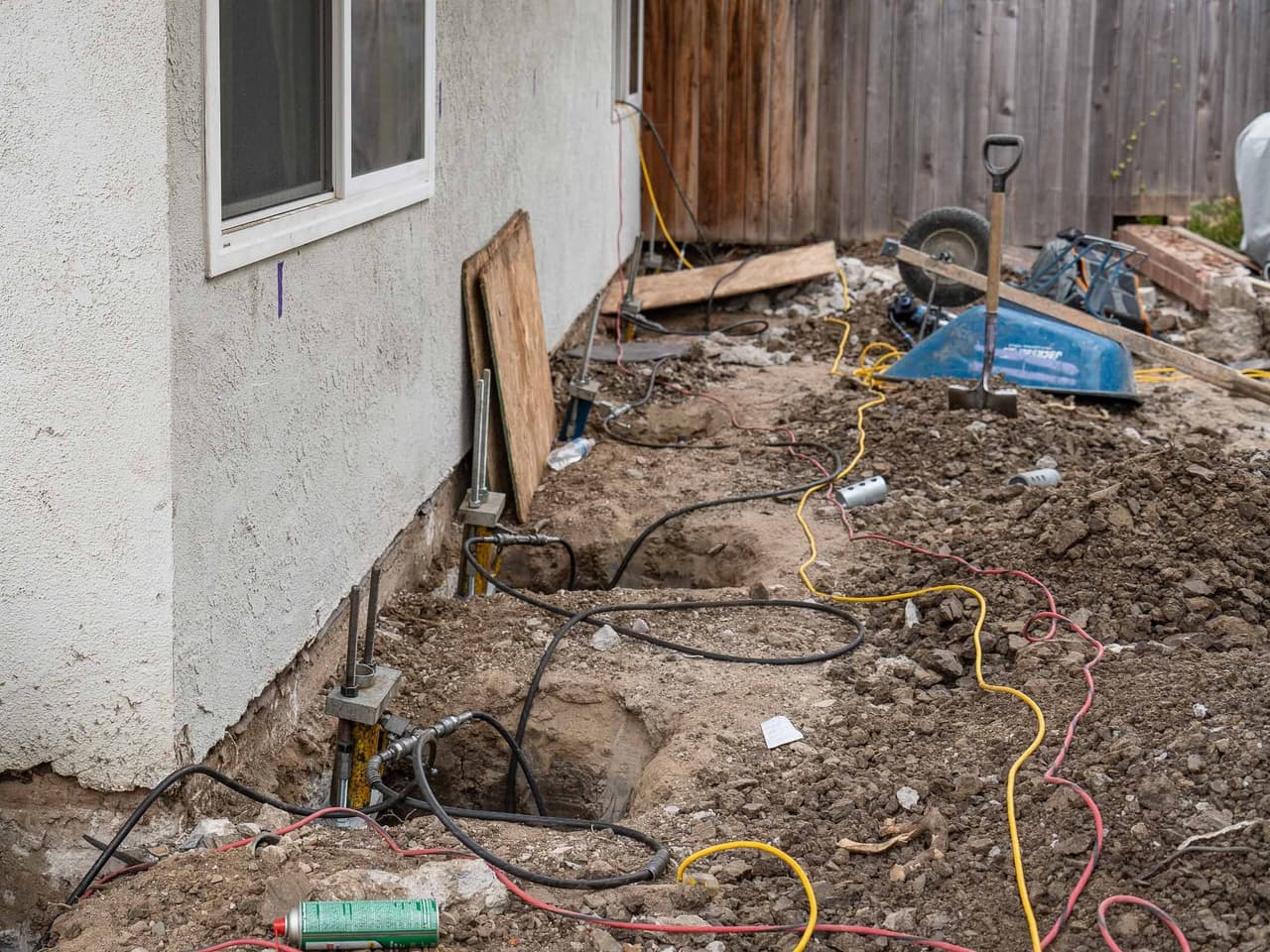
An inspection is only useful if it maps to action, so ours ends with a specific route. Trapped water calls for drainage corrections that give the backfill a way to drain before pressure builds. Eroded or voided backfill calls for polyurethane injection behind the wall to rebuild the soil into a stable mass. A wall being overpowered by its slope calls for anchor reinforcement that ties the wall to competent ground beyond the failure zone, and a cracked or early bowing face calls for carbon fiber installation to restore the tension strength masonry does not have.
Many walls need a combination, and a few need the honest recommendation nobody advertises: monitoring, or in the worst cases, replacement. The inspection is where you find out which, while every option among our retaining wall repair solutions is still on the table.
CH 05
Reading the ground behind the wall
In our Southern California, Arizona, and Nevada markets, the two most common soils behind retaining wall repair are clay and sand, and an inspection reads each differently. Clay backfill holds water and swells, so a clay backed wall gets checked for the pressure signatures: horizontal cracking, mid face bowing, and movement that jumps after wet weather. Much of our footprint carries moderate to high expansion risk, which keeps that cycle running every year.
Sandy and granular soils shed water fast but surrender their fines with it, so a sand backed wall gets checked for the erosion signatures instead: voids behind the face, settlement at the toe, and soil migrating through joints and weep holes. Hillside walls in Southern California earn extra attention where cut and fill construction left the fill side still consolidating. Matching the inspection to the soil is how a report ends up naming causes instead of listing symptoms.