
Expansive clay under the pier pads
Clay swells with winter rain and shrinks through the dry season, and a footing riding that cycle settles a little further every year it repeats.
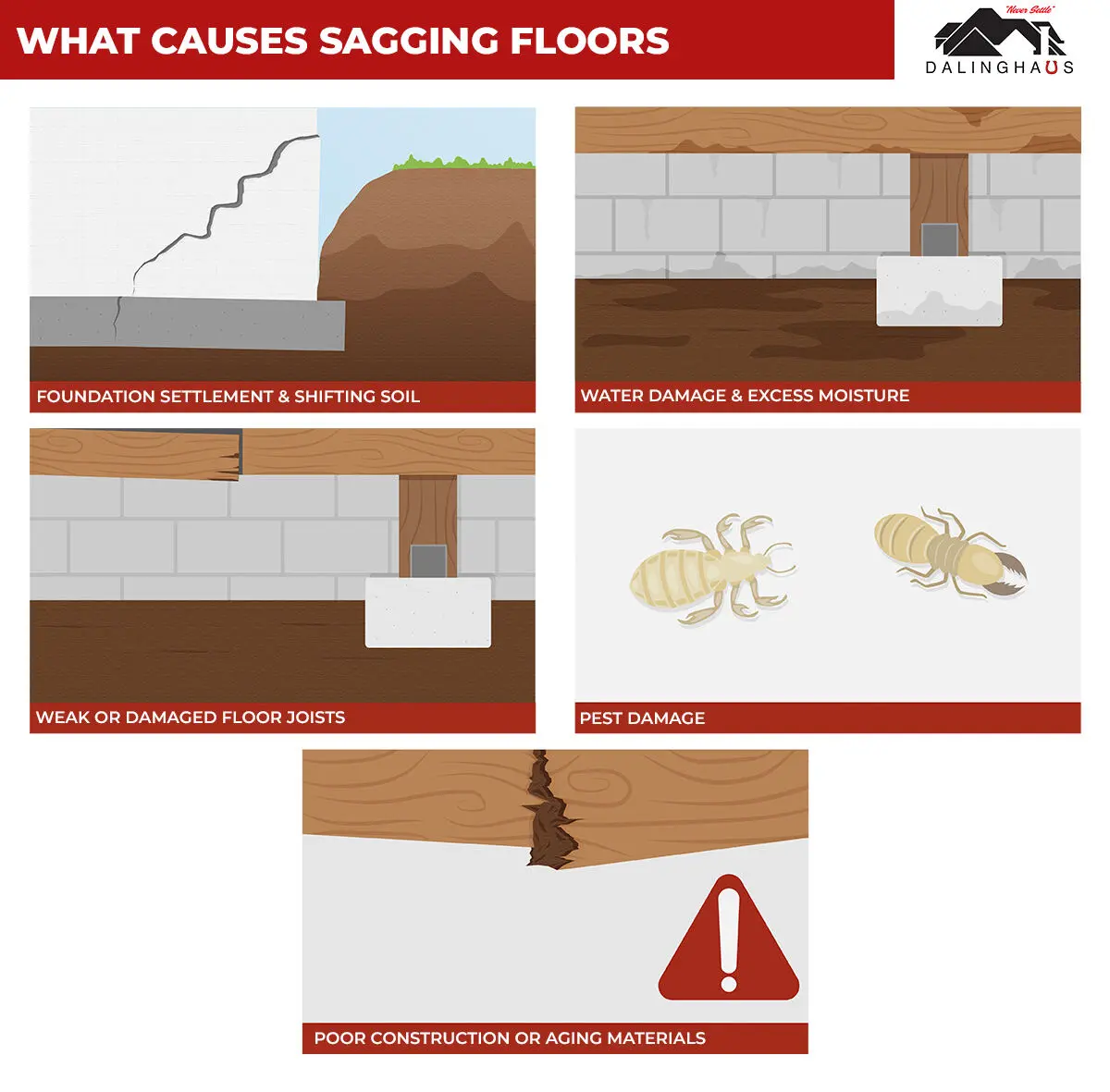
Post and pier foundations carry the house on dozens of small footings. When the soil under some of them gives way, the floor above goes out of level.

A local specialist will evaluate your foundation, walk you through the findings, and send a clear estimate. No cost, no pressure.
A raised foundation does not sit on one continuous slab. It stands on a perimeter stem wall plus a field of interior piers, each with its own small footing, and each footing depends on the soil directly beneath it. That is the whole vulnerability: a slab spreads its load across a large area, while a pier pad concentrates it on a footprint the size of a stepping stone. When the soil under a run of piers shrinks, washes, or compresses, those supports drop and the floor above drops with them, which is why raised foundation settlement usually reads as a tilt across a room rather than a dip in the middle of one. That distinction is the diagnosis. A dip between supports is a framing question and belongs with joist and beam repair; a plane that tilts toward one corner of the house is the foundation itself moving, and that is this page. In Southern California, Arizona, and Nevada the usual drivers are expansive clay cycling between wet winters and long dry summers, runoff carving out the soil under a perimeter footing, and cut and fill hillside lots where the fill side consolidates for decades after the house went up. The pattern compounds because a settled pier sheds its share of the load onto its neighbors, so the movement spreads along a line rather than staying put. The repair is not carpentry. It is carrying the load down to soil that will hold it, which is what post and pier foundation repair does.
For the repair side of this, the foundation repair solutions page lists every method Dalinghaus installs, including the ones that fix problems other than raised foundation settlement.
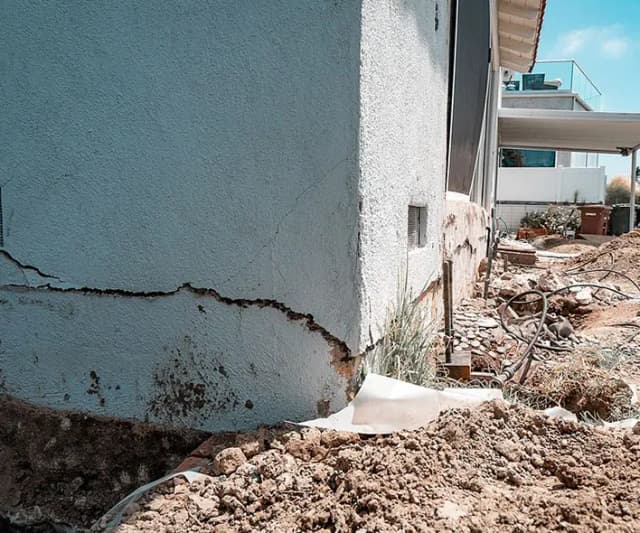
Clay swells with winter rain and shrinks through the dry season, and a footing riding that cycle settles a little further every year it repeats.
Roof runoff, a broken irrigation line, or a plumbing leak under the house carries fines away from a footing. Drainage discharging at the stem wall is the single most common accelerant we find.
Many raised foundations from the middle of the last century sit on pads poured shallow and small by today's standards. They performed for decades, and then the soil under them changed, which is what post and pier repair addresses.
On a graded lot the fill side keeps consolidating long after the cut side has stopped, so the house settles across the line between them and the floor tilts toward the downhill corner.
A pier that has dropped stops carrying its share, and the beams hand that load to the piers either side. That is why settlement travels along a line instead of staying in one spot.
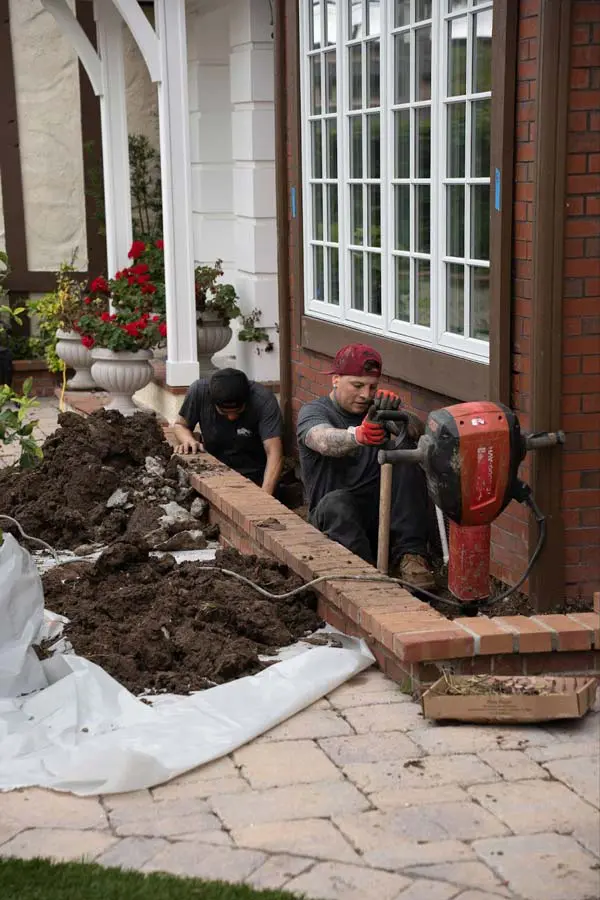
Solving raised foundation settlement means addressing the underlying soil, pressure, or settlement cause. Not just patching the visible damage. Below are the engineered solutions we install most often for this symptom in California, Arizona, and Nevada homes.
If your home is showing raised foundation settlement, the team you call matters. Dalinghaus crews handle foundation repair and related structural work across California, Arizona, and Nevada, and nothing else.
Foundation repair, concrete leveling, and crawl space repair are our entire focus. Not a sideline.
More than 2,000 projects on the clay and desert soils of California, Arizona, and Nevada since 2011.
CSLB License #983851 in California, ROC #330307 in Arizona, and License #0089738 in Nevada. Look us up with the state before we ever set foot on your property.
Warranty terms come in writing with every proposal, and the terms that apply to your job are stated in that job's paperwork. Ask your project specialist during the free evaluation.


Don't see your question here? Our team is happy to help. Reach out anytime.
By shape. Settlement produces a plane that tilts, usually toward one wall or corner, and it comes with stem wall cracks and doors racking on the same side. A sagging floor is a dip between supports, low in the middle of a room or soft along a hallway, with the rest of the floor still level. Many older homes have some of each, which is why the evaluation pairs an elevation survey with a look at the framing before anyone recommends anything.
How a repair moves from free evaluation to completed work once raised foundation settlement is diagnosed.
A local specialist walks the areas showing raised foundation settlement, measures what is moving, and answers your questions on site. No cost, no obligation.
The method is matched to the cause behind the raised foundation settlement, with scope and pricing in writing. No pressure in either direction.
A Dalinghaus crew corrects the movement behind the raised foundation settlement, and leaves the site cleaner than we found it.
Most foundation problems show early signs. This guide shows you what to look for, what can cause it, and how a lasting repair works, before you call anyone.
Before you call anyone about raised foundation settlement, read how homeowners across California and Arizona rate our work.
Share a few details and a local specialist will follow up as soon as possible to set your evaluation.
A free evaluation pins down the cause: one visit, clear findings, written estimate.