CA Lic. #983851 · AZ ROC #330307 · NV Lic. #0089738
Diagnosis First
Which walkway problem do you have?
Offsets, dips and raised panels have different causes and different repairs. Pick the closest match.
A step down into one section, the rest of the run flushOne panel sitting low
A void has formed under that panel and it dropped into it. Lifting it flush removes the offset and fills the void, and it is usually finished in a few hours.
A familiar ridge, no new movementA small lip that has not changed in years
If the readings confirm it has stopped moving, grinding the high edge flush is the proportionate repair and it is done in one visit without injecting anything.
One panel high, roots visible or suspectedA panel pushed up near a tree
Growing roots lifted it, and the panels either side may be sunken for the opposite reason. The concrete and the root path get addressed together, and the tree usually stays.
Water now draining back at the structureThe whole run tilting toward the house
A walkway that has rotated toward the building delivers every storm to the foundation line. Restoring the fall protects far more than the walkway, and it is the part of this repair worth doing first.
Everything a homeowner should understand about this repair, written by the people who do it.
Read the full guideHide the full guide
CH 01
Why walkways move before anything else
A walkway is the thinnest, most lightly based concrete on a property. It is usually four inches over a shallow bed, poured in small panels with a joint every few feet, and it runs along the edge of lawns, planting beds and downspout discharges. Every one of those joints is an opening, and the base underneath is close enough to the surface that ordinary irrigation reaches it. That combination means a walkway registers a soil problem years before a driveway does, which makes it a useful early warning as well as a nuisance.
The panel layout is also what makes it fixable. Because each panel is effectively its own small slab, one panel can drop while its neighbor stays put, and the repair can be aimed at that one panel rather than the whole run. The offset between them is the thing people feel, and it is the thing that grows, because the low panel is still moving while the high one is not.
CH 02
The offset is the liability, not the dip
A walkway that has settled evenly is a cosmetic matter. A walkway with a vertical offset between two panels is a hazard, and the distinction is worth being precise about because the numbers are small. A quarter of an inch is enough to catch the toe of a shoe that is not being lifted much, which is most shoes on a familiar path. Half an inch is enough to be seen and stepped around by people who are looking, which is not everybody. On a frontage or a commercial approach the property owner generally carries that risk, so it belongs on the written findings as a measurement rather than as an impression.
That is also why the honest repair is usually smaller than people fear. Restoring the low panel to flush removes the offset, and in doing so it closes the open joint that was delivering water to the base. Most of the trip hazards we look at are one or two panels, finished in an afternoon, and the alternative on the table is rarely replacement.
CH 03
Lift it or grind it: how we choose
Two repairs remove an offset and they are not interchangeable. Lifting raises the low panel back to its neighbor, which restores the walkway's line and its drainage, fills the void that caused the drop, and leaves the concrete at its original thickness. Grinding takes the high edge down to the low one, which removes the hazard in a single visit with no injection at all, and costs less. Where the readings show the walkway has stopped moving and only one small lip is in the way, shaving the edge flush is the proportionate answer and we will say so.
Where the panel is still settling, grinding is a delay rather than a repair. The offset returns, the walkway ends up thinner where it was ground, and the void underneath is untouched. It also does nothing about the fall of the path, so a walkway that is now pitching toward the house keeps doing it. The decision comes out of the elevation readings, not out of a preference, and it is the same discipline behind every one of our concrete leveling methods.
CH 04
Trees, roots, and the walkway that has both problems
Mature trees near a walkway produce a pattern that confuses people: panels raised and panels sunken within a few feet of each other. Both come from the same cause. Growing roots lift the concrete above them. Older roots that die back rot away and leave voids that the panels drop into. Reading which is which decides the repair, because a raised panel is a grinding or a root path question and a sunken one is a lifting question, and treating both the same way gets one of them wrong.
The root work matters as much as the concrete. Where a root has lifted a panel, correcting the concrete without addressing the path invites the same lift again, and where roots have decayed and left a cavity, filling the void is the durable half of the job. Neither usually requires removing the tree, which is the outcome most homeowners are actually worried about when they call. The same soil and water reading also tells us whether the rest of the run is on its way or genuinely stable.
CH 05
What the walkway shares with the driveway
Walkways rarely fail in isolation. The same downspout that is washing a walkway base out is usually working on the slab it runs beside, and the same irrigation zone waters both. When a walkway ties into a driveway, the joint between them behaves exactly like the one at a garage door: a hinge between slabs on different bases, where a step announces which side moved. Where the readings say both, the walkway and the driveway lift get planned as one visit rather than two.
The finishing step is the same on both: seal the joints and send the water somewhere else. Cured polyurethane does not erode, but the soil next to it still can, and an open joint is a direct line to the base. Sealing what was opened is the difference between a repair that holds and a repair that is asked to fight a downspout for the rest of its life. It is the least interesting part of concrete lifting work and the part that decides how long it lasts.
An empty pocket, such as the cavity an old tree root leaves as it rots, sits under a panel that is still flush with its neighbors.
The panel already sits below its neighbor, so filling alone would leave the lip that can catch a toe.
A table is a starting point, not a diagnosis. Which method fits your home is confirmed on site during the free evaluation.
Why Choose Dalinghaus
Care and expertise from a team that's been doing this since 2011.
Work like sidewalk leveling is not a sideline for us. Dalinghaus crews handle concrete leveling and related structural work across California, Arizona, and Nevada, and nothing else.
01
Specialized expertise.
Foundation repair, concrete leveling, and crawl space repair are our entire focus. Not a sideline.
02
Locally owned since 2011.
More than 2,000 projects on the clay and desert soils of California, Arizona, and Nevada since 2011.
03
Licensed in California, Arizona and Nevada.
CSLB License #983851 in California, ROC #330307 in Arizona, and License #0089738 in Nevada. Look us up with the state before we ever set foot on your property.
04
Warrantied solutions.
Warranty terms come in writing with every proposal, and the terms that apply to your job are stated in that job's paperwork. Ask your project specialist during the free evaluation.
Brian DalinghausCO-FOUNDER · SINCE 2011Brad DalinghausCO-FOUNDER · SINCE 2011
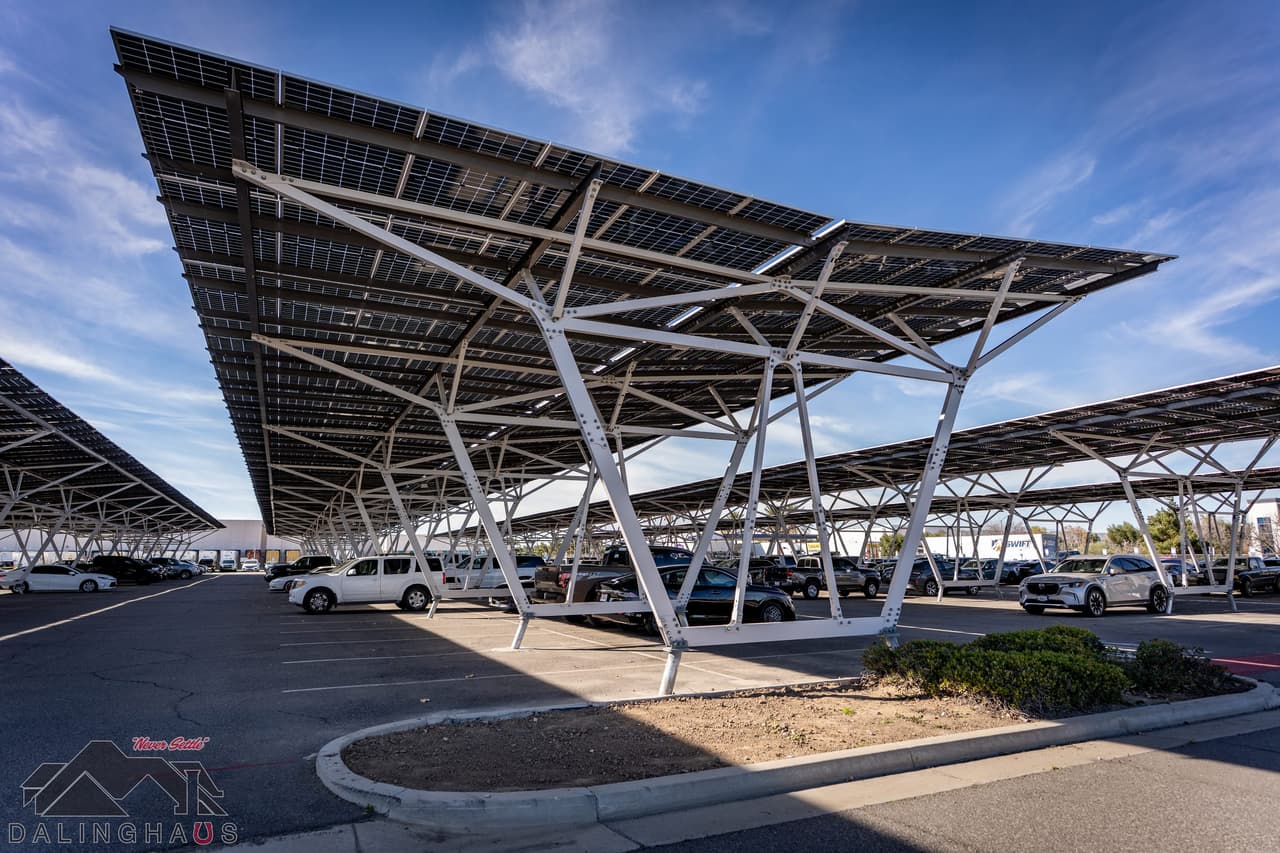
Helical pile foundation for a solar canopy in Southern California
Helical PilesPull Testing
Dalinghaus installed the helical pile foundation and erected the structure for a solar canopy over a staff parking lot in Southern California, working in four phases so the lot stayed open.
Lifting a settled Irvine home 3 inches with helical piers
Helical PiersHydraulic Lift
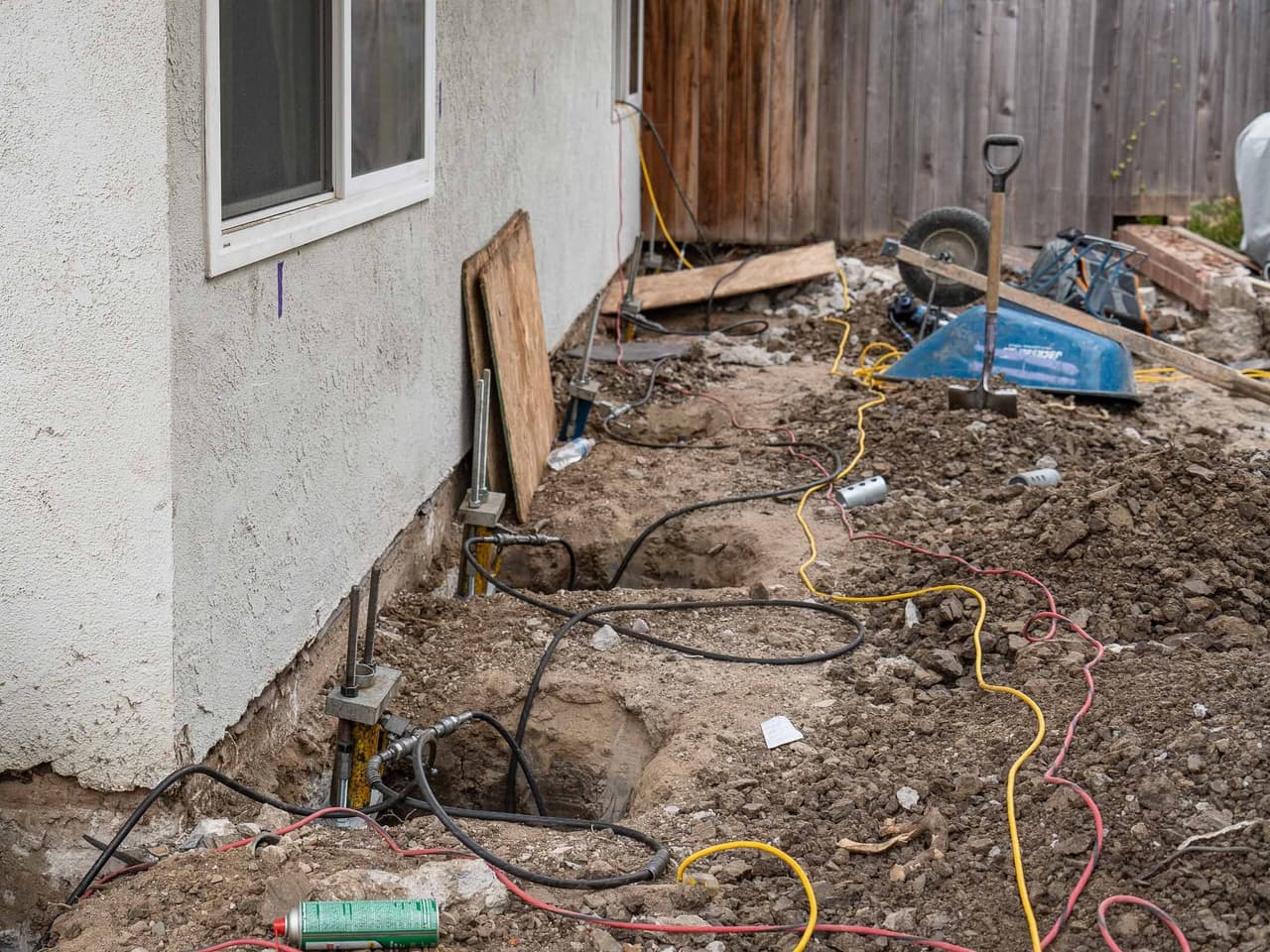
The back of an Irvine home had settled about 3 inches over roughly ten years. Ten helical piers went in over two days, and a 30 minute lift brought the back half of the home up 3 inches.
Helical piers to bedrock under a Rancho Palos Verdes home caught in a landslide
Helical Piers
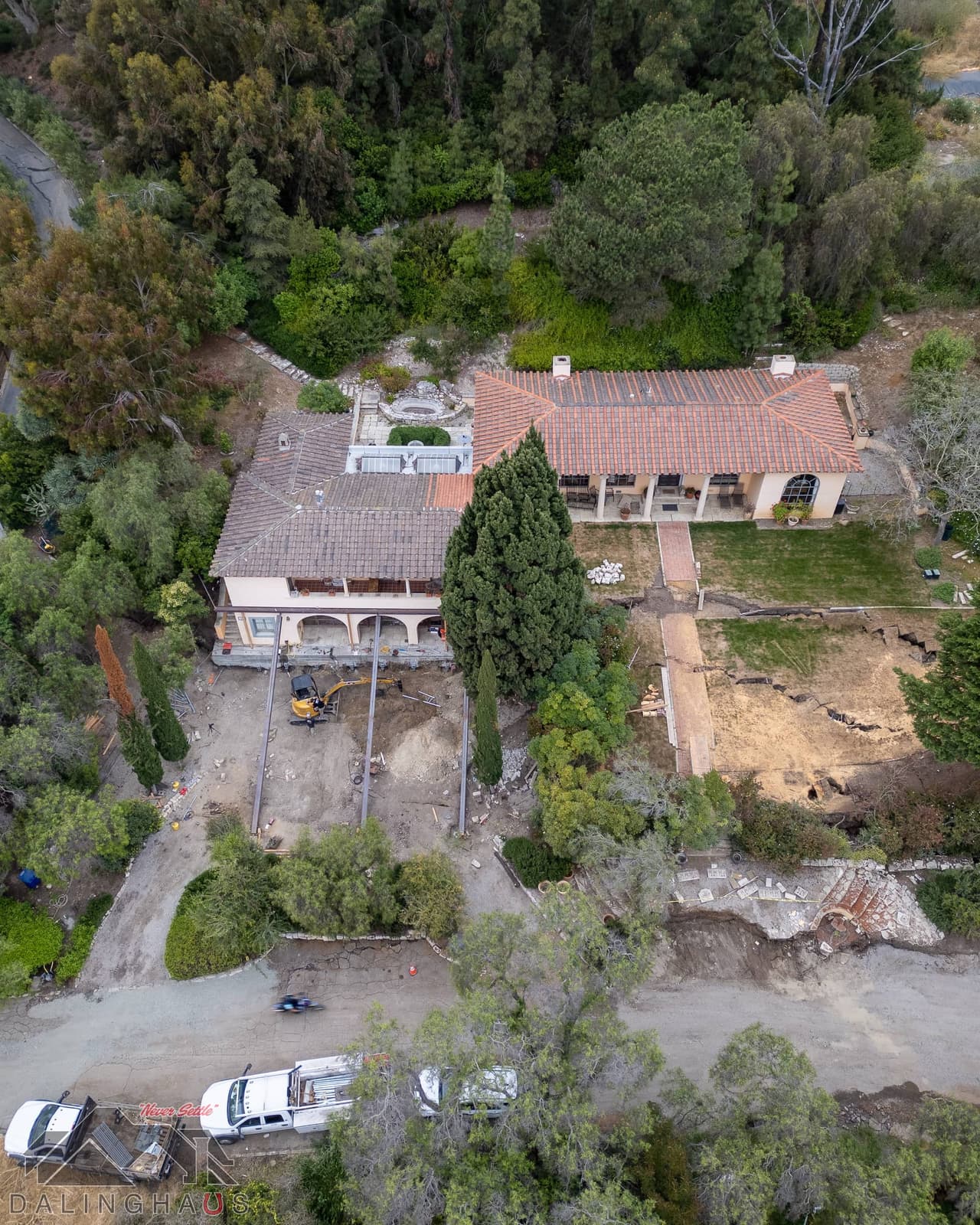
A hillside home in Rancho Palos Verdes split in half as the ground slid toward the slope. Dalinghaus installed helical piers about 30 feet down to competent strata or bedrock beneath it.
Steel piers for a Rancho Palos Verdes home that settled 16 inches
Steel PiersFoundation Stabilization
A beachside home in Rancho Palos Verdes settled 16 inches in a couple of months. Steel piers were driven to load bearing soil or bedrock at each excavated location, with a lift planned once they were in.
Lifting a San Clemente hillside home that settled 2 inches
Helical PiersHelical Tieback Anchors
A San Clemente hillside home had settled about 2 inches and was moving toward the slope behind it. Vertical helical piers and helical tieback anchors stabilized the home and recovered part of the drop.
Answers to common questions about Sidewalk Leveling.
Don't see your question here? Our team is happy to help. Reach out anytime.
Smaller than most people expect. A vertical change of about a quarter of an inch is enough to catch a toe, and half an inch is enough that people notice it with their eyes and step around it. The number matters where a walkway is a public right of way or a commercial frontage, because the property owner generally carries the liability for it, which is why we measure offsets rather than describe them.
Yes, and it usually should be. Walkways are poured in panels precisely so they can move independently, so a lift can be targeted at the one or two that dropped without touching the rest. That keeps the work short and the cost proportionate, and it is one reason walkways are the cheapest flatwork on a property to correct.
Because a walkway is the best real estate on the block for a root: the soil under concrete stays damp when everything around it dries out. Roots grow toward that moisture and lift whatever sits above them. Then when older roots die back they rot away and leave voids, so one tree can produce raised panels and sunken ones a few feet apart. The fix treats both the concrete and the root path, and it usually does not mean removing the tree.
No, and the difference is whether the walkway is still moving. Grinding shaves the high edge down, which removes the hazard today and leaves the settlement running. On a panel that has stopped moving that is a reasonable, proportionate repair. On one that is still dropping, the offset simply comes back, which is why the elevation readings come first.
A handful of panels is typically a few hours. The foam reaches working strength within minutes of injection, so the walkway is back under feet the same day, and the drilled holes are patched before the crew leaves. Larger runs and commercial frontages are scheduled around access rather than around cure time, because there is no cure time to wait out.
Pricing & Scope
Honest pricing & honest limits
Every home is different, so every estimate is written for the home in front of us. A free on site evaluation gives you a written estimate that reflects your specific scope, access, and conditions.
How pricing works
Repair pricing varies by load, depth, and access. Your written estimate comes from the free evaluation.
When this isn't the right fix
A panel that has cracked into several pieces cannot be raised as a unit. Where a walkway has genuinely reached the end of its life the written findings say so, with the measurements behind it, rather than a lift being sold into a section that cannot hold one.
Why our estimates are honest
Licensed contractor serving California, Arizona, and Nevada.
The Process
How we approach Sidewalk Leveling
A straightforward path from free evaluation to completed repairs.
Step 01
Free evaluation
Offsets are measured panel by panel, voids are traced by sounding, and the water or root path behind the settlement is identified.
Step 02
Target the panels that moved
Only the settled panels are drilled, which keeps the work and the cost proportionate to the actual problem.
Step 03
Inject and raise flush
Polyurethane fills the void and lifts each panel in watched increments until it sits flush with its neighbor.
Step 04
Patch and seal the joints
Holes are patched and the joints are sealed so runoff stops washing the base out from under the next panel.