What this symptom means
Crack in Retaining Wall: diagnosed and explained.
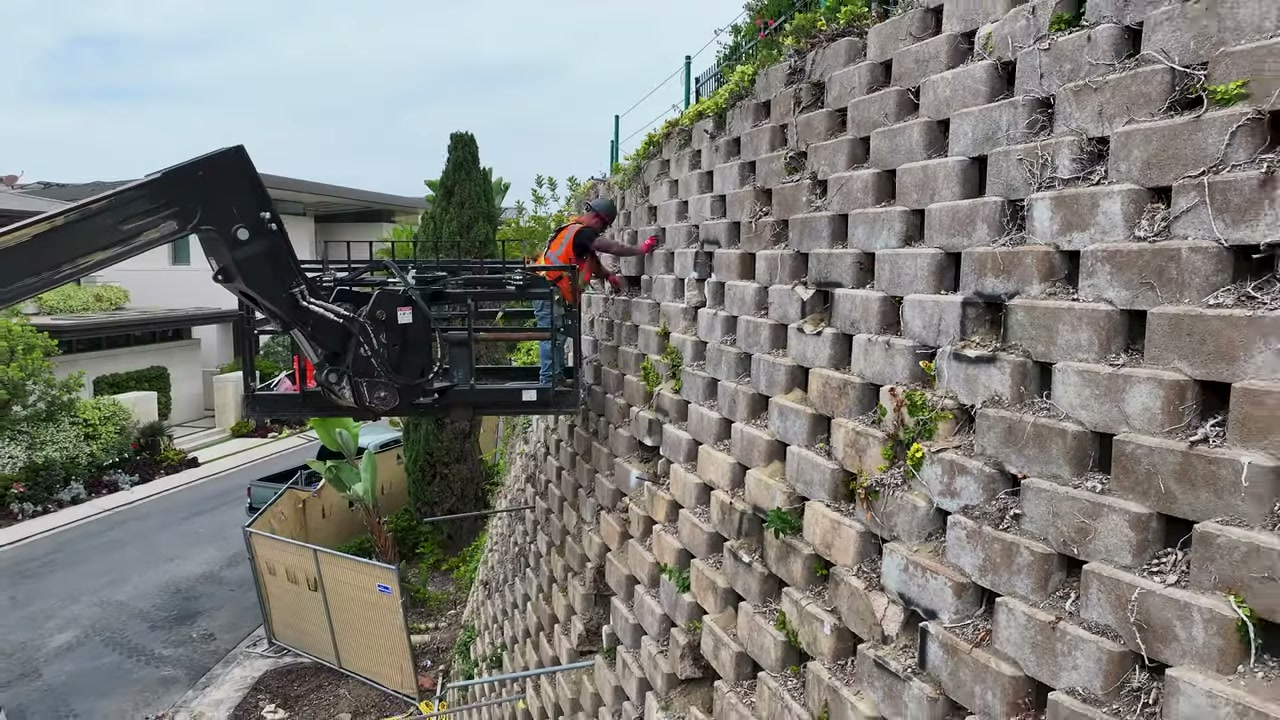
A retaining wall holds back tons of soil, and every crack is a note about how that job is going. Where the crack sits and which way it runs matter.
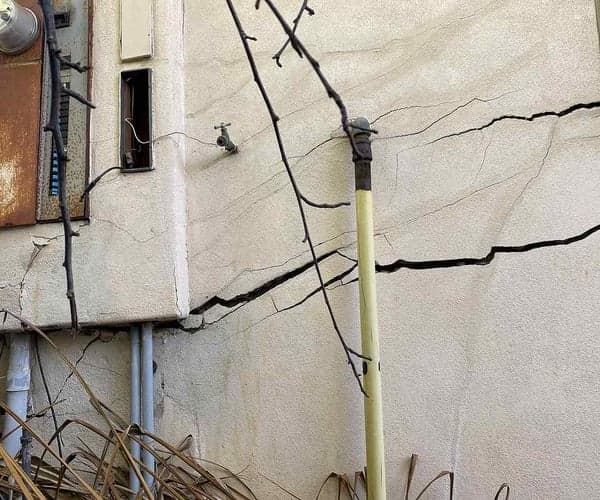
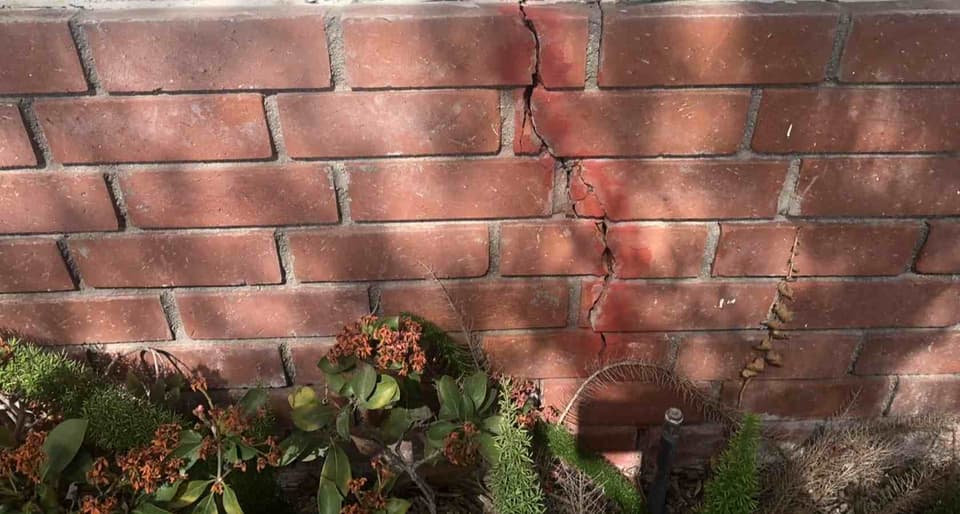
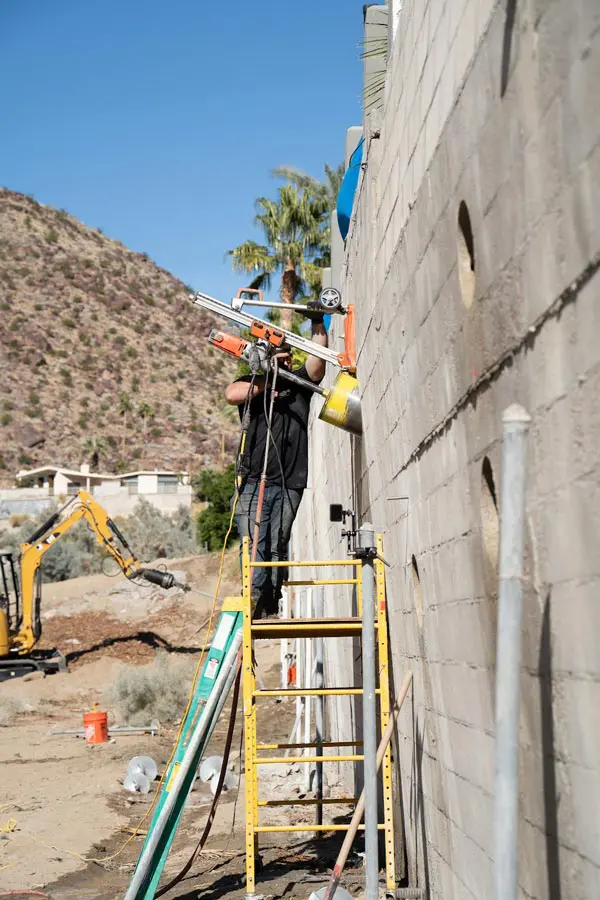
A single hairline vertical crack in a poured concrete wall is often shrinkage from the original cure and may never move again. Horizontal cracks are the ones to respect, because they usually mean pressure from the retained soil is bending the wall face inward. Stair step cracks in block or brick walls follow the mortar joints diagonally and typically mean part of the wall footing has settled or the wall is rotating. Cracks that widen over time, run wider at one end, let water seep through, or arrive alongside leaning, bulging, or soil escaping at the base mean the wall is actively losing. In California, Arizona, and Nevada the usual engine is the ground itself: clay rich backfill swells every time it gets wet and shoves the wall, poor drainage lets water pressure stack on top of the soil load, and in higher elevation communities freeze and thaw cycles pry small cracks wider each winter. A crack caught early is usually a modest repair. The same crack ignored through a few wet seasons can grow into a rebuild. Which repair fits depends on that reading: pressure driven cracks usually call for anchor reinforcement or carbon fiber straps, erosion and voids behind the wall call for polyurethane soil injection, and our retaining wall crack repair service is built to handle both the crack and its cause.
For the repair side of this, the retaining wall repair solutions page lists every method Dalinghaus installs, including the ones that fix problems other than crack in retaining wall.