A local specialist will evaluate your foundation, walk you through the findings, and send a clear written estimate.
Retaining Wall Repair · Since 2011
A cracked retaining wall is reporting pressure, not age.
Brick, block, or poured concrete, the crack tells us where the soil is winning. We repair the wall and take the pressure off it, so the crack does not come back.
Southern California · Arizona · NevadaSince 2011
Let's take the first step toward solid ground.
A local specialist will evaluate your foundation, walk you through the findings,
and send a clear estimate. No cost, no pressure.
CA Lic. #983851 · AZ ROC #330307 · NV Lic. #0089738
Diagnosis First
How serious is the crack in your retaining wall?
Not every retaining wall crack means the wall is failing, and a few do. Direction, width, and whether the crack is changing tell most of the story. Pick the closest match to what you are seeing.
Thin vertical line in poured concrete, unchanged for yearsHairline and vertical, not moving
This is usually shrinkage from the original cure, not soil pressure. Measure the width, photograph it, and check it again after the wet season. If it never changes, sealing it against water intrusion is the most it should ever need. If it starts growing, it has been promoted to a structural question.
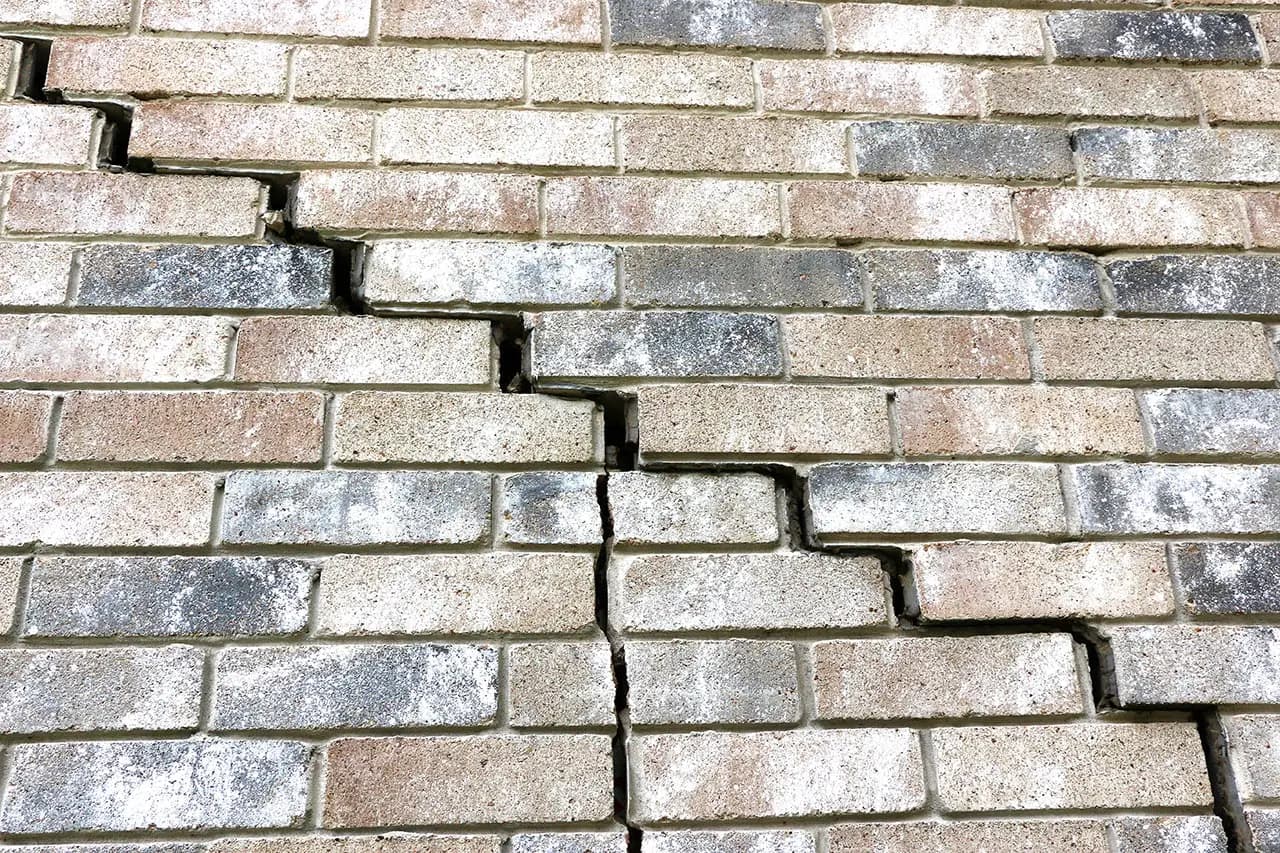
Diagonal, follows the mortar joints, often wider at one endStair step cracks through block or brick
Stair step cracking means part of the wall is moving relative to the rest, usually because a section of footing has settled or the wall is rotating. Repointing the joints without addressing the movement invites the same crack back. The wall needs its support and load problem diagnosed, then reinforced.
Runs sideways, often near mid height, face may show a slight bowHorizontal crack across the wall face
A horizontal crack usually means lateral pressure from saturated backfill is bending the wall face inward, and the wall is cracking along the line of maximum tension. This is the crack type most likely to precede bowing. The pressure needs to be relieved and the wall reinforced before the bend grows.
Grows season over season, weeps water, soil escaping at the baseWidening, seeping, or paired with leaning
A crack that is measurably growing, letting water through, or arriving alongside lean, bulge, or escaping soil means the wall is actively losing to the ground behind it. A free evaluation confirms the scope. The typical scope pairs reinforcement with drainage correction, and acting early is what keeps repair from becoming rebuild.
Everything a homeowner should understand about this repair, written by the people who do it.
Read the full guideHide the full guide
CH 01
What the crack pattern tells you before anyone opens a toolbox
A retaining wall crack is a message written in the wall's weakest material, and the direction it runs is most of the message. A single vertical hairline in poured concrete is usually shrinkage from the original cure: the concrete gave up moisture, contracted, and relieved the stress in one thin line that may never move again. A horizontal crack is a different animal. It means the retained soil and the water trapped in it are bending the wall face inward, and the face is failing in tension along the line of maximum bend.
Stair step cracks belong to block and brick walls. Masonry is strong in compression but weak in shear, so when part of the footing settles or the wall starts to rotate, the movement telegraphs diagonally through the mortar joints, the weakest path available. You can read the fuller symptom breakdown on our cracks in retaining walls page, and if the crack has arrived alongside visible leaning or bowing, that combination moves the wall up the urgency list.
CH 02
How we diagnose a cracked retaining wall
The evaluation starts with measurements, not opinions. A specialist logs every crack by width, direction, and location, then measures the wall for lean and bulge, because a crack on a wall that is out of plumb is a different problem than the same crack on a straight one. Drainage gets equal attention: clogged weep holes, downspouts dumping behind the wall, and grading that feeds water into the backfill are the usual accelerants, and the soil behind the wall is checked for saturation, settlement, and gaps.
Everything goes into written findings you keep, whether or not any repair follows. If the wall deserves a full workup rather than a crack focused visit, that is what our retaining wall inspection service exists for.
CH 03
When crack repair is not the right call
Some cracks do not need us. A hairline shrinkage crack on a wall that stands straight, drains well, and has not changed across a few wet seasons usually earns monitoring, not a contract. Measure it, photograph it, and check it after heavy rain; if it holds steady, keep watching and keep your money.
The opposite case matters just as much. When a wall is leaning or bowing, sealing the crack treats the symptom while the soil keeps winning. That wall needs its load problem solved first, usually with anchor reinforcement that ties it to stable ground, and only then is the crack itself worth repairing, one of several retaining wall repair solutions matched to what the evaluation finds. And when a wall is too far gone, we say so. Rebuilding is sometimes the honest answer, and you deserve to hear it before spending on repairs that cannot hold.
CH 04
The repair itself: seal the crack, then remove its reason
Crack repair at Dalinghaus is two jobs done in the right order. The crack is sealed through its full depth, not skimmed at the surface: structural injection fills the void so water has no path, and cracked masonry joints are repointed so the wall face works as one piece again. Where the crack sits in a tension zone, carbon fiber straps are bonded across it so it cannot reopen.
Then the cause gets its turn. Drainage corrections give water a way out instead of a place to push, and where erosion has carved voids or loosened the backfill, polyurethane backfill injection rebuilds the soil behind the wall into the stable ground the wall was designed to hold. A crack sealed without this second half is a repair on a timer.
CH 05
Why retaining walls crack harder here
Across the communities Dalinghaus serves in Southern California, Arizona, and Nevada, clay and sandy soils dominate, and each attacks a retaining wall in its own way. Clay rich backfill acts like a sponge: it swells against the wall every time it takes on water and shrinks away in the dry months, cycling pressure on and off, year after year. A large share of the cities we track carry moderate to high soil expansion risk, which is exactly the condition that turns small cracks into growing ones.
Sandy soils fail differently. Desert cloudbursts and winter storms drive water through sand fast, washing out fines and undermining footings, so the wall cracks from losing support rather than gaining pressure. Southern California hillsides add one more factor: many walls hold cut and fill slopes, where the fill side keeps consolidating for decades. Different soil, same conclusion: the crack is the messenger, and the ground wrote the message.
Which Solution Is Right?
Which repair fits the crack in your retaining wall?
The wall leans or tips forward along with the crack. Anchors set into stable ground can stop that movement before the crack is sealed.
The wall stands straight and dry with stable hairline cracks, or its material has broken down past saving.
A table is a starting point, not a diagnosis. Which method fits your home is confirmed on site during the free evaluation.
Project Photos
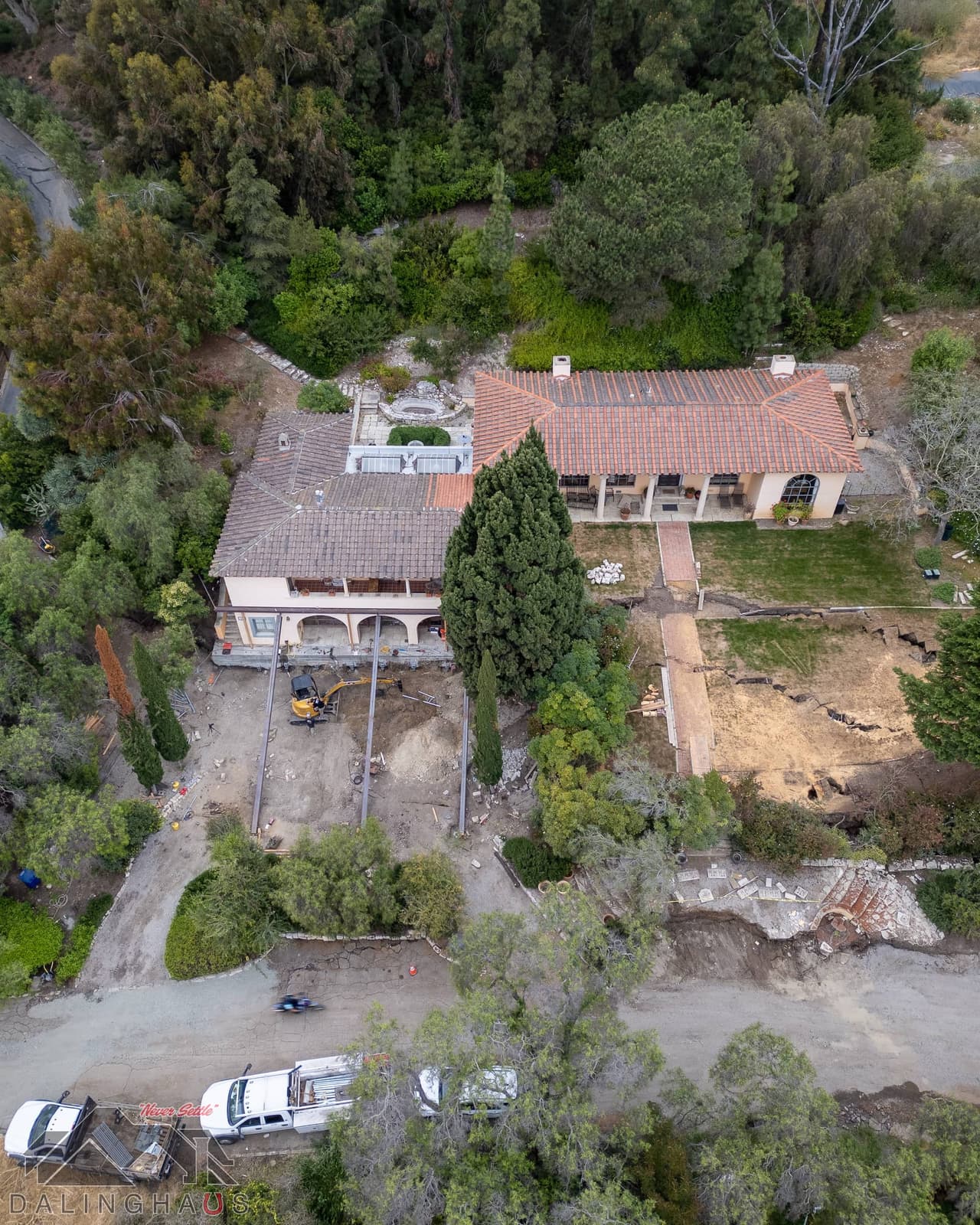
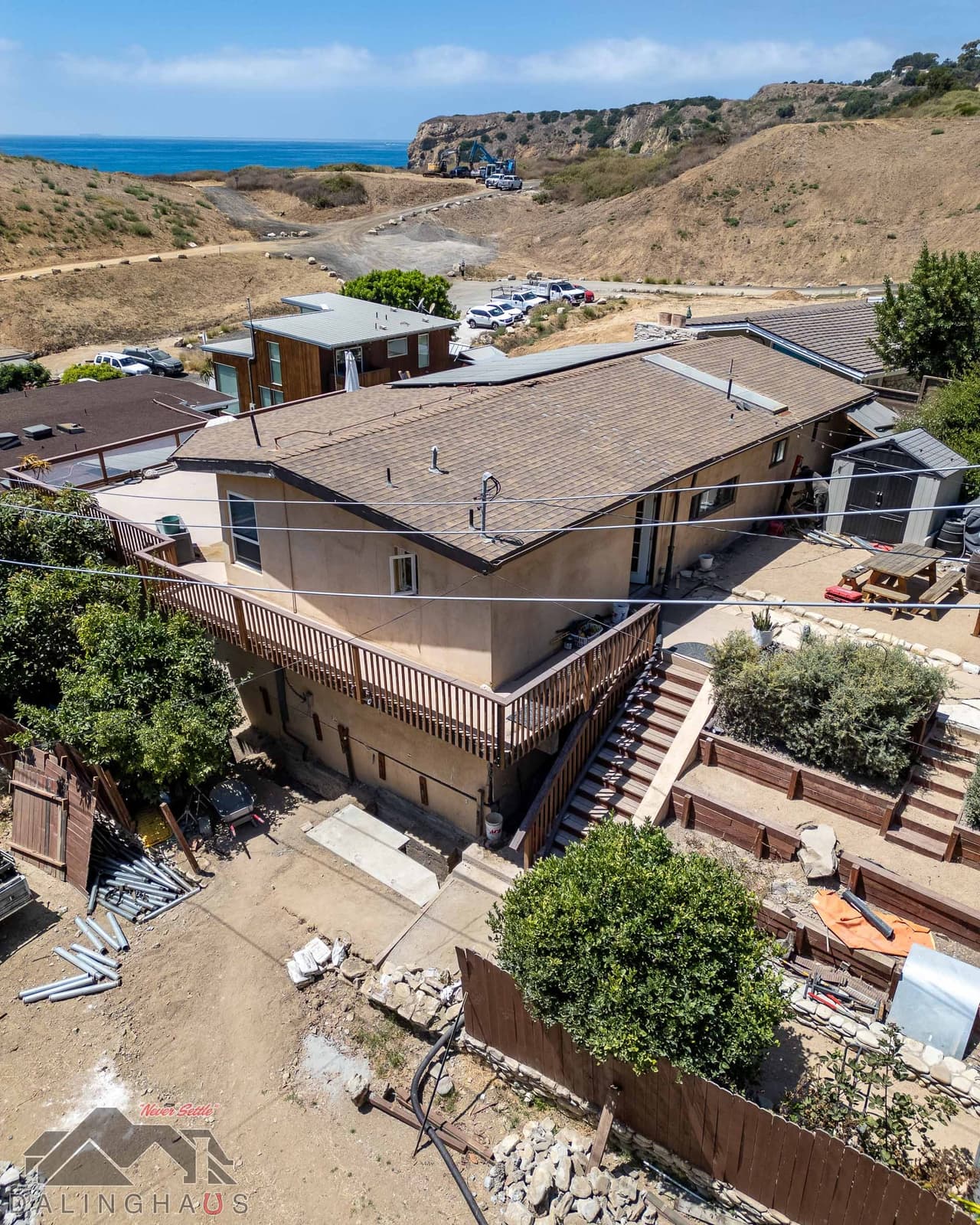
Retaining Wall Crack Repair on our job sites.
Photos from our own crews and projects. Swipe or use the arrows to see more.
[ 01/05 ]
Why Choose Dalinghaus
Care and expertise from a team that's been doing this since 2011.
Work like retaining wall crack repair is not a sideline for us. Dalinghaus crews handle retaining wall repair and related structural work across California, Arizona, and Nevada, and nothing else.
01
Specialized expertise.
Foundation repair, concrete leveling, and crawl space repair are our entire focus. Not a sideline.
02
Locally owned since 2011.
More than 2,000 projects on the clay and desert soils of California, Arizona, and Nevada since 2011.
03
Licensed in California, Arizona and Nevada.
CSLB License #983851 in California, ROC #330307 in Arizona, and License #0089738 in Nevada. Look us up with the state before we ever set foot on your property.
04
Warrantied solutions.
Warranty terms come in writing with every proposal, and the terms that apply to your job are stated in that job's paperwork. Ask your project specialist during the free evaluation.
Brian DalinghausCO-FOUNDER · SINCE 2011Brad DalinghausCO-FOUNDER · SINCE 2011
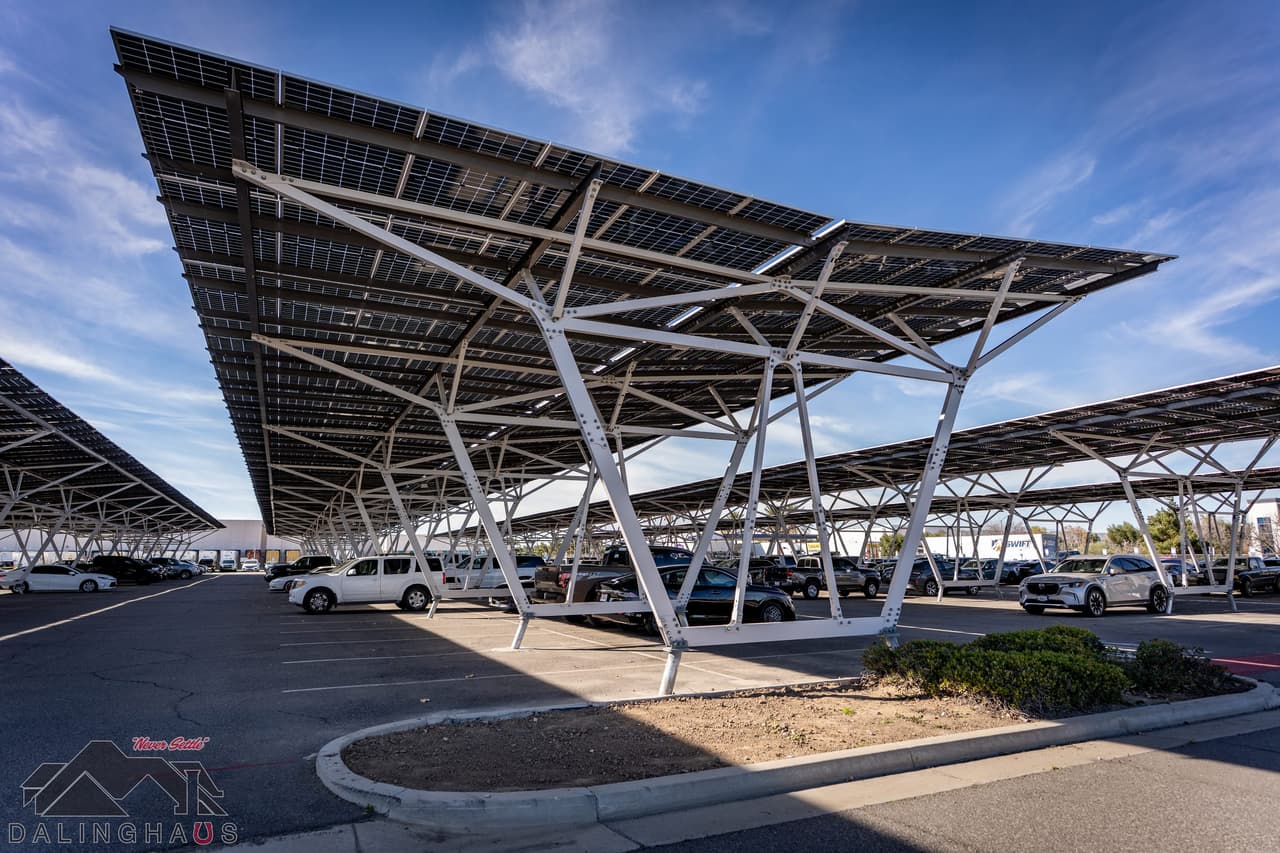
Helical pile foundation for a solar canopy in Southern California
Helical PilesPull Testing
Dalinghaus installed the helical pile foundation and erected the structure for a solar canopy over a staff parking lot in Southern California, working in four phases so the lot stayed open.
Lifting a settled Irvine home 3 inches with helical piers
Helical PiersHydraulic Lift
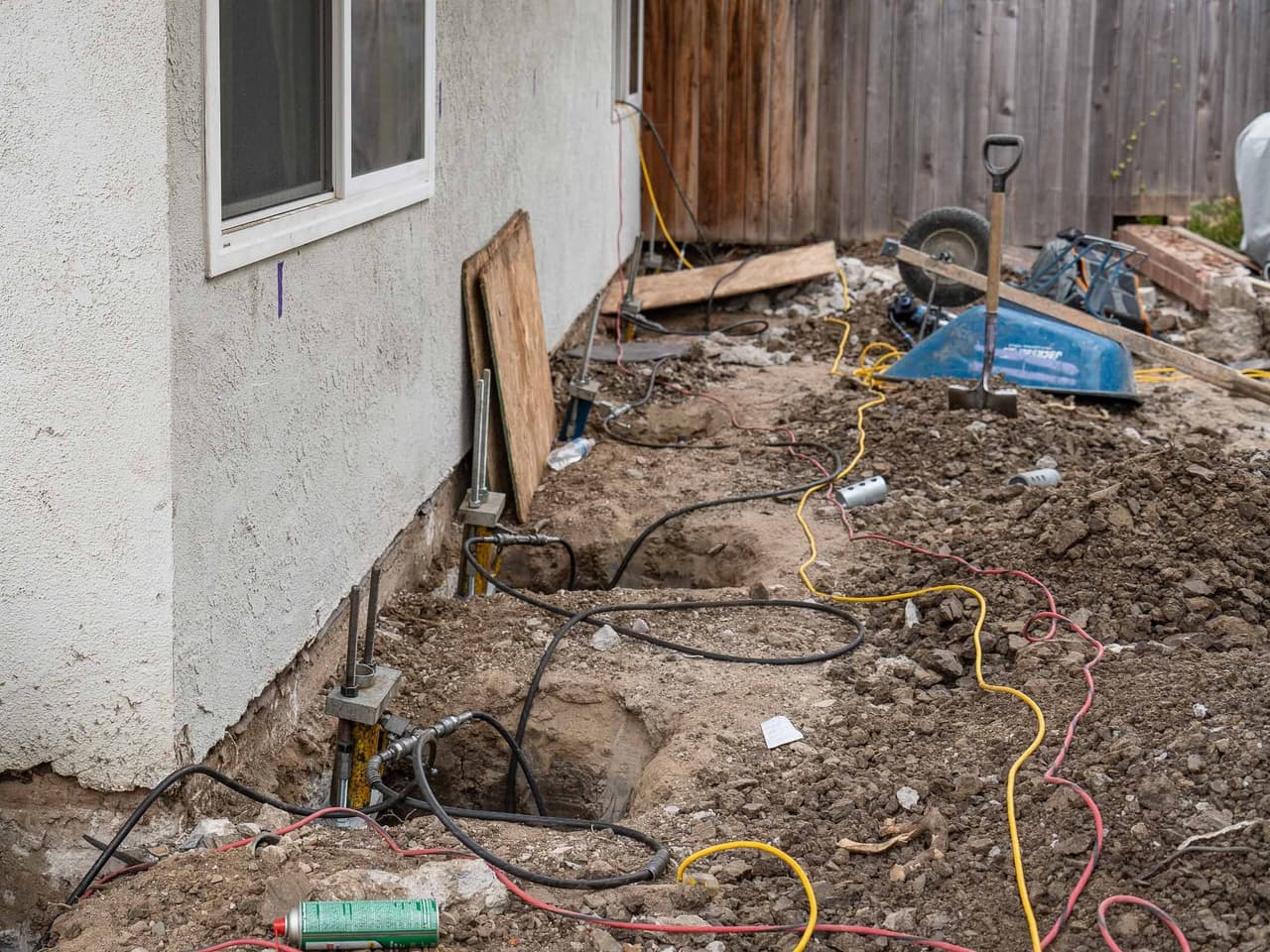
The back of an Irvine home had settled about 3 inches over roughly ten years. Ten helical piers went in over two days, and a 30 minute lift brought the back half of the home up 3 inches.
Helical piers to bedrock under a Rancho Palos Verdes home caught in a landslide
Helical Piers
A hillside home in Rancho Palos Verdes split in half as the ground slid toward the slope. Dalinghaus installed helical piers about 30 feet down to competent strata or bedrock beneath it.
Steel piers for a Rancho Palos Verdes home that settled 16 inches
Steel PiersFoundation Stabilization
A beachside home in Rancho Palos Verdes settled 16 inches in a couple of months. Steel piers were driven to load bearing soil or bedrock at each excavated location, with a lift planned once they were in.
Lifting a San Clemente hillside home that settled 2 inches
Helical PiersHelical Tieback Anchors
A San Clemente hillside home had settled about 2 inches and was moving toward the slope behind it. Vertical helical piers and helical tieback anchors stabilized the home and recovered part of the drop.
Answers to common questions about Retaining Wall Crack Repair.
Don't see your question here? Our team is happy to help. Reach out anytime.
It depends on what failed. Deteriorated mortar joints are repointed with fresh mortar, severely damaged bricks are replaced with matches for the original size and texture, and structural cracks are sealed and strengthened with injection or reinforced with carbon fiber. Just as important, we address the soil pressure or drainage problem that cracked the wall, because masonry repair alone does not stop the force behind it.
Usually pressure, not age. The soil behind the wall pushes on it constantly, saturated backfill adds hydrostatic pressure when drainage is poor, and walls built without enough reinforcement for their height carry that weakness from day one. In higher elevation areas, freeze and thaw cycles work water into small cracks and pry them wider each winter.
Not if the cause is treated along with the crack. A sealed crack in a wall that is still overloaded will reopen or reappear nearby, which is why our repairs pair the masonry work with drainage correction or anchoring when the evaluation shows the wall is still being pushed. Fix the force and the crack stays fixed.
It can become dangerous if ignored. A crack paired with leaning, bulging, or soil escaping through the wall means the wall is actively failing, and retaining wall failures accelerate once soil starts moving through a weak point. A crack on its own, caught early, is usually a straightforward repair. The evaluation tells you which one you have.
Pricing & Scope
Honest pricing & honest limits
Every home is different, so every estimate is written for the home in front of us. A free on site evaluation gives you a written estimate that reflects your specific scope, access, and conditions.
How pricing works
Repair pricing varies by load, depth, and access. Your written estimate comes from the free evaluation.
When this isn't the right fix
A hairline crack in a wall that stands straight, drains well, and has not changed in years may only need monitoring. We will tell you when watching beats spending.
Why our estimates are honest
Licensed contractor serving California, Arizona, and Nevada.
The Process
How we approach Retaining Wall Crack Repair
A straightforward path from free evaluation to completed repairs.
Step 01
Free evaluation
A specialist examines the crack pattern, measures the wall for lean and bulge, and assesses the soil and drainage behind it.
Step 02
Findings in writing
You get the measurements and a plain language explanation of why the wall cracked, whether or not you hire us.
Step 03
Repair the crack
Structural injection, repointing, brick or block replacement, or carbon fiber reinforcement restores the wall, matched to the material and the damage.
Step 04
Remove the pressure
Drainage corrections or anchor reinforcement address the force that cracked the wall, so the repair lasts.