
Solar carport helical piers,
for GCs and solar EPCs.
Foundations for carports, canopies, ground mount arrays, and battery storage. Installed to the structural engineer of record, phased around a lot that still has to work, and logged pile by pile.
Who This Page Is For
The carport is steel. The problem is soil.
Solar carports are bought by people who buy megawatts, and built by people who have to get steel plumb over a working parking lot. This page is written for the second group: general contractors, solar EPCs, and the owner representatives who have to sign off on the foundation.
Solar EPCs and installers
The racking supplier gives you reaction loads. The geotechnical engineer gives you soil. We are the sub that puts steel in the ground between the two and documents it.
General contractors on site work
A carport goes over a parking lot that has to keep working. We plan the pier scope around striping, drive aisles, and the days the lot has to be open.
Owners and facility managers
The canopy has to stand through wind uplift for decades. The foundation is the part nobody sees and the part that decides whether it does.
Battery storage and EV charging builders
Battery enclosures, inverter skids, and charging canopies are all equipment pads with real loads. Helical piles reach competent soil without a poured footing cure cycle.
What We Install
How a carport pile foundation goes in.
A carport foundation is judged on uplift as much as bearing. Here is what that means for the scope you are buying.
Why carports are a helical job
A carport is a tall, light structure carrying a large sail area. Wind pushes up on it as hard as gravity pulls down. Helical piles resist both, because the same helix plates that bear on soil below also bear against soil above when the load reverses.
Battered piles for lateral and uplift
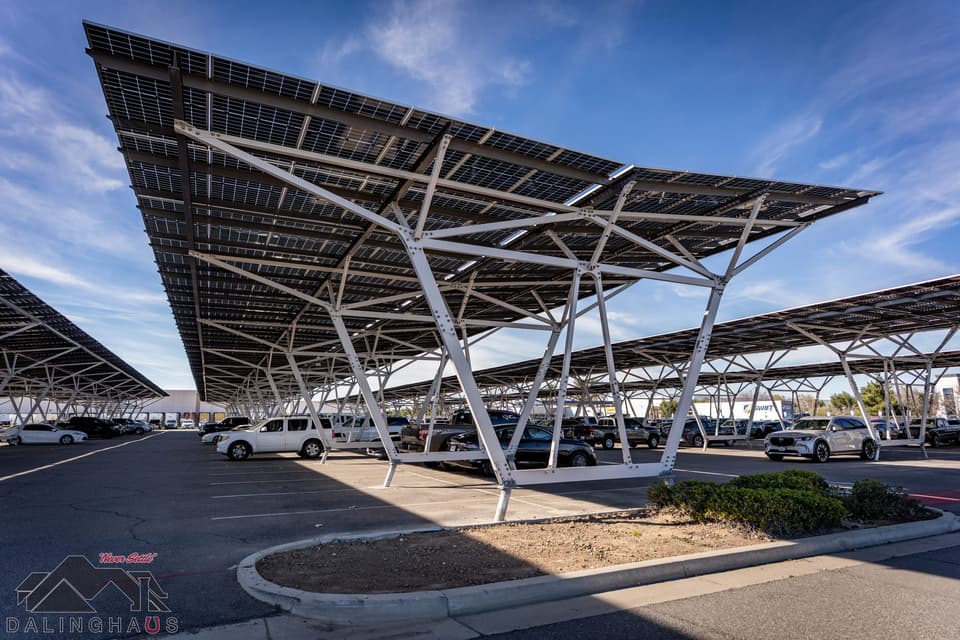
On a recent solar canopy over an industrial parking lot, our crews installed 186 battered helical piles, five and a half inches in diameter, every one of them driven at a 20 degree angle rather than vertically. The batter is what fights the lateral force and the uplift the panels above will generate.
Round shaft or square bar
Round shaft handles eccentric loading and is what we use for compression. Square bar performs better in tension. On a canopy, where the governing case may be uplift rather than bearing, that distinction stops being academic and becomes a line in the design.
How the pile goes in
A hydraulic torque motor turns a galvanized steel shaft with helix plates near the tip into the ground. The pile advances until it reaches competent soil or the torque the design calls for. No spoils pile, no cure time, no concrete truck waiting on a pour window.
What the design is based on
Compression, tension, and lateral loads come from the racking supplier and the structural engineer of record. Soil comes from the geotechnical report. Those two documents set pile size, helix configuration, embedment depth, and spacing. We install what they specify.
Working over an active parking lot
Most carports go over lots that still have to hold cars. Compact equipment, small work zones, and phased pile installation let you close a few rows at a time instead of the whole lot.
What gets recorded
Every drive head carries a gauge in the flow line of the hydraulics. The psi reading multiplied by that unit factor gives the torque rating, and torque is the field measure of capacity, so it is logged with depth and location as each pile goes in. The inspector and the engineer get that record.
Ground mount arrays and equipment pads
The same crews and the same equipment install piles for ground mount arrays, inverter pads, and battery enclosures. Helical piers for solar and battery installations are a confirmed part of our commercial work.
If you want the underlying method in plainer language, the residential page on how a helix plate carries load covers the same system, our new construction pile scope covers buildings rather than canopies, new construction foundations covers the residential version, and our commercial services page lists everything we take on for general contractors.
Solar carport helical piers: see the install.
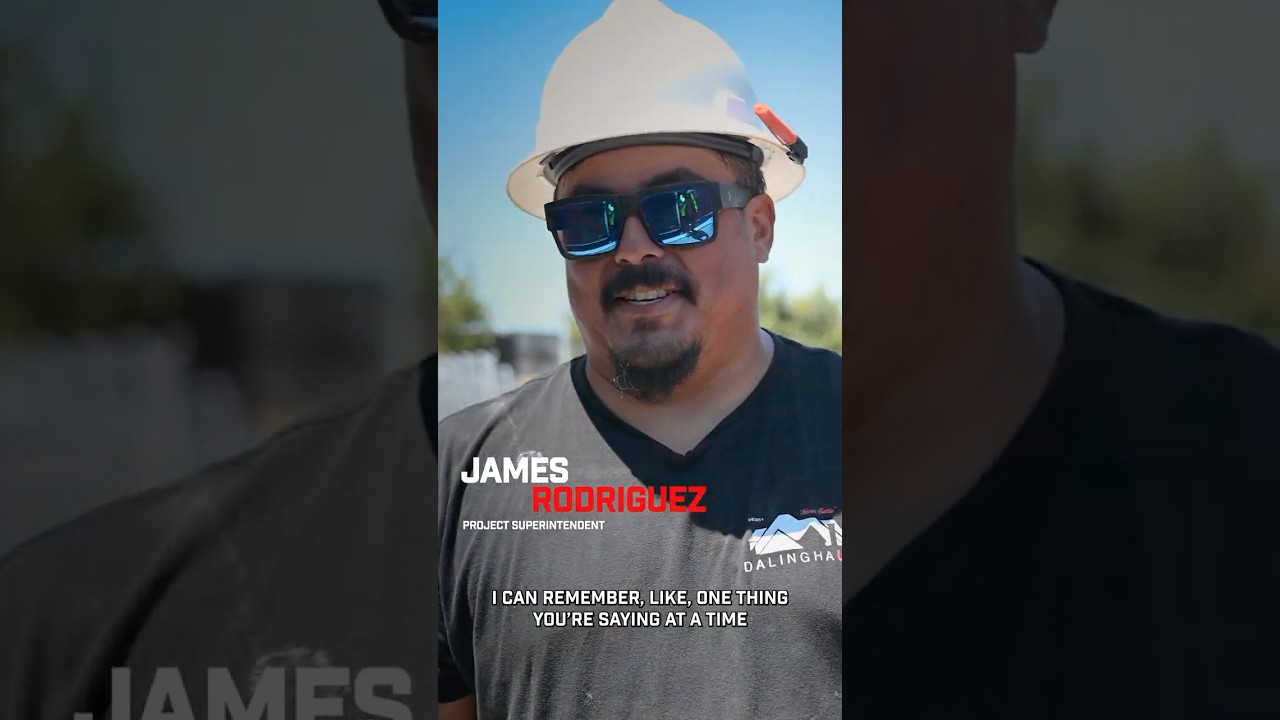
A published DCI job running 186 battered helical piles at twenty degrees under a solar canopy. The lateral load on a canopy is what makes the batter angle necessary, and the video shows what that looks like on a live parking lot.

"The number one person that uses them is going to be city officials, as well as your engineering team, the design team designing the repairs for your foundation project. They utilize the ICC to verify and validate the capacity."

How The Work Runs
Five steps around a lot that stays open.
Carport work happens on occupied sites. The sequence below is built so the disruption is planned rather than discovered.
- 01Send the load table and the soils reportRacking reactions, the foundation plan, and the geotechnical report. Those three documents are what an honest number is built from.
- 02Written proposalPile type, pile count, exclusions, a start window, and a finish window. Warranty terms come in writing with the proposal.
- 03Submittals before mobilizationProduct data and the installation plan go to the engineer of record. Engineering review runs about four to six weeks, and permits range from a few days to sixteen weeks depending on the city, so both belong in the program rather than in a phone call later.
- 04Phased installationPiles go in section by section so the lot or the site keeps operating. Torque and depth are logged pile by pile.
- 05Handover to the steel erectorPiles are surveyed and turned over so the column bases land where the drawings say they land.
Engineering And Submittals
What we take responsibility for.
Solar projects carry a lot of parties. This is the line around our scope.
- We install to the structural engineer of record. We do not stamp structural drawings.
- Racking supplier reaction loads and the geotechnical report govern the pile design we bid.
- Installation torque, depth, and location are recorded for every pile.
- Uplift and lateral loads are treated as design inputs from the engineer, never assumed from a catalog.
- Special inspection is coordinated with whoever the jurisdiction or the owner appoints.
- Arizona work is performed under Arizona ROC license 330307, class KB-1, a dual commercial and residential classification.
What GCs and EPCs ask before awarding the pile scope.
Don't see your question here? Our team is happy to help. Reach out anytime.
The engineer decides, not us. What helical piles bring to a carport is speed and a clean site: no spoils to haul off, no concrete cure time before the steel goes up, and capacity you can measure the day the pile goes in. We have installed 8 inch helical piers past 40 feet on new construction in place of the concrete caissons a site would otherwise have needed, so the depth is not the limitation people assume it is. On sites where the lot has to reopen quickly, all of that matters more than it does on a green field.
Care and expertise from a team that's been doing this since 2011.
Dalinghaus Foundation Repair is locally owned and operated, with crews dedicated exclusively to foundation, concrete, and crawl space work across California, Arizona, and Nevada.
Foundation repair, concrete leveling, and crawl space repair are our entire focus. Not a sideline.
More than 2,000 projects on the clay and desert soils of California, Arizona, and Nevada since 2011.
CSLB License #983851 in California, ROC #330307 in Arizona, and License #0089738 in Nevada. Look us up with the state before we ever set foot on your property.
Warranty terms come in writing with every proposal, and the terms that apply to your job are stated in that job's paperwork. Ask your project specialist during the free evaluation.


Tell us about your commercial project.
Share the project address and the services you need, and add photos of the site if you have them. A member of our team will follow up.

Let's take the first step toward solid ground.
Tell us about the project, add photos of the site if you have them, and a project manager will follow up.