CH 01
Why driveways go first
A driveway is the hardest working flatwork on a residential lot, and the loading tells most of the story. A patio carries furniture and people. A driveway carries a vehicle parked in the same two strips of concrete every night, plus whatever arrives on a delivery truck, and it does that over a base that was usually placed and compacted in one pass during construction. Where that base was fill rather than native ground, it keeps consolidating for years, and the consolidation shows up under the wheel paths before it shows up anywhere else.
The second reason is geometry. A driveway is a long, narrow slab with two edges fully exposed to the yard, a joint at the street apron and another at the garage, and a slope built into it so water leaves. That is four separate invitations for water to get underneath. Once it does, a driveway settling at one corner is not a concrete failure at all, it is an erosion report, and the concrete is simply doing what any slab does over a gap.
CH 02
What the evaluation measures before anything is drilled
Guessing where to inject is how a driveway ends up lifted in the wrong place. The evaluation reads the slab three ways. Elevations first: readings taken across a grid and logged, which turns "the left side looks low" into a number with a direction. Then sounding, because tapping across the concrete changes tone where the slab has separated from the soil, and tracing that dull to hollow boundary draws the void's footprint from above without drilling anything. Then the edges and the water, because sediment fans, soil pulled back from the slab perimeter and a downspout discharging at a corner usually name the culprit outright.
Those three readings decide the hole pattern, the sequence and the volume, and they also decide whether the answer is a lift at all. A slab sitting level over a hollow zone is a void filling job today and a lifting job in two years, and knowing that difference is worth more than any material. The numbers go into your written findings either way, which makes a second set of readings next season mean something, and that measured approach is the whole product on our concrete inspection page.
CH 03
The lift itself, and why it stops where it should
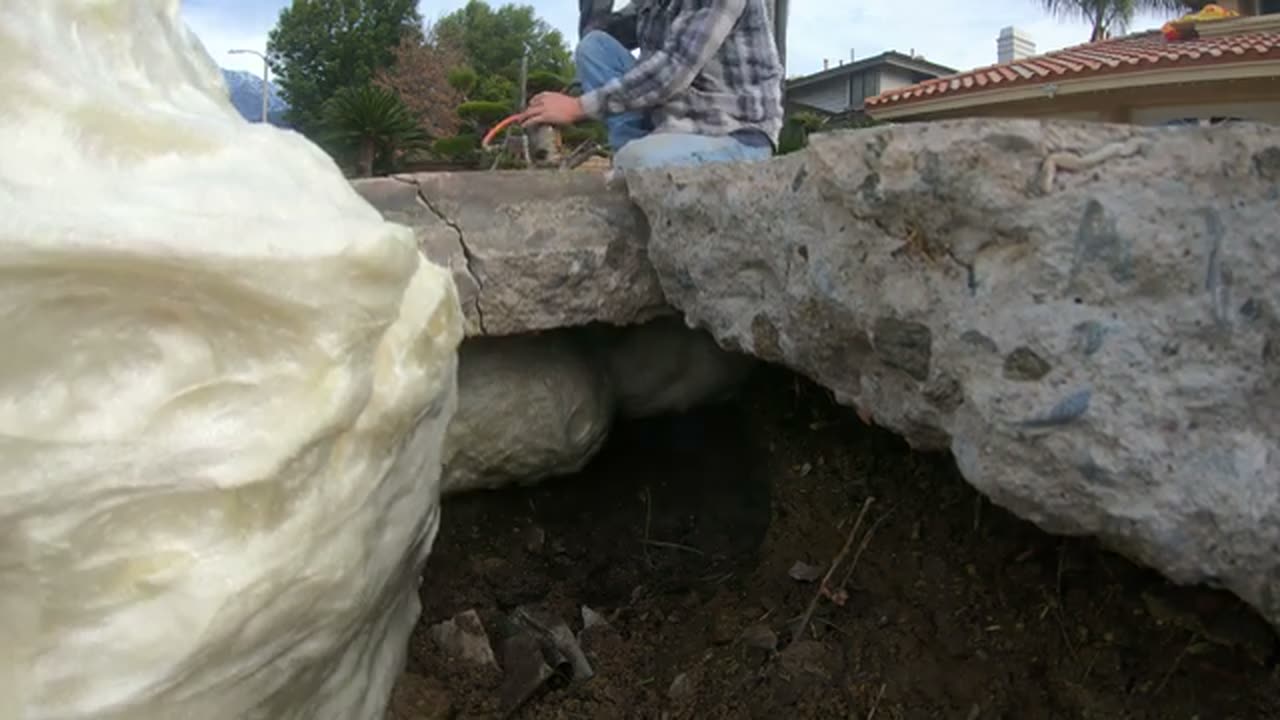
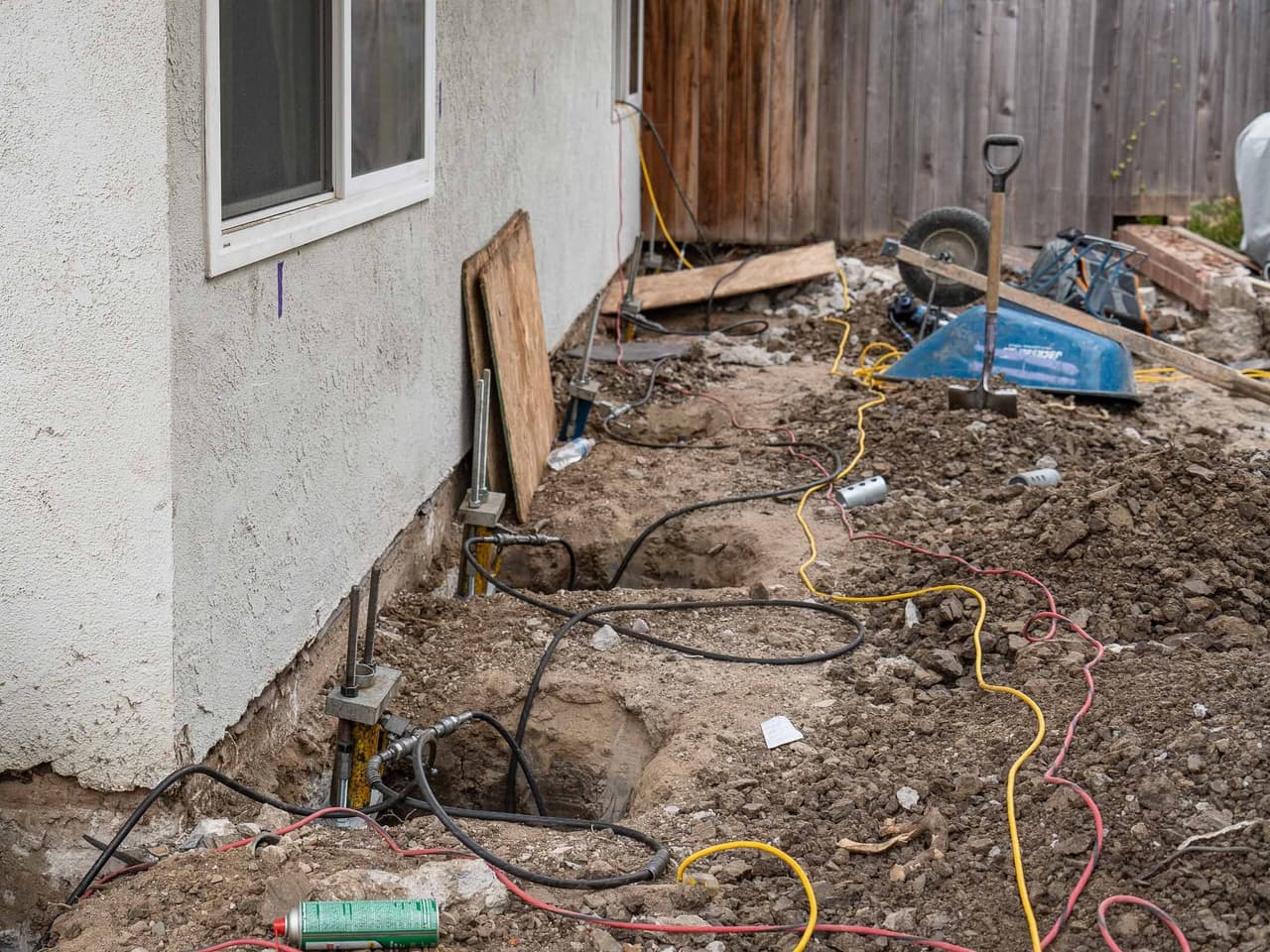
The crew arrives with a rig rather than a demolition crew. Holes about the size of a coin go through the sunken sections at the points the elevation map chose. Through each one goes a two part polyurethane resin that stays liquid until the components meet at the nozzle, reacts within seconds, and expands to many times its liquid volume. The expansion follows the path of least resistance, which is the void, and fills it completely, including fingers and channels that no slurry hose could reach. As it presses outward it also densifies the loose soil at the void's edges, so the soft zone that caused the problem becomes part of the new base.
Only once the void is full does continued injection start raising the concrete, and this is where discipline lives. Foam goes in as small watched shots with elevations checked between them, so the driveway comes up in fine increments and the lift stops at grade rather than past it. Most residential driveways finish inside a day. The material reaches working strength in minutes, the holes are patched, and the surface is typically walkable immediately and taking vehicles the same day.
CH 04
Foam or slurry under a driveway
Both materials lift concrete, and Dalinghaus lifts with one of them. Polyurethane, the polyjacking method, is what we use under driveways, for three reasons. It weighs a small fraction of what cement slurry weighs, so it does not add load to ground that already failed under the load it had. It resists water, which matters when water is what created the void. And it lifts in fine increments, which suits work next to a garage slab, a walkway and finished landscaping.
Cement slurry, the older method, is dense and heavy. Its weight cuts against it on soft or saturated soil, and a slurry loses a little volume as its water dries out, which can leave a small cavity behind. Dalinghaus does not use mudjacking. The umbrella term for either version is slab jacking, and the soil reading comes before any lift.
CH 05
The garage line, the apron, and everything the driveway touches
A driveway rarely settles alone. The joint where it meets the garage floor is a hinge between two slabs on different bases, so a step there usually means the driveway is pulling away from the structure, and the open joint then channels water to the soil under both. The same is true at the street apron and wherever a walkway ties in. When the driveway is the piece that moved, lifting it closes the step and the water path in the same visit, and where the garage side has dropped too, the two get planned together with the garage floor lift so they finish flush instead of trading the step back and forth.
The tilt is worth as much attention as the drop. A driveway that has rotated back toward the house delivers every storm to the foundation line, where clay soil absorbs it, swells, and starts a much more expensive story than a driveway. Restoring the fall away from the structure is often the most valuable part of the work, and it is one of the reasons a a raised edge at a joint is worth acting on early rather than living with.
CH 06
After the lift: closing the water path
A lifted driveway is a repaired symptom. Keeping it level means retiring the cause, so the last part of the project is making sure the water that carved the void has somewhere better to go. Sometimes that is a downspout extension, sometimes it is correcting sprinkler overspray, and very often it is sealing the joints and cracks that were feeding the base below. Cured foam does not erode, but the soil beside it still can, and an open joint is a direct line to it.
What we will not do is sell a tear out by default. Removing and repouring a driveway is a large, slow, expensive project, and it is not what a sound slab on failed soil needs. Where a driveway genuinely has reached the end of its life, the written findings say so plainly with the measurements behind it. Everything else goes on the shorter list: lift it, seal it, or measure it again next season. The rest of the concrete leveling solutions we use are set out with the same honesty about where each one fits, and every project starts with a free evaluation on residential concrete leveling terms rather than a sales script.