A local specialist will evaluate your foundation, walk you through the findings, and send a clear written estimate.
House Lifting · Since 2011
Stabilizing stops the sinking. Lifting undoes it.
Every pier repair we do stabilizes your foundation against future settlement. Lifting is the optional next step: recovering the elevation your home already lost.
Southern California · Arizona · NevadaSince 2011
Let's take the first step toward solid ground.
A local specialist will evaluate your foundation, walk you through the findings,
and send a clear estimate. No cost, no pressure.
CA Lic. #983851 · AZ ROC #330307 · NV Lic. #0089738
Diagnosis First
Should your settled home be stabilized or lifted?
Settlement severity is the first fork in the road: some homes only need to be stopped where they are, others have elevation worth recovering. Pick the closest match to what your home is doing.
Minor elevation loss, no daily friction from doors or floorsSettled about half an inch, livable
At this scale, stabilization is usually the smarter buy. Piers stop the settlement where it stands, and the half inch you cannot feel stays as it is instead of being purchased back at lift prices. A measured elevation survey confirms the settlement really is minor and gives you a baseline to compare against later.
Sticking doors, cracks near openings, a slope you can senseOne to three inches, symptoms arriving
Settlement in this range is actively working on the structure above it, and the stabilize or lift decision becomes a real conversation. Piers stop the movement either way; the elevation survey and your own priorities decide whether the lost inches are worth recovering. Both paths get scoped and priced.
Slope obvious underfoot, doors and windows misaligned, cracks tracking one sectionSeveral inches, visibly sloping floors
At this severity, lifting usually earns its cost: recovering elevation relieves the stress the settlement has loaded into framing, openings, and finishes, and puts rooms back near how they were built. The home is stabilized on piers driven to competent strata, then lifted to maximum practical recovery with the structure monitored throughout.
New or widening cracks after a leak, heavy rain, or nearby earthworkMovement that jumped recently
Settlement that accelerates has found a new cause, often water moving soil under the foundation, and waiting lets it keep carving. A free evaluation confirms the scope. Stabilization comes first; whether a lift follows depends on how much elevation the event took and what the survey shows once the movement is stopped.
Everything a homeowner should understand about this repair, written by the people who do it.
Read the full guideHide the full guide
CH 01
House lifting is underpinning with a second act
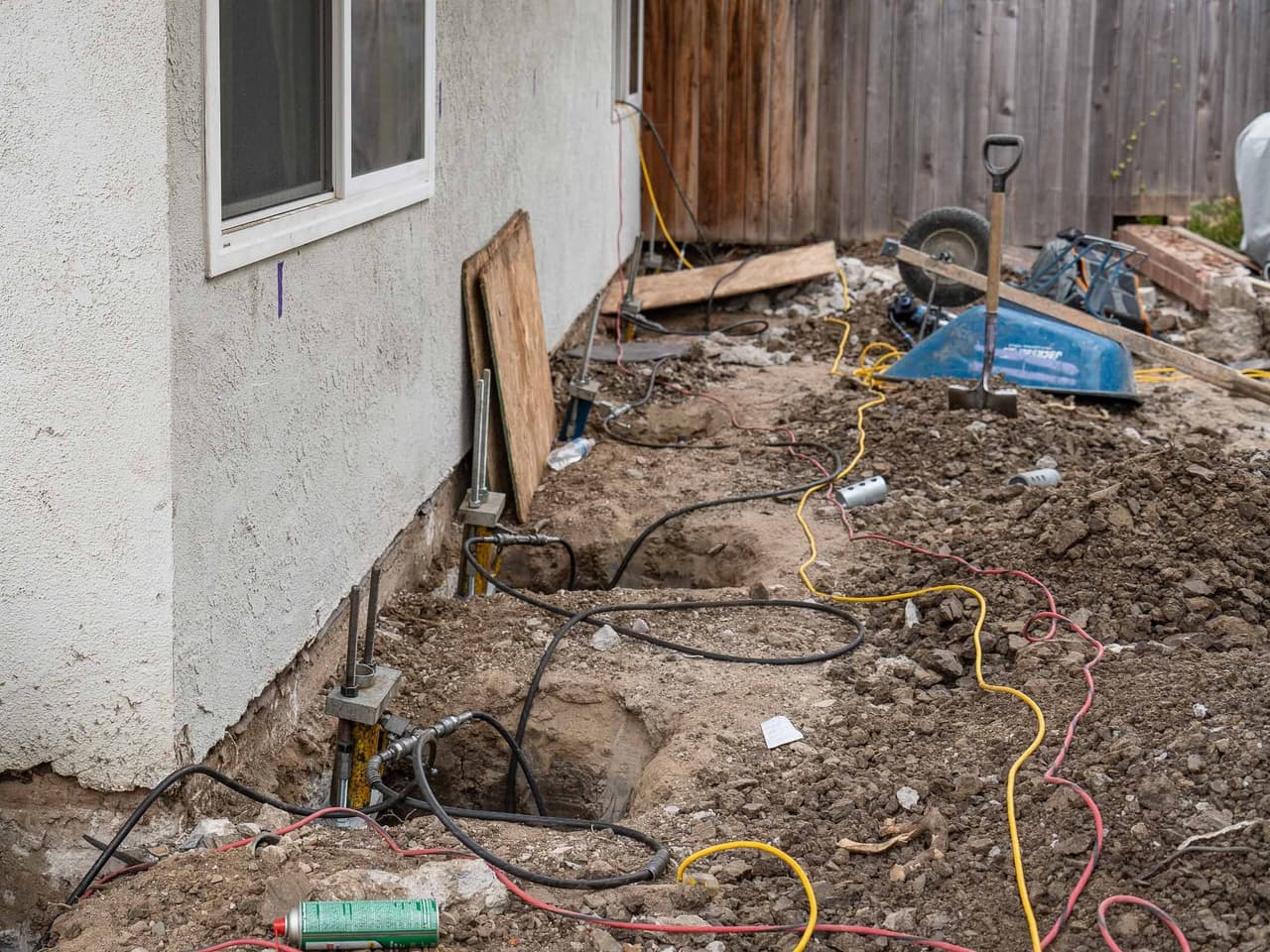
House lifting always begins as a stabilization project. Galvanized steel push piers or helical piers are installed through heavy duty brackets attached to the footing and driven until they reach bedrock or competent load bearing soil, so the settled section of the home stops sinking. That first act happens on every pier project we do, lift or no lift.
The second act is what this page is about. Once the piers are seated in ground that can carry the house, the same steel that stopped the settlement becomes the platform for reversing some of it. A synchronized hydraulic system takes the home's weight onto the piers and raises the settled portion back toward its original elevation, deliberately and measurably, with the structure monitored the whole way up.
CH 02
Stabilize or lift: the decision that shapes the project
Not every settled home should be lifted, and we say so plainly. A home that has settled around half an inch and is not fighting you day to day is usually better served by stabilization alone: the piers stop the movement, and the house keeps living at its current elevation. Lifting adds cost and some risk of cosmetic cracking upstairs, and buying it for a half inch you cannot feel is rarely worth it.
The clearest house lifting warning signs are floors that slope enough to notice, doors that misalign along one side of the house, and cracks that track the settled section; recovering elevation relieves stress on the framing above and puts rooms back close to how they were built. The choice stays yours: some homeowners are comfortable stabilizing at two inches of settlement, others want every inch back that the structure will give. Our job is to walk you through the house lifting solutions available, show you the elevation numbers, explain what foundation underpinning can honestly recover in your case, and price both paths without leaning on the scale.
CH 03
What happens on lift day
By lift day the hard work is buried: piers driven to verified depth or torque, brackets secured to the footing, hydraulics connected at each pier location. The lift itself is the patient part. The synchronized system raises the settled section in small increments while the crew watches elevations, door openings, and finishes, because the goal is maximum practical recovery, the most elevation the structure will return without being damaged to get it. We encourage homeowners to be there for lift day; watching a settled corner come back up is the best part of this work.
Lifting a slab home leaves one more job: the space the settlement carved under the slab does not disappear because the house came up. Those voids are filled with polyurethane foam injection, which expands to fill the gaps and support the slab, so the recovered elevation is resting on solid material rather than air.
CH 04
How we measure what your home has lost
The lift conversation starts with a floor elevation survey, not a sales pitch. A specialist maps elevations across the home and produces a contour of the settlement: where it is deepest, which direction it runs, and which walls and openings are carrying the distortion. That map is what makes an honest foundation repair services recommendation possible, because a half inch of uniform settlement and two inches concentrated at one corner are entirely different projects.
The evaluation also identifies why the home settled, since the answer decides pier type and layout. The findings come to you in writing, with the settlement mapped and both the stabilization and lift options scoped against it, whether or not you move forward.
CH 05
The soil that sinks homes here, and the warranty that answers it
Across our California, Arizona, and Nevada markets, the two most common soils under homes are clay and sand, and both are capable of the differential settlement that makes lifting necessary. Clay dominates a large share of the cities we track, much of it with moderate to high expansion risk: it swells when wet and shrinks when dry, and decades of that cycle can walk one corner of a foundation down while the rest stays put. Sandy soils settle differently, losing their fines, the fine sand and silt particles that hold the soil together, to water movement until voids form and support disappears. Hillside lots add cut and fill construction, where the fill side keeps consolidating for years.
That soil behavior is exactly why the lift rides on steel piers rather than on anything shallow: the piers bypass the reactive surface soils entirely and carry the home on bedrock or competent strata far below. Once the load is on ground that does not move, the settlement problem is answered at its source.
A home on a concrete slab has been lifted on piers, and the lift has left empty spaces under the slab.
The concrete footing under the outer walls is still settling. Foam under it would treat the symptom while the footing keeps sinking.
A table is a starting point, not a diagnosis. Which method fits your home is confirmed on site during the free evaluation.
Project Photos
Foundation Lifting for Repairs on our job sites.
Photos from our own crews and projects. Swipe or use the arrows to see more.
[ 01/07 ]
Why Choose Dalinghaus
Care and expertise from a team that's been doing this since 2011.
Work like foundation lifting for repairs is not a sideline for us. Dalinghaus crews handle house lifting and related structural work across California, Arizona, and Nevada, and nothing else.
01
Specialized expertise.
Foundation repair, concrete leveling, and crawl space repair are our entire focus. Not a sideline.
02
Locally owned since 2011.
More than 2,000 projects on the clay and desert soils of California, Arizona, and Nevada since 2011.
03
Licensed in California, Arizona and Nevada.
CSLB License #983851 in California, ROC #330307 in Arizona, and License #0089738 in Nevada. Look us up with the state before we ever set foot on your property.
04
Warrantied solutions.
Warranty terms come in writing with every proposal, and the terms that apply to your job are stated in that job's paperwork. Ask your project specialist during the free evaluation.
Brian DalinghausCO-FOUNDER · SINCE 2011Brad DalinghausCO-FOUNDER · SINCE 2011
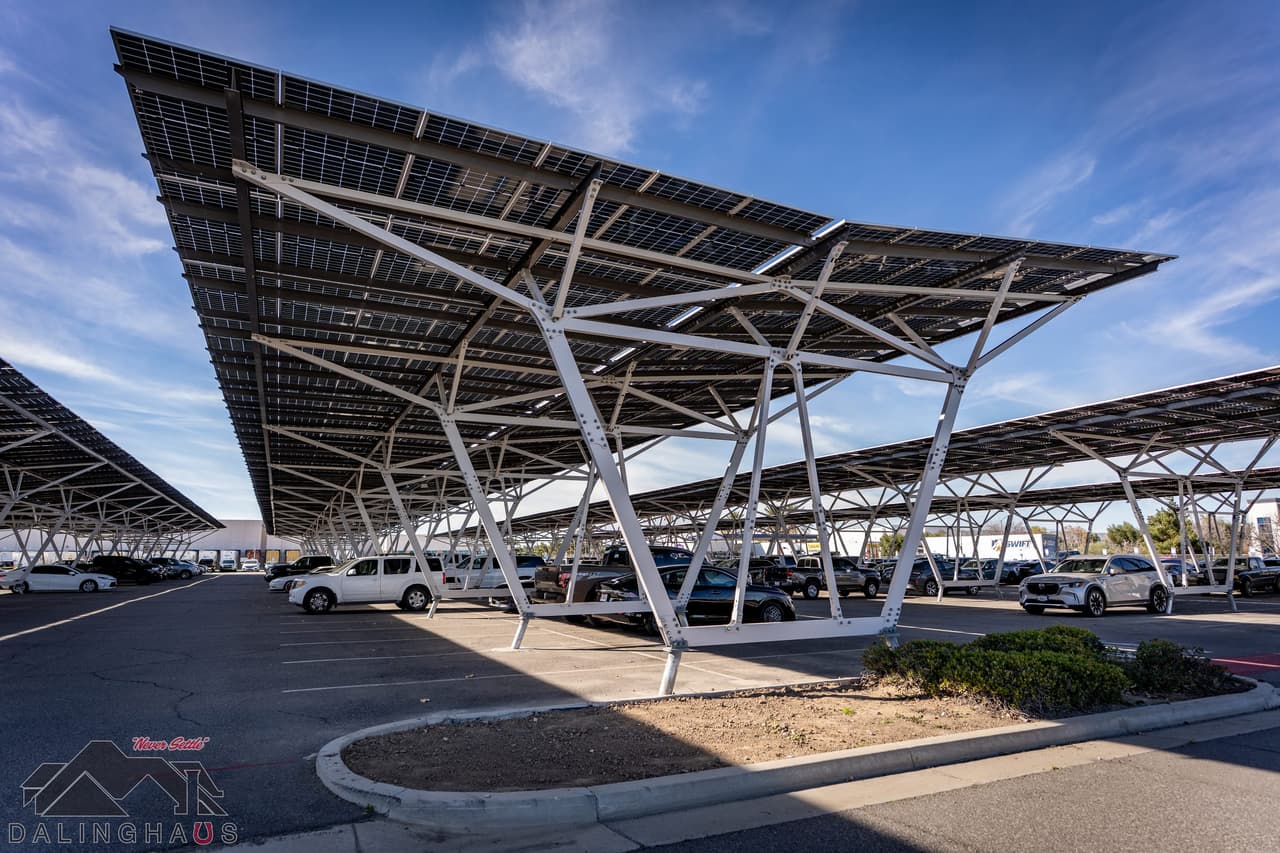
Helical pile foundation for a solar canopy in Southern California
Helical PilesPull Testing
Dalinghaus installed the helical pile foundation and erected the structure for a solar canopy over a staff parking lot in Southern California, working in four phases so the lot stayed open.
Lifting a settled Irvine home 3 inches with helical piers
Helical PiersHydraulic Lift
The back of an Irvine home had settled about 3 inches over roughly ten years. Ten helical piers went in over two days, and a 30 minute lift brought the back half of the home up 3 inches.
Helical piers to bedrock under a Rancho Palos Verdes home caught in a landslide
Helical Piers
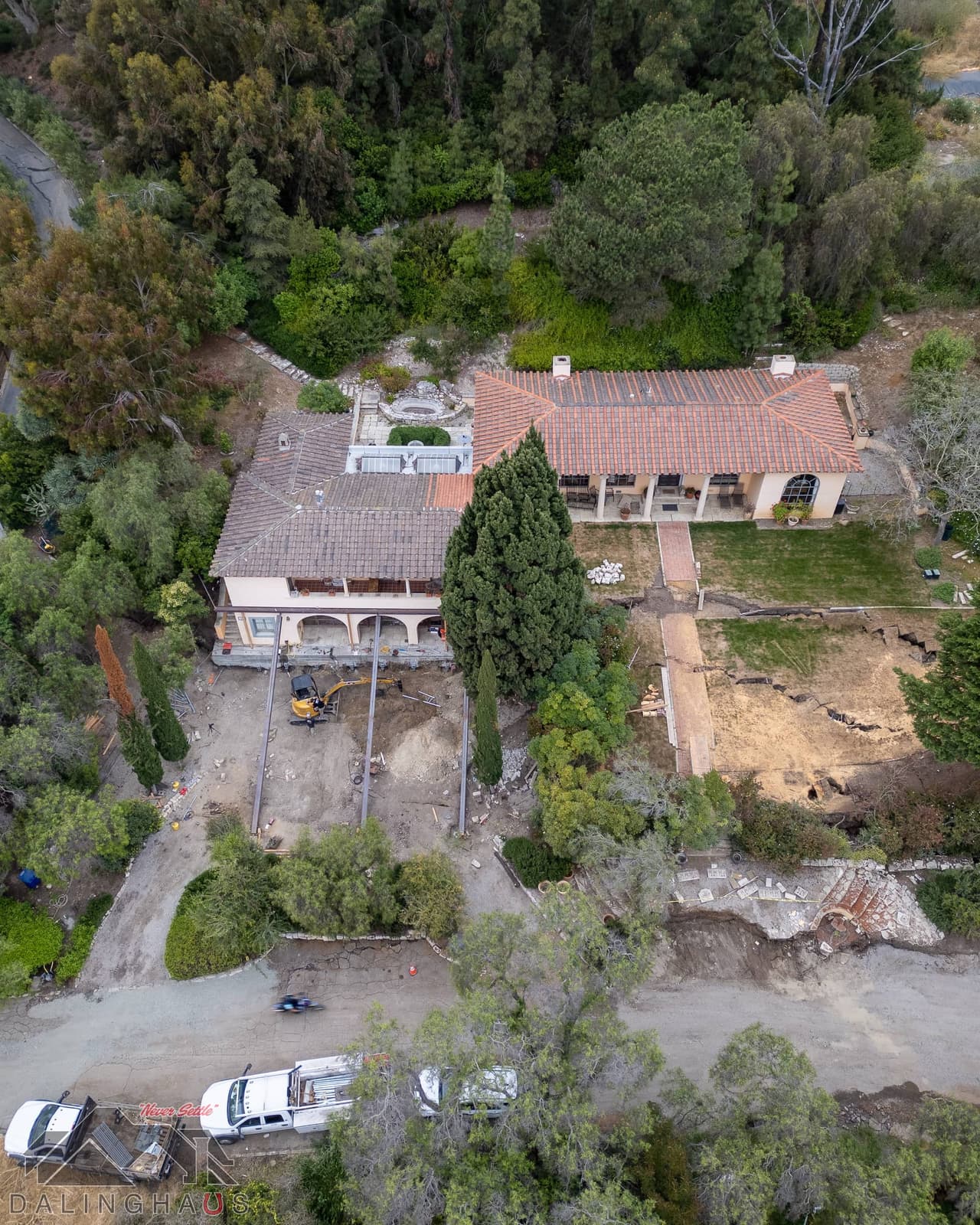
A hillside home in Rancho Palos Verdes split in half as the ground slid toward the slope. Dalinghaus installed helical piers about 30 feet down to competent strata or bedrock beneath it.
Steel piers for a Rancho Palos Verdes home that settled 16 inches
Steel PiersFoundation Stabilization
A beachside home in Rancho Palos Verdes settled 16 inches in a couple of months. Steel piers were driven to load bearing soil or bedrock at each excavated location, with a lift planned once they were in.
Lifting a San Clemente hillside home that settled 2 inches
Helical PiersHelical Tieback Anchors
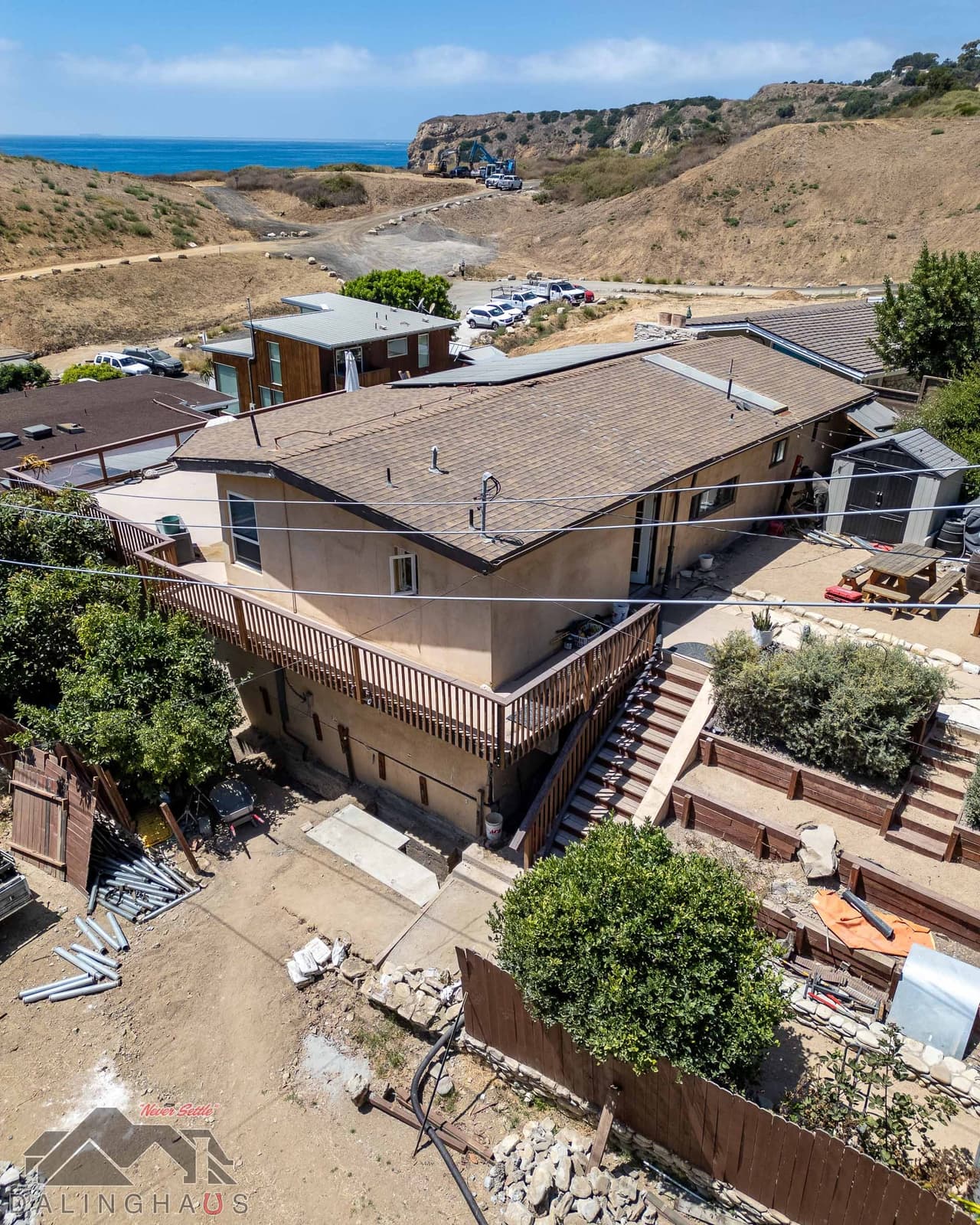
A San Clemente hillside home had settled about 2 inches and was moving toward the slope behind it. Vertical helical piers and helical tieback anchors stabilized the home and recovered part of the drop.
Answers to common questions about Foundation Lifting for Repairs.
Don't see your question here? Our team is happy to help. Reach out anytime.
Stabilization is always included: the piers carry the home's weight down to stable soil below the layer that settled. Lifting is an optional recovery step you choose on top of that. If you skip the lift, sloped floors stay where they are, but the home stops moving. If you choose the lift, we raise the settled area back toward its original elevation using the same pier system.
We lift to maximum practical recovery, which means as much as the structure allows without creating new damage. That is often close to original elevation, but no honest contractor guarantees a perfect 100 percent. Forcing a lift beyond what the home tolerates causes cracking instead of closing it, so we stop at the point the structure tells us to.
Yes. If your home settled five inches, you can elect to recover only part of that. Some homeowners want the maximum recovery available, others just want the worst of the slope gone. Your specialist will walk through the elevation survey with you and price the options so you can decide what fits your goals.
Lifting a slab on grade home can leave voids where the soil no longer touches the concrete. We fill those voids with deep injection polyurethane foam, which expands to support the slab and densify the soil beneath it. That way the lifted foundation bears on the piers and the slab stays fully supported.
Warranty terms for the piers that hold the lifted elevation arrive in writing with your proposal, before any work begins. Ask your project specialist during the free evaluation which terms apply to your project.
Pricing & Scope
Honest pricing & honest limits
Every home is different, so every estimate is written for the home in front of us. A free on site evaluation gives you a written estimate that reflects your specific scope, access, and conditions.
How pricing works
Repair pricing varies by load, depth, and access. Your written estimate comes from the free evaluation.
When this isn't the right fix
If your home has settled a small amount, around half an inch, and the movement is not affecting daily life, stabilizing in place is often the smarter choice. We will show you the elevation numbers and tell you plainly when a lift is not worth it.
Why our estimates are honest
Licensed contractor serving California, Arizona, and Nevada.
The Process
How we approach Foundation Lifting for Repairs
A straightforward path from free evaluation to completed repairs.
Step 01
Floor elevation survey
A specialist maps how far each part of your home has settled and identifies what is driving the movement.
Step 02
Recovery plan in writing
You see what lift is realistic, what it involves, and what it costs, whether or not you hire us.
Step 03
Pier installation
Galvanized steel push or helical piers are driven to load bearing strata, with torque and depth logged on every pier.
Step 04
Monitored hydraulic lift
A synchronized hydraulic system raises the settled section in small increments to maximum practical recovery, then voids are filled with polyurethane foam where needed.