
10 Signs Your Home May Need Hillside Repair
Leaning trees, tilting retaining walls, a widening gap at the patio and new cracks in the house can be signs a California hillside is moving. Here is what each can mean.
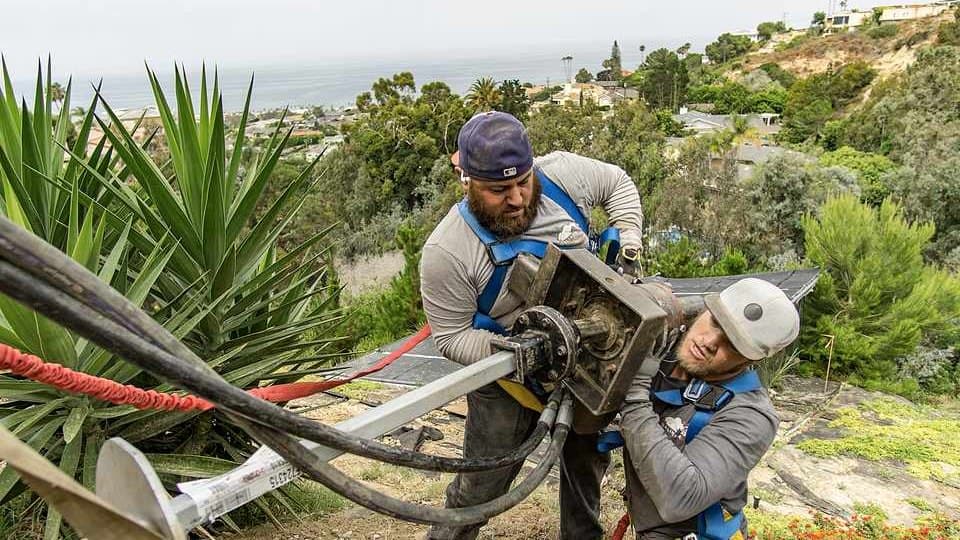
Building a home on a hillside can bring great views and added value. It also means the home sits on ground that is always moving a little. How much it moves depends on several things, including how the slope was built and what it is made of.
When a slope moves more than it should, the signs usually show up on its surface, in trees, fences, retaining walls, patios, decks, pools and sometimes the house itself. This guide covers ten of those signs, grouped by where you are most likely to notice them. Dalinghaus repairs both retaining walls and foundations, so the guide also explains what the signs can mean for each: the walls that hold back a slope and the house on top of it. Both are part of hillside repair in California.
No single sign proves that a hillside is moving. Several of these signs can have more than one cause. An evaluation of the slope and the house is the best way to know which one applies.
What Signs Appear on the Slope Itself?
1. Are Trees on the Slope Leaning or Bent?
Trees keep growing toward the sun. On a slope that is not moving much, a tree usually grows straight up. When the ground under a tree moves, the tree tips with the soil. It then starts growing upward again, which can leave a lean or a bow in the trunk.
Trees can lean for other reasons too, so a leaning tree is worth noting alongside the other signs on this list. It is one of the signs of slope movement Dalinghaus sees most often on Southern California hillsides.
2. Are Cracks Opening in the Ground or the Yard?
Cracks in the soil on a slope, or across a lawn, can mean the ground underneath is shifting. On a Rancho Palos Verdes property caught in a landslide, cracks and fissures ran through the grass and soil across the whole lot. A brick walkway also broke apart where the ground under it had moved.
A crack in the ground does not always come from a moving slope. Clay soil can shrink and crack as it dries out. Cracks that keep getting wider, or that also run through walkways and patios, can be an early sign of ground movement.
3. Is the Ground Bulging at the Bottom of the Slope?
The bottom edge of a slope is called the toe. When soil higher on the slope moves downhill, it can push outward at the toe and form a bulge. A section of the slope can also slump, which means it drops and slides forward as one mass.
Water can give clues as well. Water that starts trickling out of the slope in a new spot, or pooling at its base, may point to changes below the surface.
What Signs Appear in Retaining Walls and Fences?
Walls and fences are built to stand straight, which makes them useful markers. When a slope moves, the soil pushes on anything built into it. The tops of walls and fences then tend to lean toward the bottom of the slope.

4. Are Fences or Garden Walls Leaning Downhill?
Fences and garden walls are usually built plumb, which means straight up and down. A fence or wall that now leans toward the bottom of the slope can be a sign that the ground under it has moved. The sign is clearer when the fence or wall was built recently.
Block walls along a property line can also show stair step cracks. These are diagonal cracks that follow the mortar joints like a set of stairs.
5. Is a Retaining Wall Leaning or Bulging?
A retaining wall holds back soil so the ground on one side can sit higher than the ground on the other. Each wall is designed to carry a certain amount of sideways pressure from that soil. When the pressure grows beyond what the wall was built to hold, the wall can start to lean or bulge outward in one section. Eventually, it can fail.
A moving slope is one reason the pressure can grow. Heavy rain, earthquakes and poor soil conditions can also play a part. The causes behind a lean and a bulge can differ, as the page on why retaining walls lean or bow explains.
6. Does a Retaining Wall Have Cracks or Water Coming Through?
Cracks are among the most common signs that a retaining wall needs repair. Some cracks are minor. Others appear along with a lean or a bulge, and those can mean the wall is under more pressure than it was built for.
Water seeping through a crack may also point to a structural problem. Erosion at the base of a wall is another common sign. A wall face that is crumbling or flaking away is worth a closer look too. The guide to what retaining wall cracks mean covers which crack patterns tend to be minor.
What Signs Appear Around the House?
As a slope moves, it can pull whatever sits on it downhill, including patios, decks, pools and sometimes the house.
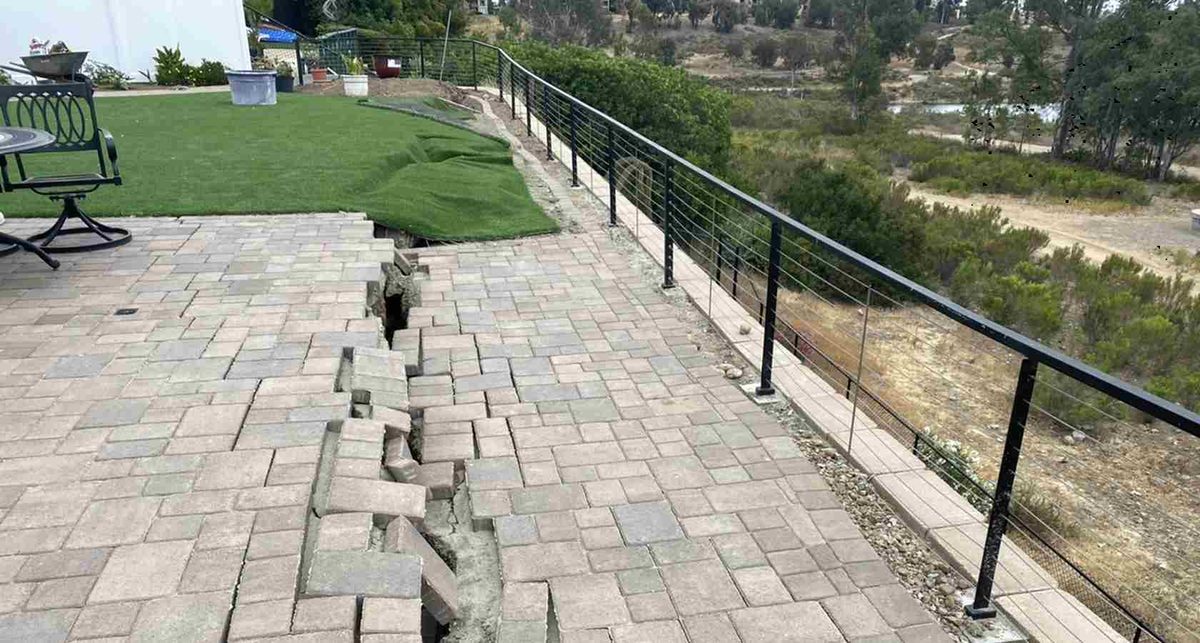
7. Is a Gap Opening Between the House and the Patio?
Unless a patio or walkway is tied into the foundation, it rests on the soil beside the house. When that soil moves with the slope, the concrete can move with it. A gap usually starts where the house and the patio meet, and it can keep getting wider as the concrete continues to move.
Patios and walkways that sit closer to the slope than the house are often the easiest place to see it.
8. Are Deck Posts Leaning or Kicking Outward?
Many hillside homes have decks built out over the slope. The posts that hold up those decks rest in the soil, so when the slope moves, the posts can move with it.
Hold a level against each post. A post that is not straight up and down is likely being moved by the slope under it. The same goes for a support beam that has started to kick outward.
9. Does the Pool Water Line Look Uneven?
Water always settles level. If a pool tilts with a moving slope, the water line can sit higher on the tile at one end than the other.
The joint between the pool edge and the deck can also keep opening. Resealing that joint can cover the gap for a while, although the movement that opened it may continue.
10. Are New Cracks Appearing in the House?
When the house itself starts to move, it can show the same signs as other foundation problems. Cracks in exterior stucco can start at the corners of windows and doors, and doors and windows can begin to stick.
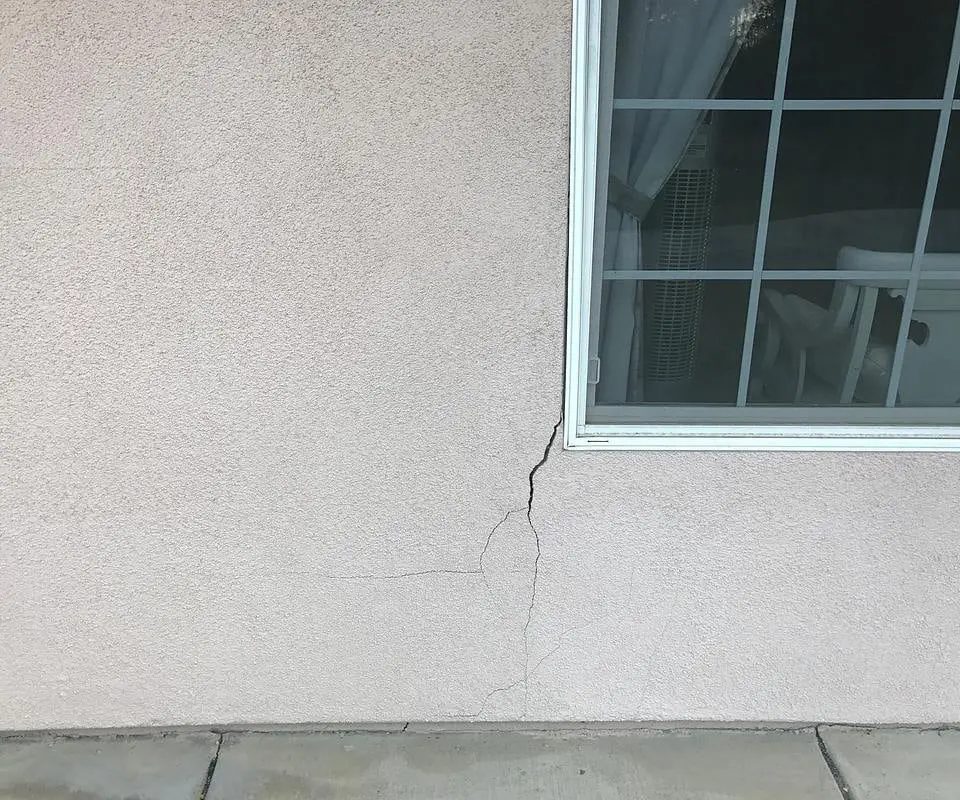
On a row of Chino Hills townhouses at the top of a slope, stucco cracks climbed from the corners of windows and door frames. The structure had settled as much as 7 inches and was also moving sideways toward the hillside.
Cracks like these have many possible causes, and a house on flat ground can crack as it settles too. That is one more reason an evaluation looks at the house and the slope together.
What Makes a Hillside Start to Move?
Every hillside moves a little. Four things have a lot to do with how much:
- How the slope was built. Man made slopes are shaped from fill soil, which is soil brought in and packed down. That fill is required to be tested for compaction as it goes in. Fill that was not compacted properly can leave a slope unstable.
- What the slope is made of. Clay expands when it gets wet and shrinks as it dries. Wet clay also turns slippery, which can help a slope start to slide.
- Plant cover. Roots weave the soil together and can reduce how much soil washes away in heavy rain.
- Drainage. Drainage is critical to how long a slope lasts. Catch basins and V shaped ditches on a slope limit how much water can run freely down it and wash it out.
The house matters too. Many hillside homes sit on foundations designed for some slope movement. These often rest on piles that reach below the active part of the slope into firmer native soil. A home built without a proper foundation, or on a slip plane (a layer the slope tends to slide along), can move with the slope. Slow, steady downhill movement is often called slope creep, which Dalinghaus describes in its guide to slope creep.
Is It a Retaining Wall Problem, a Foundation Problem or a Hillside Problem?
The signs above can come from three different problems, and each one leads to a different repair. More than one can apply on the same property.
- A retaining wall problem. A wall can lean or crack from age, weather, earthquakes or the way it was built, even when the slope behind it is stable. That is a retaining wall repair job, where the wall itself is reinforced or rebuilt.
- A hillside problem. When the slope behind a wall is moving, the wall is one part of holding that slope. In that case the repair needs to hold the slope as well as the wall.
- A foundation problem. When the house is settling or moving too, the house needs its own repair along with any work on the slope.
How Is a Moving Hillside Repaired?
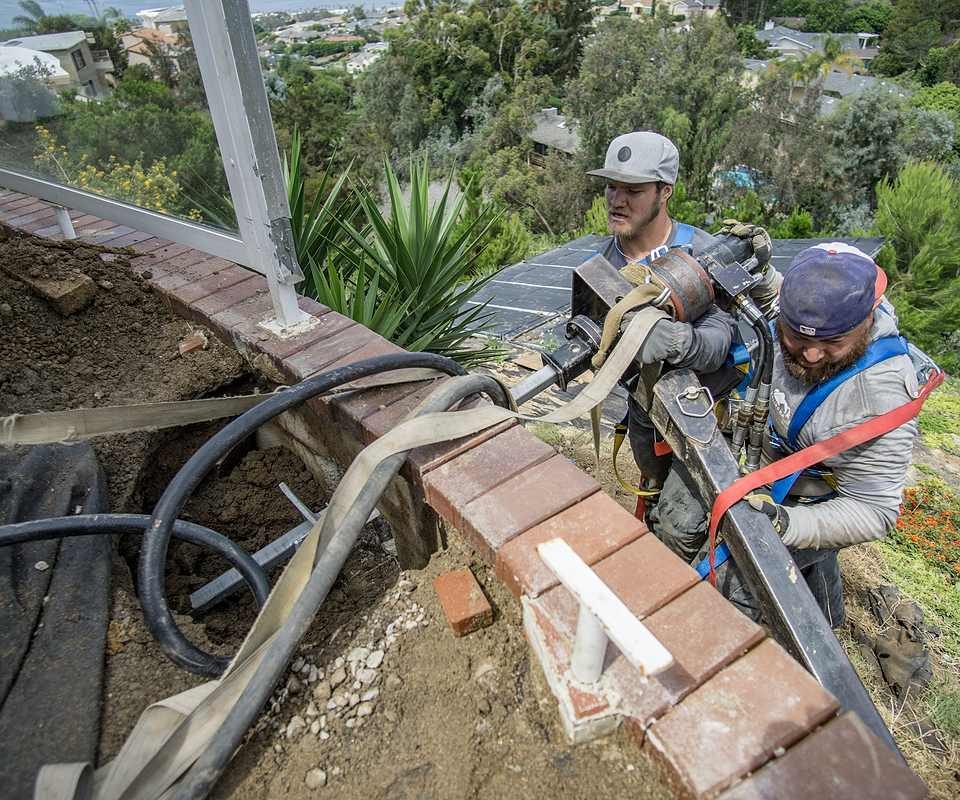
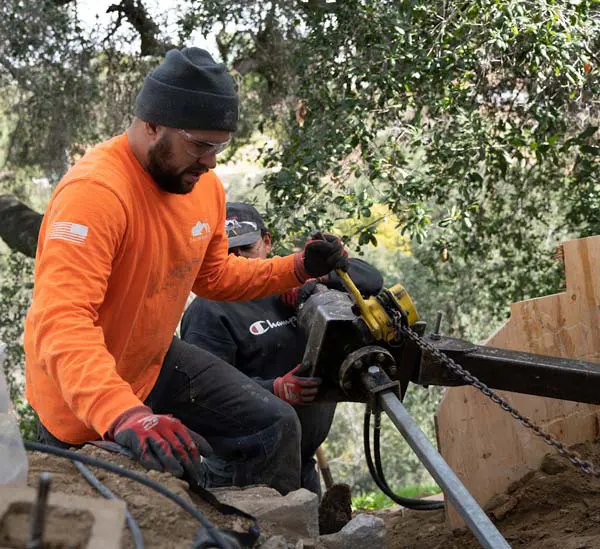
Hillside repair aims to slow the movement and then stop it. Dalinghaus does that with piers, piles and walls. It has worked with engineering firms for many years on cost effective slope repair methods. The methods on its hillside repair pages include:
- Tiebacks through an existing retaining wall. Tiebacks are steel anchors installed at an angle through a wall and into firmer soil behind it. On a hillside they can often be anchored in the dense native soil behind the loose fill. Anchoring the existing wall usually costs far less than building a new one. A wall that has been pushed too far to save may need to be replaced with a new retaining wall with tiebacks.
- Retaining wall systems tied to piers and anchors. Piers, beams, helical piles and anchors work with the wall, so it holds back the slope and has support from below.
- Soldier piles. Large concrete piles are drilled close together in a line, through the fill and into dense native soil. The method needs special drilling rigs and can be costly. The page on how soldier piles are installed walks through the steps.
- Soil nailing. Soil nails are steel bars drilled into the hillside, locked in place with grout and tied together behind a concrete or shotcrete wall. Shotcrete is concrete sprayed into place.
- Tiebacks and piers on the house. When the house is moving too, foundation tieback anchors can hold it against sideways movement, and piers can carry the parts that have settled. Piers can help support a house, a deck or a pool on a hillside, although they do not stop the slope itself from moving. That is why pier work is often paired with work on the slope.
Every slope is built differently, and a more expensive method is not always the better one. Each plan is designed around the slope’s current condition. The page on slope stabilization for hillside homes covers the options in more detail.
Where Does Dalinghaus See These Signs in California?
Hillside repair is a California service for Dalinghaus Foundation Repair. Its crews evaluate homes on Southern California hillsides every year. Its project write ups show several of the signs above on real jobs:
- San Clemente. A two story home on a San Clemente ridge had settled about 2 inches and was moving sideways toward the slope behind it. Vertical helical piers now carry the home to load bearing soil, and helical tieback anchors hold it against the sideways movement.
- Anaheim. The back of a 10,000 square foot Anaheim home had settled several inches. Retaining walls on several levels hold up its backyard and the home itself. Helical piers went in under the house first, and helical tieback anchors with whaler beams were planned for the walls. A whaler beam is a steel beam that spreads the hold of the anchors along a wall.
- Chino Hills. Townhouses at the top of a Chino Hills slope had settled as much as 7 inches and were moving toward the hillside. The crew installed 33 helical piers around the perimeter and lifted the structure 6 inches. Helical tieback anchors were planned for the sideways movement.
- Rancho Palos Verdes. A Rancho Palos Verdes home caught in a landslide had split in half, and cracks ran across the whole property. The crew advanced helical piers about 30 feet down to firm, load bearing soil or bedrock.
When Should You Have a Hillside Evaluated?
Dalinghaus recommends having a slope evaluated as soon as signs of movement appear. Movement that is found early may not have reached the house yet. In that case the house may not need to be lifted, leveled or anchored, which can keep the repair smaller.
What Happens During a Free Evaluation?
A Dalinghaus specialist can look at the slope, the retaining walls and fences on it, the concrete around the house and the house itself. The specialist then explains what the signs show. If work is needed, the scope and price come in a written proposal before anything starts.
Schedule a free evaluation to have your slope, your retaining walls and your home looked at together.
