What Is The Difference Between Epoxy And Polyurethane In Concrete Crack Injections?
Imagine you've invested in a beautiful new home teeming with potential. Over time, you notice small cracks snaking through your pristine concrete.
Imagine you’ve invested in a beautiful new home teeming with potential. Over time, you notice small cracks snaking through your pristine concrete. These cracks might seem minor initially, but if they’re left unchecked, they can expand and compromise the entire structure, a common issue many property owners face due to factors like shifting weather patterns, ground movement, or simply the natural aging of the building.
Understanding the unique properties of epoxy and polyurethane is crucial for making informed decisions about concrete crack repair. Each material has distinct characteristics that suit different cracks and conditions. By grasping these differences, you can select the most appropriate material, ensuring the longevity and integrity of your concrete structures. This knowledge not only empowers you to make the best repair decision but also provides peace of mind about the future of your property.
Epoxy: the Rigid Solution
Epoxy is a two-part resin that, when combined, creates a rigid and long-lasting material. Thanks to its strength and dependability, epoxy is commonly used for structural repairs. Let’s dive into why epoxy is often the go-to option for fixing cracks in concrete.
Strength and Durability
Epoxy injections are a robust method for fixing and strengthening concrete. When the epoxy hardens, it forms a solid and sturdy bond that can withstand heavy pressure, making it an ideal choice for structural cracks. This solution is particularly effective for relatively stable cracks, as the epoxy creates a rigid, inflexible repair. However, it’s not recommended for cracks that undergo frequent expansion and contraction.
Application Process
Injecting epoxy into concrete cracks is a meticulous process designed to restore the damaged area’s strength and integrity. The first step is to clean the crack thoroughly, removing any dirt, dust, or loose particles that might prevent the epoxy from adhering correctly. This can be done using wire brushes, compressed air, or vacuuming.
Next, small injection ports, often made of plastic, are strategically placed along the length of the crack. These ports are spaced evenly to ensure the epoxy resin can be injected at various points, allowing for thorough distribution throughout the crack.
Once the injection ports are in place, a special epoxy resin is mixed and prepared. The resin is injected into the crack through the ports using a high-pressure injection system. This pressure helps the epoxy penetrate the crack deeply, filling even the smallest voids and ensuring a solid bond.
As the epoxy flows into the crack, it displaces any remaining air and fills the entire space. The resin then hardens and cures, forming a solid, durable repair that restores the structural integrity of the concrete. This method is particularly effective for repairing cracks too fine for other fillers, providing a long-lasting solution that prevents further damage and deterioration.
Curing Time
One of the main downsides of using epoxy is that it takes a long time to harden or cure fully. After you apply it, you have to wait anywhere from several hours to a few days before it’s completely set. The exact curing time depends on the specific type of epoxy and the environmental conditions, such as temperature and humidity. For example, the curing process can take longer if the weather is cool or there is high humidity.
Once the epoxy is fully cured, the repair is solid and can withstand significant structural loads. It is an excellent choice for heavy-duty repairs that require lasting strength and durability.
Ideal Conditions for Use
Epoxy works best in dry environments because moisture can disrupt its hardening process. Additionally, epoxy is relatively rigid, making it a poor choice for repairing cracks that might shift or expand over time.
Polyurethane: the Flexible Solution
Polyurethane foam injection is another popular material for concrete crack injections. It differs significantly from epoxy in its properties and applications. Here’s why polyurethane might be the right choice for specific concrete cracks.
Flexibility and Elasticity
Polyurethane, in contrast to epoxy, offers flexibility once it cures. This elasticity allows it to adapt to the movement of the concrete, making it an excellent choice for cracks that experience continual stress, such as those caused by thermal expansion and contraction. While polyurethane provides a durable and flexible repair, it may not be as permanent as epoxy. It is better suited for non-structural cracks and areas subject to movement and moisture.
Application Process
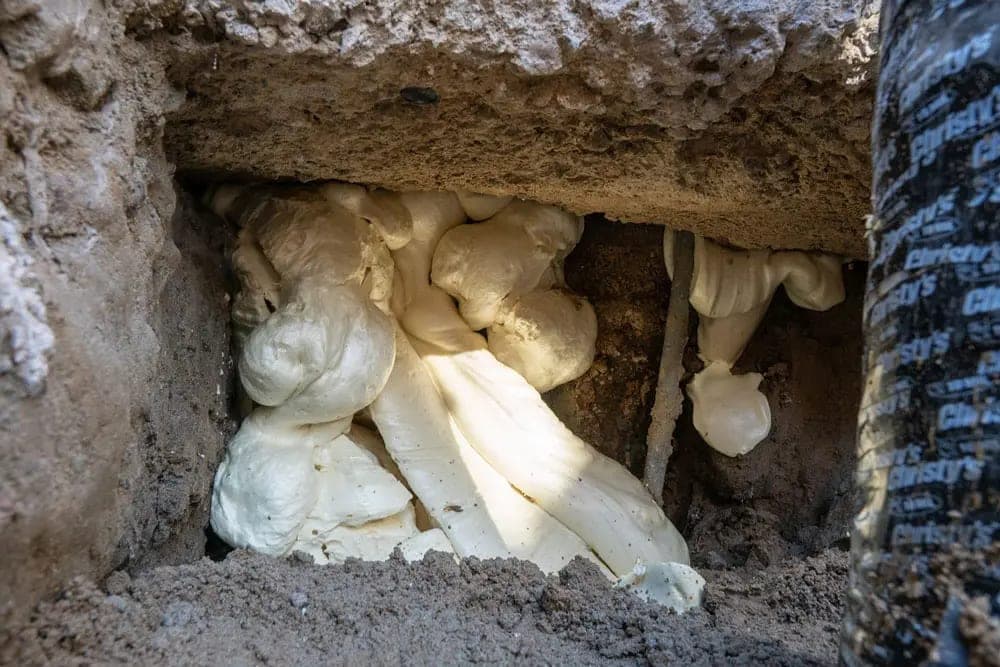
Applying polyurethane involves similar preparation steps to epoxy, but the injection process differs slightly. When you inject polyurethane, it starts to expand immediately. This expansion allows the material to penetrate deeply into the crack, reaching even the most minor voids and gaps that epoxy might miss. Polyurethane fills the entire crack as it expands, ensuring a thorough and secure seal. This characteristic makes it particularly effective for sealing cracks, as it fills the visible gap and any hidden spaces, providing a more comprehensive repair.
Curing Time
Polyurethane cures much faster than epoxy. This quick curing time can be advantageous for projects that require a rapid turnaround, providing you with a sense of relief that your repair work can be completed swiftly and efficiently.
Moisture Tolerance
Polyurethane’s standout feature is its tolerance to moisture, allowing it to be applied in wet conditions and even underwater. This versatility, combined with its ability to cure at lower temperatures, empowers you to choose a material that can adapt to different conditions and repair needs, instilling confidence in its adaptability.
Comparing Epoxy and Polyurethane
When deciding between epoxy and polyurethane for concrete crack injections, it’s essential to consider the specific requirements of your project. Here’s a comparative overview:
- Epoxy
- Strength: High. Suitable for structural repairs.
- Flexibility: Rigid.
- Curing Time: Longer (several hours to days).
- Moisture Tolerance: Low. Requires dry conditions.
- Application: Deep penetration, structural repair.
- Polyurethane
- Strength: Moderate. More suitable for non-structural repairs.
- Flexibility: Flexible and elastic.
- Curing Time: Short (minutes to hours).
- Moisture Tolerance: High. Can be used in wet conditions.
- Application: Expands to fill voids and is adaptable to movement.
Additional Considerations
Cost Comparison
Understanding the cost of different materials is crucial. Epoxy is usually pricier because it is solid and long-lasting. Even though it costs more initially, its durability makes it worth the investment, especially for structural repairs. On the other hand, polyurethane is often cheaper and is an excellent budget-friendly option for non-structural fixes or situations where flexibility is more important.
Epoxy vs Polyurethane Concrete Crack Injection
Choosing between epoxy and polyurethane for concrete crack injection ultimately depends on the nature of the crack and the environmental conditions. Epoxy is the go-to choice for structural repairs where strength and permanence are crucial. Its rigidity and high compressive strength make it suitable for cracks that compromise the structural integrity of the concrete.
On the other hand, polyurethane shines in situations where flexibility and moisture tolerance are critical. Its ability to expand and contract with the concrete makes it ideal for cracks subject to movement. Its rapid curing time and adaptability to wet conditions offer a practical solution for many repair scenarios.
Choose the Right Concrete Crack Injection: Get Expert Advice Today!
As a property owner, your role in understanding the differences between epoxy and polyurethane for concrete crack injections is crucial. This knowledge empowers you to select the most suitable material for your repair needs. Epoxy offers a rigid, strong repair suited to structural cracks, while polyurethane provides flexibility and rapid curing, making it suitable for non-structural cracks and challenging conditions. By considering your project’s specific requirements, you can make an informed decision, ensuring your concrete structures’ longevity and integrity.
If you want help deciding what concrete crack injection works for your specific situation, we are happy to assist you in Southern California, Arizona, and Nevada. Whether you’re currently facing any concrete issues or aiming to prevent future ones, taking proactive action can help you worry less. Our team of skilled professionals is committed to ensuring that your home remains a safe and comfortable place for your family. Please use our free consultation to gain peace of mind and enjoy your home for years.
Schedule a Free Evaluation
Foundation movement is easier to judge in person than from a photo. Schedule a free evaluation and a Dalinghaus specialist will walk the property with you and explain what the evidence shows.