
Footing settlement
Chimney footings are often shallower and smaller than the house foundation. When the soil below compresses under the concentrated weight, the footing sinks and the stack rotates.
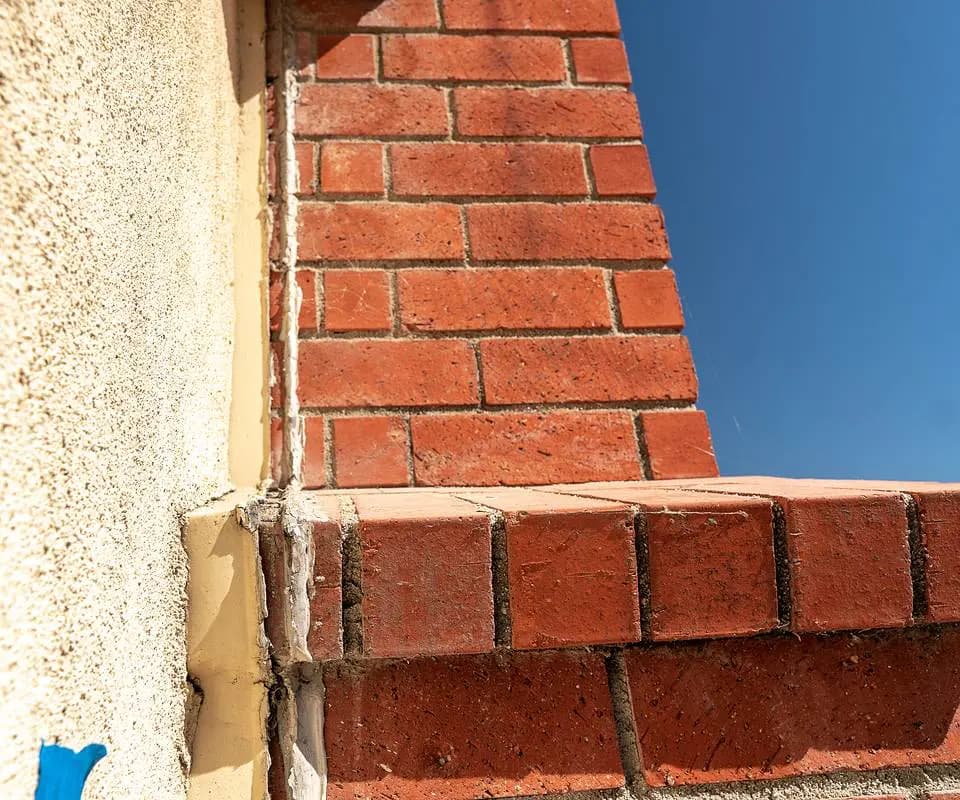
Chimneys tilt when the soil under their footing gives way. Here is why it happens and why the fix starts at the ground, not the brick.

A local specialist will evaluate your foundation, walk you through the findings, and send a clear estimate. No cost, no pressure.
A chimney is one of the heaviest, most concentrated loads on your property, and it usually stands on its own footing, separate from the house foundation. That makes it an early warning system: when soil conditions change, the chimney often moves first. From the yard you might see the stack tilting away from the house, a widening gap between the chimney and the siding, or flashing at the roofline that has pulled apart. Inside, you might find cracks in the wall the chimney backs up to. The mechanism is simple physics. The chimney footing sinks or rotates as the soil beneath it compresses, erodes, or cycles through clay shrink and swell, and because the chimney is tall and rigid, even a small footing rotation becomes a visible lean at the top. This is not a problem that stabilizes on its own. The lean shifts the center of gravity, which loads the low side of the footing harder, which accelerates the settlement. A separating chimney also opens paths for water and pests, and in earthquake country an unstable masonry stack is a real safety concern, which is why a measured evaluation belongs near the top of the list.
For the repair side of this, the foundation repair solutions page lists every method Dalinghaus installs, including the ones that fix problems other than leaning chimneys.
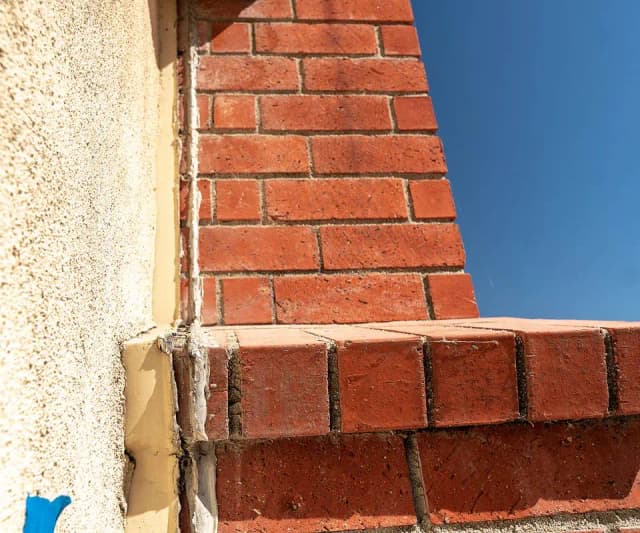
Chimney footings are often shallower and smaller than the house foundation. When the soil below compresses under the concentrated weight, the footing sinks and the stack rotates.
Roof runoff frequently concentrates right at the chimney. Water washing past the footing carries fine soil away, leaving voids that let the footing drop unevenly.
Clay soil swells in the wet season and shrinks in the dry season. A footing riding those cycles rarely moves evenly, and the chimney leans a little more with each round.
Some chimneys were built on footings too small or too shallow for their weight and soil conditions, so movement was built in from day one.
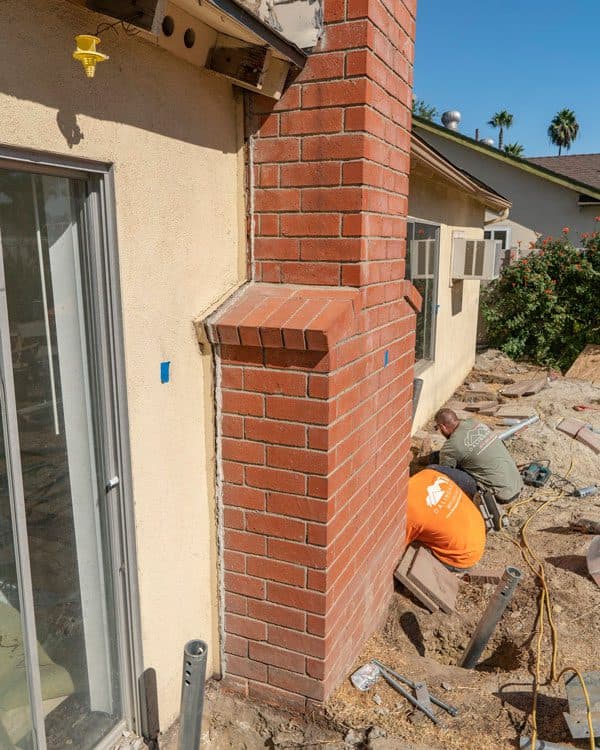
Solving leaning chimneys means addressing the underlying soil, pressure, or settlement cause. Not just patching the visible damage. Below are the engineered solutions we install most often for this symptom in California, Arizona, and Nevada homes.
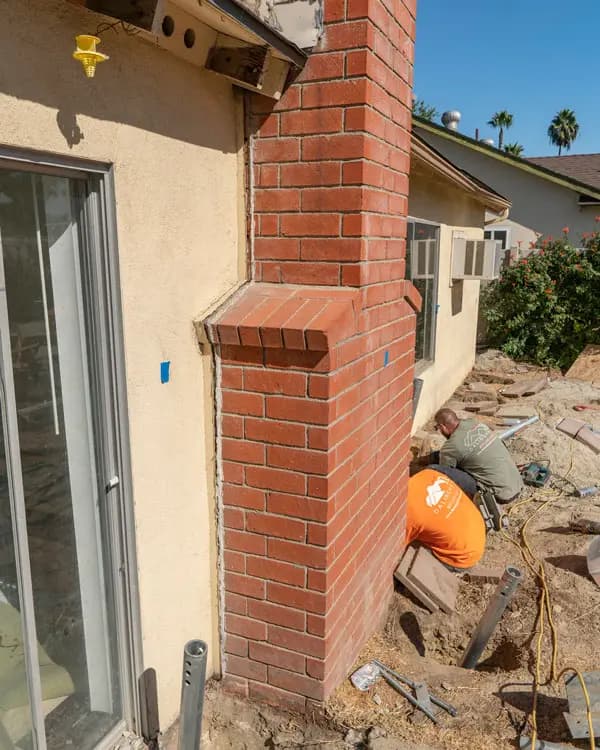
If your home is showing leaning chimneys, the team you call matters. Dalinghaus crews handle foundation repair and related structural work across California, Arizona, and Nevada, and nothing else.
Foundation repair, concrete leveling, and crawl space repair are our entire focus. Not a sideline.
More than 2,000 projects on the clay and desert soils of California, Arizona, and Nevada since 2011.
CSLB License #983851 in California, ROC #330307 in Arizona, and License #0089738 in Nevada. Look us up with the state before we ever set foot on your property.
Warranty terms come in writing with every proposal, and the terms that apply to your job are stated in that job's paperwork. Ask your project specialist during the free evaluation.

Don't see your question here? Our team is happy to help. Reach out anytime.
It can be, which is why it deserves prompt attention rather than panic. A masonry chimney is extremely heavy, and one that is separating from the house is relying on a failing footing. In California, Arizona, and Nevada, seismic activity raises the stakes for unstable masonry. Having the lean measured tells you whether you are early in the process or overdue.
How a repair moves from free evaluation to completed work once leaning chimneys is diagnosed.
A local specialist walks the areas showing leaning chimneys, measures what is moving, and answers your questions on site. No cost, no obligation.
The method is matched to the cause behind the leaning chimneys, with scope and pricing in writing. No pressure in either direction.
A Dalinghaus crew corrects the movement behind the leaning chimneys, and leaves the site cleaner than we found it.
Most foundation problems show early signs. This guide shows you what to look for, what can cause it, and how a lasting repair works, before you call anyone.
Before you call anyone about leaning chimneys, read how homeowners across California and Arizona rate our work.
Share a few details and a local specialist will follow up as soon as possible to set your evaluation.
A free evaluation pins down the cause: one visit, clear findings, written estimate.