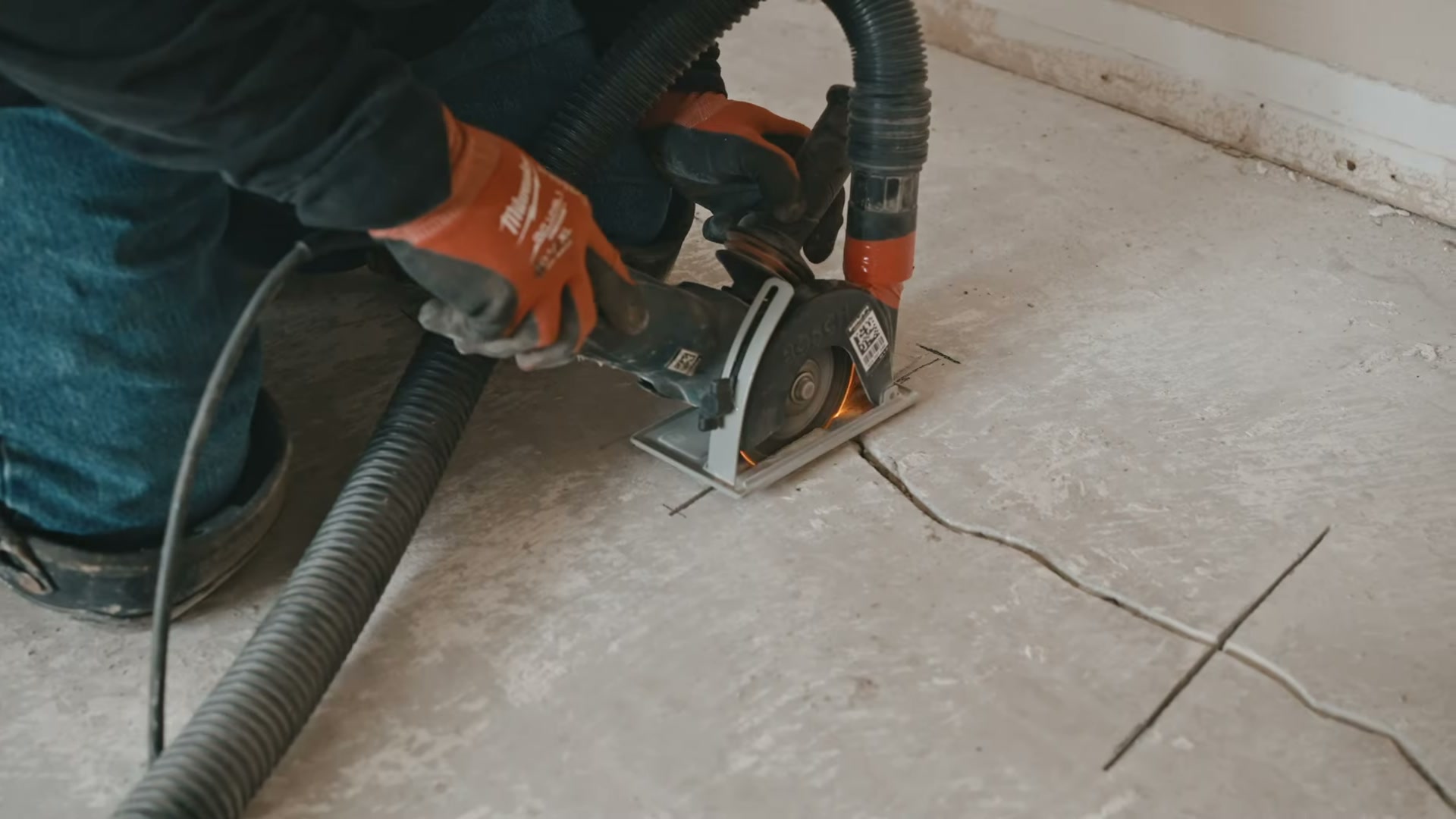

Soil movement beneath the slab
Expansive clay shrinking during drought pulls support away from the slab, and swelling during wet years pushes sections up. Both leave the concrete spanning gaps it was never designed to bridge.
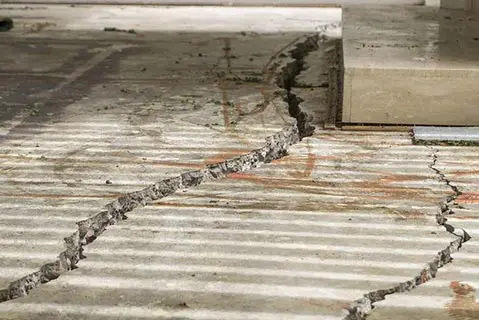
Concrete cracks where it loses support. Here is how soil movement breaks a slab floor and what actually restores it.

A local specialist will evaluate your foundation, walk you through the findings, and send a clear estimate. No cost, no pressure.
A concrete slab is strong when it is fully supported and surprisingly fragile when it is not. Concrete resists being squeezed but has little strength in bending, so when the soil under a section of slab compresses, shrinks away, or washes out, that span becomes a bridge over a void, and bridges made of unreinforced slab do not last. The crack you see in the tile, the ridge you feel under the vinyl, or the visible line across the garage floor is the slab breaking along the edge of its lost support. Some slab cracks are innocent: concrete shrinks slightly as it cures, and most slabs develop a few hairline shrinkage cracks that never move again. The meaningful cracks are the ones with displacement, where one side sits higher or lower than the other, the ones that widen over time, and the ones that arrive with sloping floors, cracked walls, or sticking doors in the same area. In Southern California, Arizona, and Nevada the soil movement behind slab cracking is usually expansive clay cycling between wet season swell and dry season shrink, though plumbing leaks and poor drainage can carve out support in any soil. Whether the crack is a cosmetic scar or a structural symptom is exactly what a floor elevation survey determines.
For the repair side of this, the foundation repair solutions page lists every method Dalinghaus installs, including the ones that fix problems other than floor cracks.
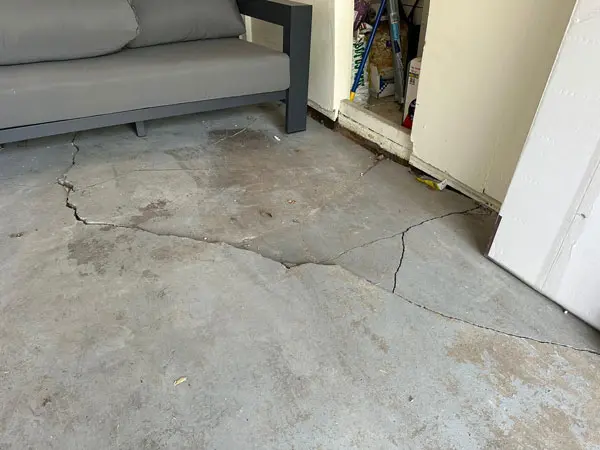
Expansive clay shrinking during drought pulls support away from the slab, and swelling during wet years pushes sections up. Both leave the concrete spanning gaps it was never designed to bridge.
Poorly compacted fill or soil compressed under load sinks away from the slab bottom, leaving voids. The unsupported span cracks under everyday weight.
A plumbing leak under the slab or drainage funneling water beneath the foundation washes fine soil out, undermining support in exactly the places you cannot see.
Concrete shrinks slightly as it cures, producing hairline cracks in the first year or two. These are cosmetic, do not displace, and do not grow.
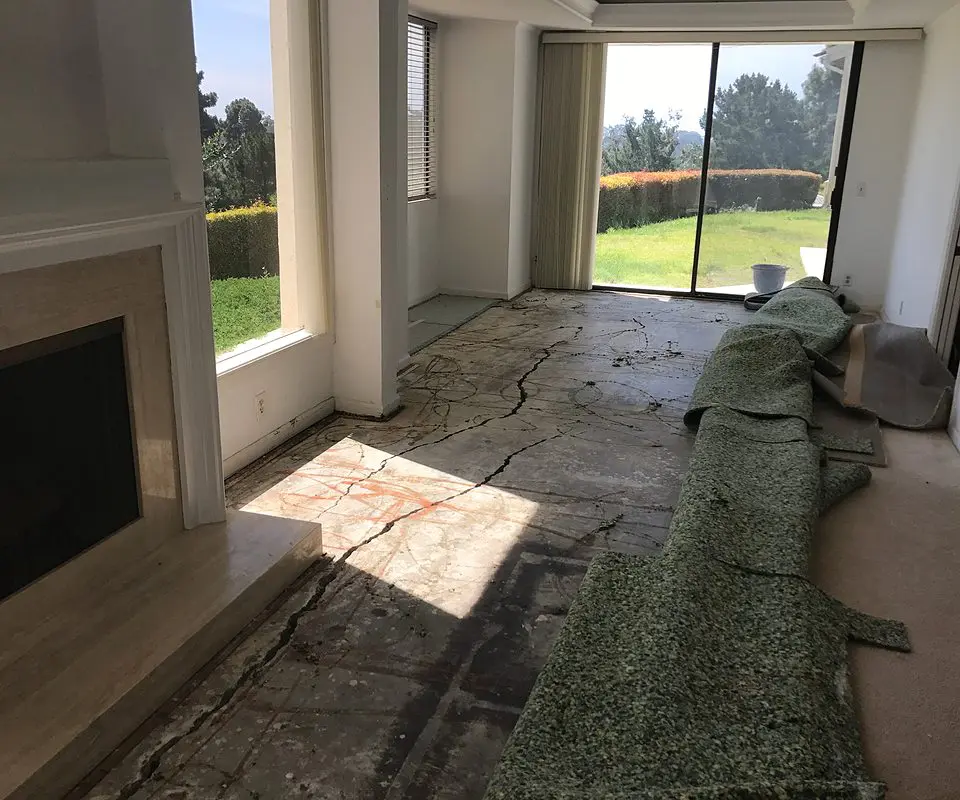
Photos from our own evaluations and job sites. Swipe or use the arrows to see more.
Solving floor cracks means addressing the underlying soil, pressure, or settlement cause. Not just patching the visible damage. Below are the engineered solutions we install most often for this symptom in California, Arizona, and Nevada homes.
If your home is showing floor cracks, the team you call matters. Dalinghaus crews handle foundation repair and related structural work across California, Arizona, and Nevada, and nothing else.
Foundation repair, concrete leveling, and crawl space repair are our entire focus. Not a sideline.
More than 2,000 projects on the clay and desert soils of California, Arizona, and Nevada since 2011.
CSLB License #983851 in California, ROC #330307 in Arizona, and License #0089738 in Nevada. Look us up with the state before we ever set foot on your property.
Warranty terms come in writing with every proposal, and the terms that apply to your job are stated in that job's paperwork. Ask your project specialist during the free evaluation.


Don't see your question here? Our team is happy to help. Reach out anytime.
Hairline shrinkage cracks are. Most slabs develop a few in the first couple of years as the concrete cures, and they stay tight, flat, and stable forever. Cracks with height difference between the sides, cracks that keep growing, and cracks paired with sloping floors or wall damage are a different category: they mean the soil under the slab is moving, and they warrant measurement.
How a repair moves from free evaluation to completed work once floor cracks is diagnosed.
A local specialist walks the areas showing floor cracks, measures what is moving, and answers your questions on site. No cost, no obligation.
The method is matched to the cause behind the floor cracks, with scope and pricing in writing. No pressure in either direction.
A Dalinghaus crew corrects the movement behind the floor cracks, and leaves the site cleaner than we found it.
Most foundation problems show early signs. This guide shows you what to look for, what can cause it, and how a lasting repair works, before you call anyone.
Before you call anyone about floor cracks, read how homeowners across California and Arizona rate our work.
Share a few details and a local specialist will follow up as soon as possible to set your evaluation.
A free evaluation pins down the cause: one visit, clear findings, written estimate.