CA Lic. #983851 · AZ ROC #330307 · NV Lic. #0089738
Diagnosis First
What is your seawall showing you?
Match the evidence you have noticed to where it sits on the failure timeline. Everything on this list is cheaper to address than the item after it.
No cracks or movement noticed, no recent evaluationNothing visible, wall is just getting older
An aging wall with no documented baseline is running on assumption. A free evaluation converts assumption into measurements: lean, crack map, joint condition, and the state of the ground behind it, all in writing for future comparison.
New or widening cracks, staining at jointsCracks appearing in the wall face
Cracks are the first line of the failure document, and the tide reads them twice a day, carrying soil out with every cycle. Sealed and stabilized early, they stay a maintenance item instead of becoming a structural one.
Lawn sinking along the wall line, pavers settlingSoft spots or depressions behind the wall
Sinking ground means soil is actively washing through the wall and voids are forming where support used to be. This stage is still repairable from behind the wall, without rebuilding, if it is stabilized before the wall starts to move.
Visible movement, widening joints, worsening by seasonThe wall is leaning, bowing, or shifting
Movement means the pressure behind the wall has beaten its anchoring, and each storm season compounds it. The evaluation measures the movement and sequences the repair: stabilize the soil, relieve the pressure, anchor the wall.
Everything a homeowner should understand about this repair, written by the people who do it.
Read the full guideHide the full guide
CH 01
Failures announce themselves early, quietly, and in order
Seawalls almost never fail by surprise; they fail by appointment, after years of small notices nobody read. The order is remarkably consistent. First come cracks, and every tidal cycle pushes water in and pulls it back out carrying fine soil with it. Then the ground behind the wall begins its disappearing act: soft spots, depressions, pavers settling. Then the wall itself starts to move, because the soil that braced it is thinner and the water pressure behind it has nowhere to drain. The collapse, when it comes, is just the last line of a long document.
An evaluation is how you read the document early. Every defect on that timeline is cheaper than the one after it, and the gap between a sealed crack and a rebuilt wall is the widest cost spread in coastal seawall repair.
CH 02
The structural read: lean, cracks, joints, and rust
The wall itself gets a methodical pass. Lean is measured, not eyeballed, so next year's evaluation has a number to compare. Cracks and their pattern are mapped, because pattern carries the diagnosis: vertical cracks at regular spacing tell a different story than diagonal cracking radiating from a corner or horizontal cracking tracking the reinforcement. Joints are checked for separation and for the telltale streaking that means soil is washing through. Rust staining bleeding from the concrete gets special attention: it means the steel inside has started corroding, the same expansion cycle that eventually spalls concrete off the face.
Because neighboring walls often share soil, drainage, and fate, the evaluation also notes how yours connects to the walls beside it. A failing neighbor section changes your wall's risk picture, and shared shorelines are how one owner's deferred repair becomes the block's problem.
CH 03
The soil side: reading the ground behind the wall
Half the evaluation happens with your back to the water, because most seawall failures start in the ground the wall retains. Depressions along the wall line, soft spots underfoot, pavers or slabs tilting toward the wall, and roots surfacing as soil drops away around them all say the same thing: fines are leaving through the wall, and voids are forming where support used to be. The full pattern is described on our settlement page.
Weep holes and drainage get checked in the same pass, because they are the pressure relief the wall was designed around. Blocked weeps trap groundwater behind the wall, and trapped water is the force that turns it into a leaning wall. A working drainage path is cheap; the pressure it relieves is not.
CH 04
What you get, and what happens if we find something
The findings arrive in writing, in plain language: the wall's dimensions and construction, every defect found with its location and measurement, and an honest read of what each one means. A healthy wall gets a report that says so, plus a baseline that makes every future evaluation sharper. The evaluation costs nothing either way.
If the wall needs work, the report points to one of our seawall repair solutions. It maps each finding to its fix: soil stabilization and void filling where the ground is leaving, anchoring where the wall is moving, cap work where water is entering from above, drainage relief where pressure is trapped. And if a wall is genuinely past saving, the report says that plainly too, because selling a repair that will not hold helps nobody on either side of it.
Why Choose Dalinghaus
Care and expertise from a team that's been doing this since 2011.
Work like seawall inspection is not a sideline for us. Dalinghaus crews handle seawall repair and related structural work across coastal California, and nothing else.
01
Specialized expertise.
Foundation repair, concrete leveling, and crawl space repair are our entire focus. Not a sideline.
02
Locally owned since 2011.
More than 2,000 projects on the clay and desert soils of California, Arizona, and Nevada since 2011.
03
Licensed in California, Arizona and Nevada.
CSLB License #983851 in California, ROC #330307 in Arizona, and License #0089738 in Nevada. Look us up with the state before we ever set foot on your property.
04
Warrantied solutions.
Warranty terms come in writing with every proposal, and the terms that apply to your job are stated in that job's paperwork. Ask your project specialist during the free evaluation.
Brian DalinghausCO-FOUNDER · SINCE 2011Brad DalinghausCO-FOUNDER · SINCE 2011
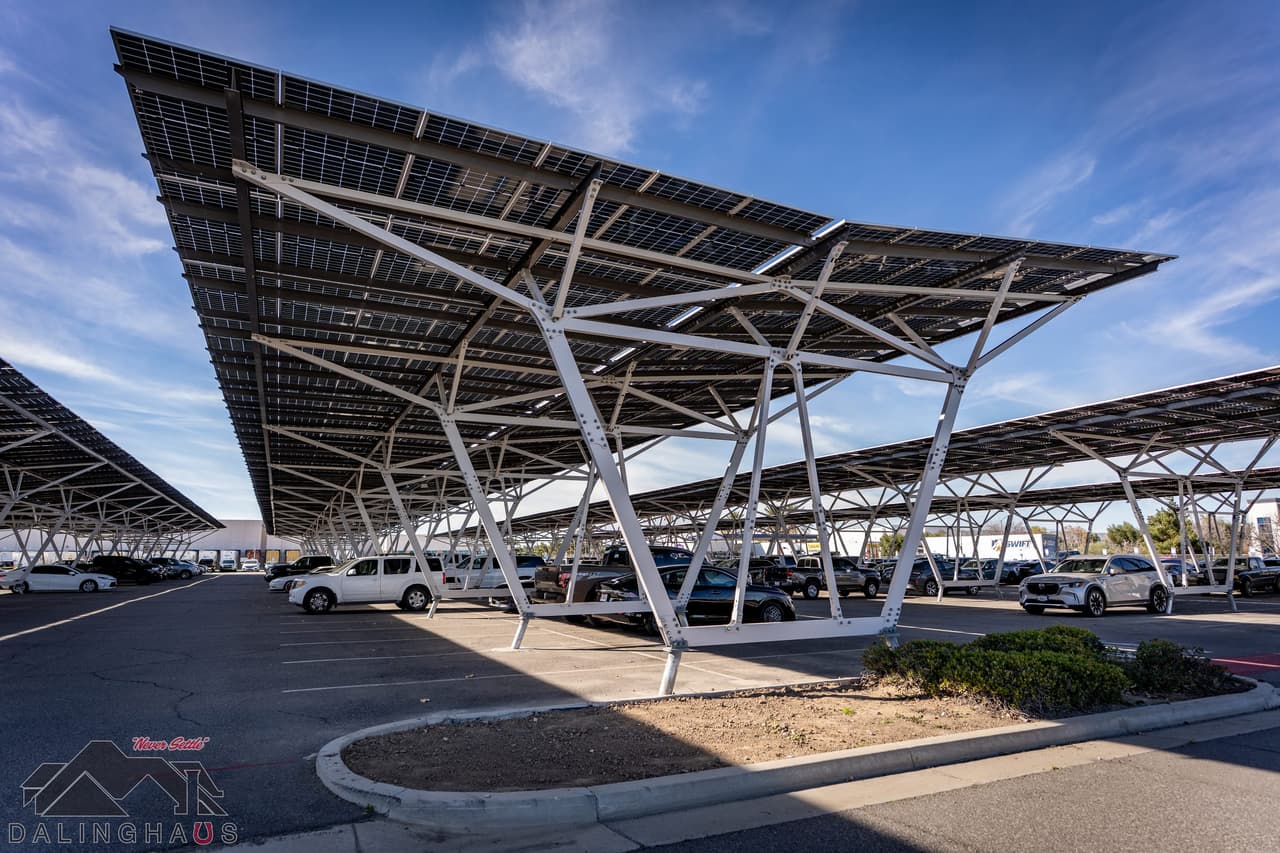
Helical pile foundation for a solar canopy in Southern California
Helical PilesPull Testing
Dalinghaus installed the helical pile foundation and erected the structure for a solar canopy over a staff parking lot in Southern California, working in four phases so the lot stayed open.
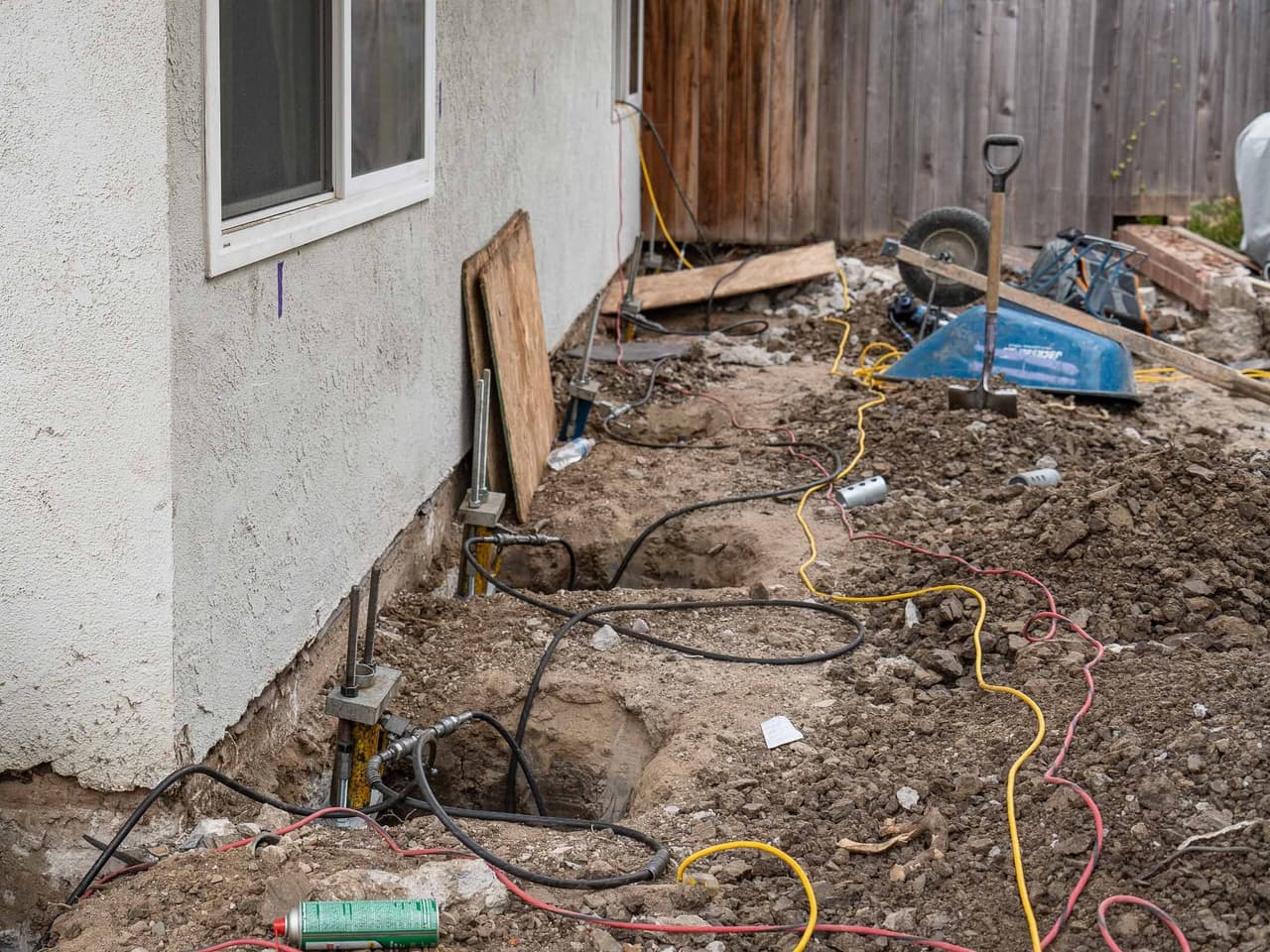
Lifting a settled Irvine home 3 inches with helical piers
Helical PiersHydraulic Lift
The back of an Irvine home had settled about 3 inches over roughly ten years. Ten helical piers went in over two days, and a 30 minute lift brought the back half of the home up 3 inches.
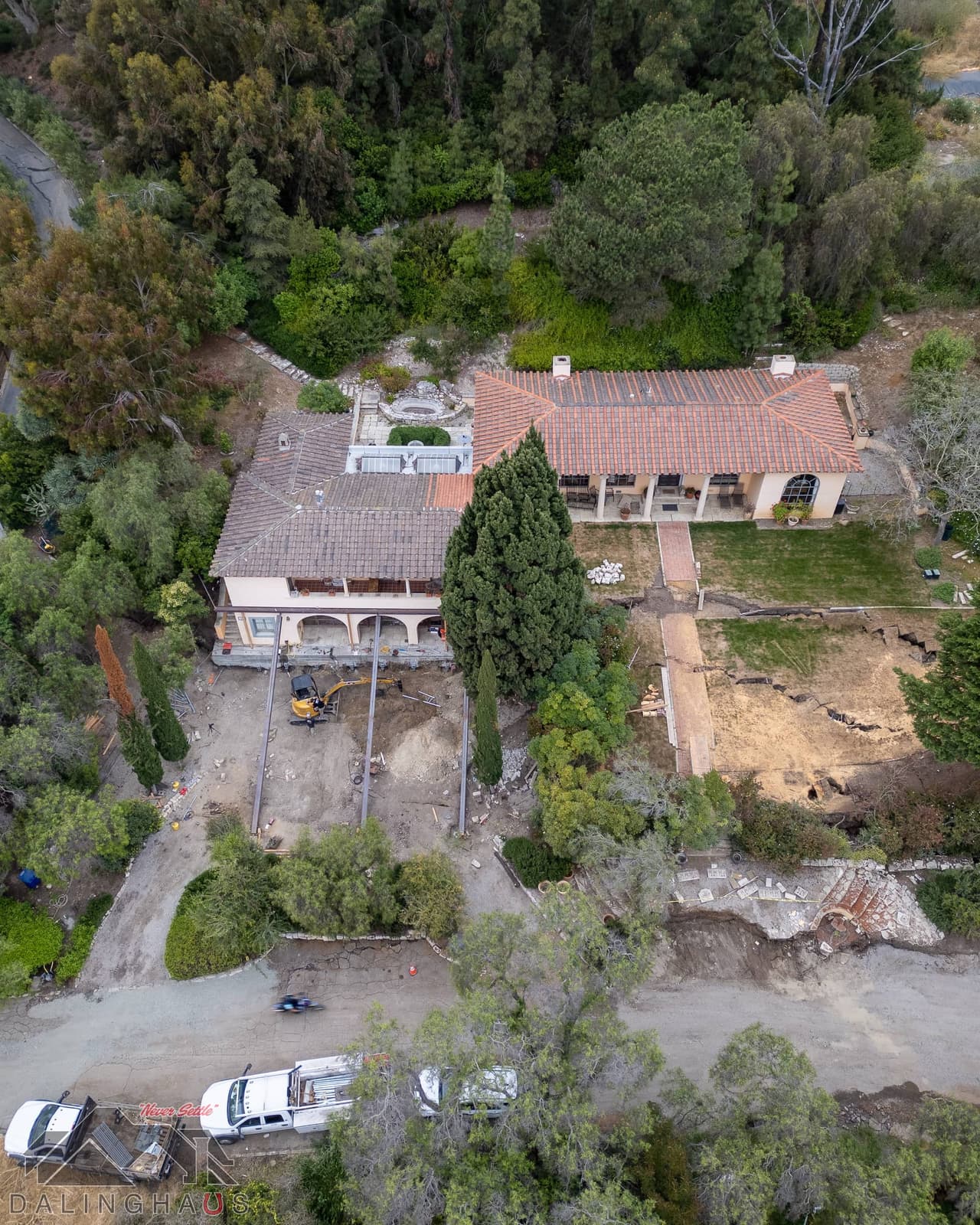
Helical piers to bedrock under a Rancho Palos Verdes home caught in a landslide
Helical Piers
A hillside home in Rancho Palos Verdes split in half as the ground slid toward the slope. Dalinghaus installed helical piers about 30 feet down to competent strata or bedrock beneath it.
Steel piers for a Rancho Palos Verdes home that settled 16 inches
Steel PiersFoundation Stabilization
A beachside home in Rancho Palos Verdes settled 16 inches in a couple of months. Steel piers were driven to load bearing soil or bedrock at each excavated location, with a lift planned once they were in.
Lifting a San Clemente hillside home that settled 2 inches
Helical PiersHelical Tieback Anchors
A San Clemente hillside home had settled about 2 inches and was moving toward the slope behind it. Vertical helical piers and helical tieback anchors stabilized the home and recovered part of the drop.
Answers to common questions about Seawall Inspection.
Don't see your question here? Our team is happy to help. Reach out anytime.
Movement or lean, cracks and their pattern, separation at joints and the cap, rust staining that signals corroding steel inside the concrete, soil loss or depressions behind the wall, and whether the weep holes and drainage are doing their job. We also document the wall's dimensions and how it connects to neighboring walls, since shared shorelines share problems.
Regularly, and always after a rough storm season or whenever something new appears: a crack, a lean, a soft spot in the ground behind the wall. The wall is under load every hour of every day, so the honest answer is that a periodic look is cheap and a missed failure is not.
Nothing. The evaluation is free, including the written findings. If repairs turn out to be warranted, you get options with clear reasoning before you commit to anything, and if the wall is healthy the report simply says so.
Waterfront properties across the coastal San Diego area: open coast, bays, harbors, and coastal waterways around San Diego, Chula Vista, and Carlsbad. If your property line ends at the water and a wall is holding it there, we can evaluate it.
You get a written repair plan matched to the cause, whether that is soil stabilization, anchoring, cap repair, or drainage relief, with the reasoning spelled out. There is no pressure attached, and if a wall is genuinely past saving, we say that plainly instead of selling a repair that will not hold.
Pricing & Scope
Pricing and scope
Every home is different. The figures below are typical ranges for similar work across coastal California. They are NOT a guaranteed quote. A free on-site evaluation is required for a written estimate that reflects your specific scope, access, and conditions.
How pricing works
Repair pricing varies by load, depth, and access. Your written estimate comes from the free evaluation.
When this isn't the right fix
Not appropriate for purely cosmetic cracks with no structural movement. We will tell you at the evaluation.
Written estimate
Licensed contractor serving California, Arizona, and Nevada.
The Process
How we approach Seawall Inspection
A straightforward path from free evaluation to completed repairs.
Step 01
Walk the wall with you
The evaluation starts with your observations and concerns, because you see this wall every day and we are just meeting it.
Step 02
Document the structure
Dimensions, construction type, movement, cracks, joints, and rust staining are all recorded.
Step 03
Check the soil and drainage
We look for soil loss and depressions behind the wall and confirm the weep holes and drainage are relieving pressure.
Step 04
Findings in writing
You get the condition report in plain language, with a repair plan only if the wall actually needs one.